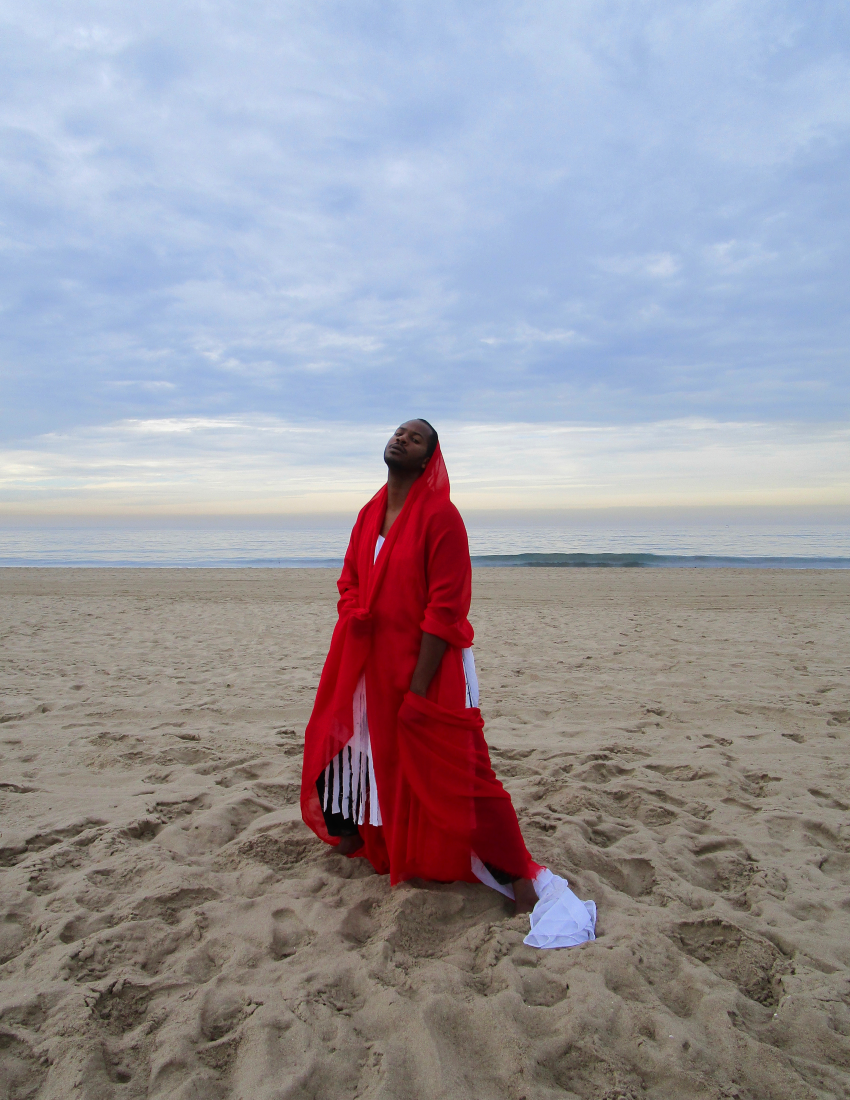
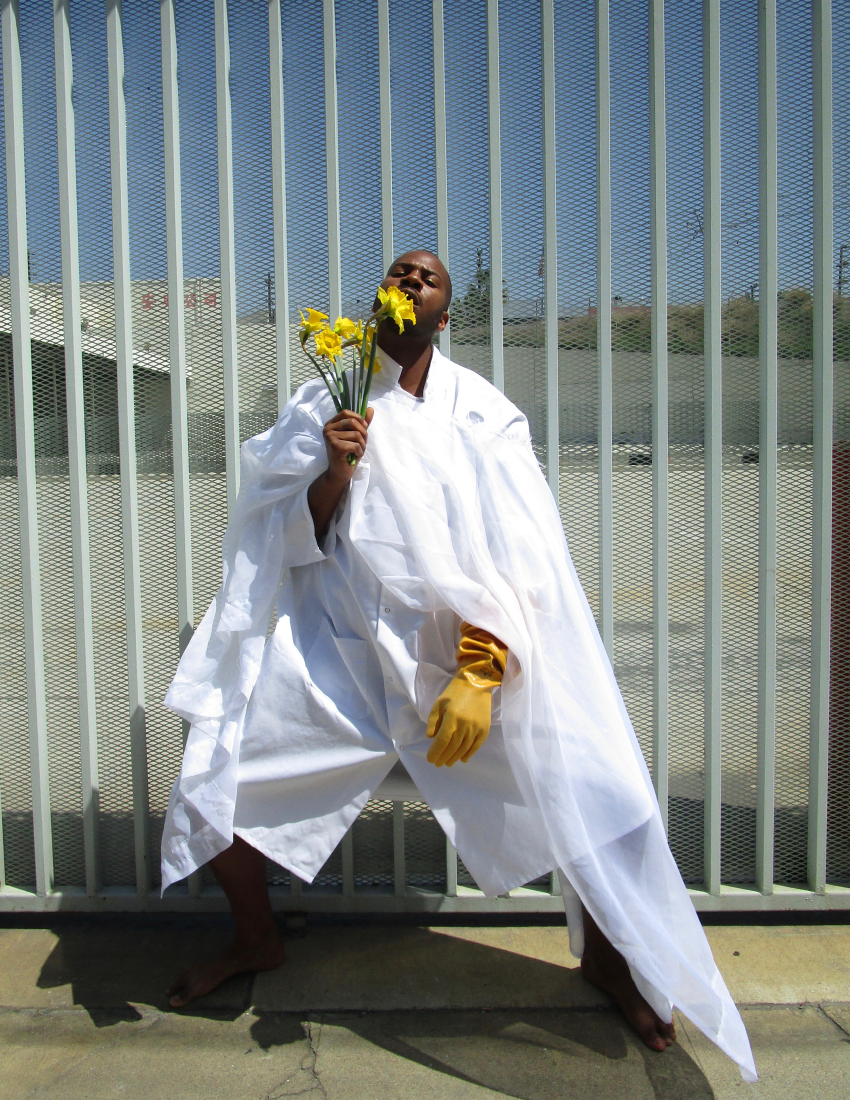
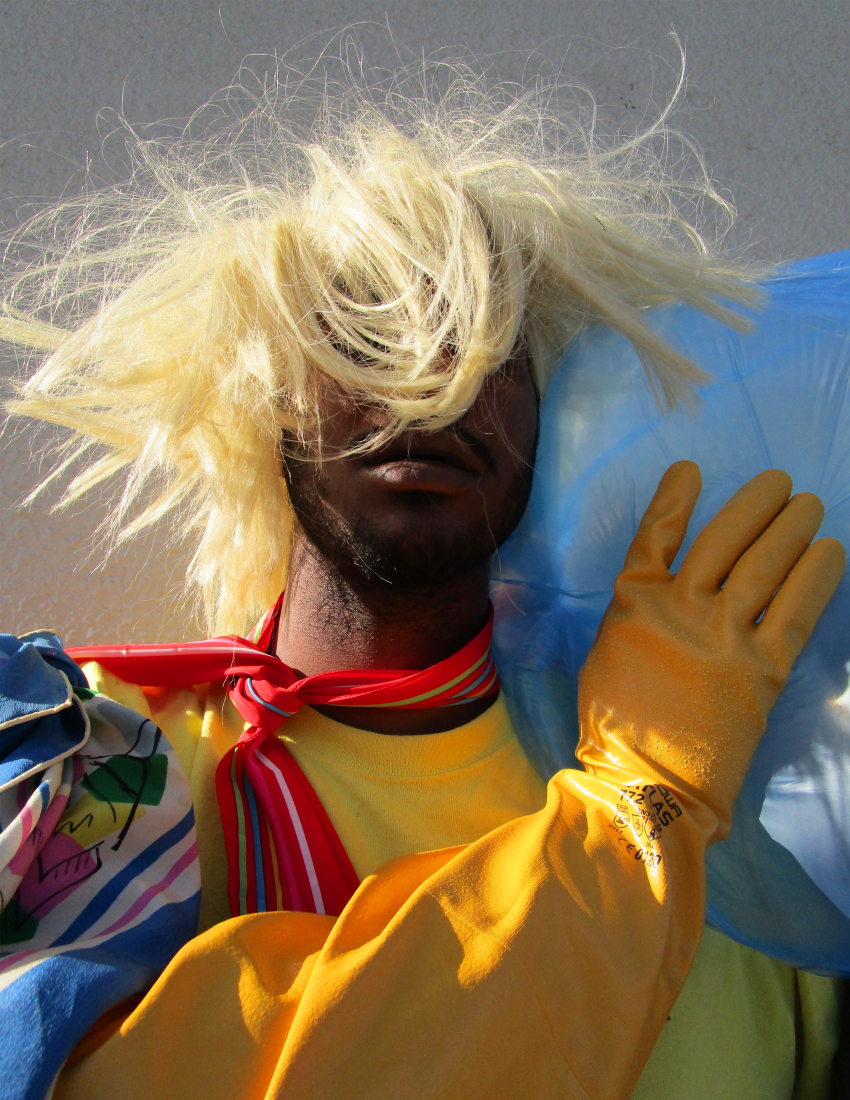
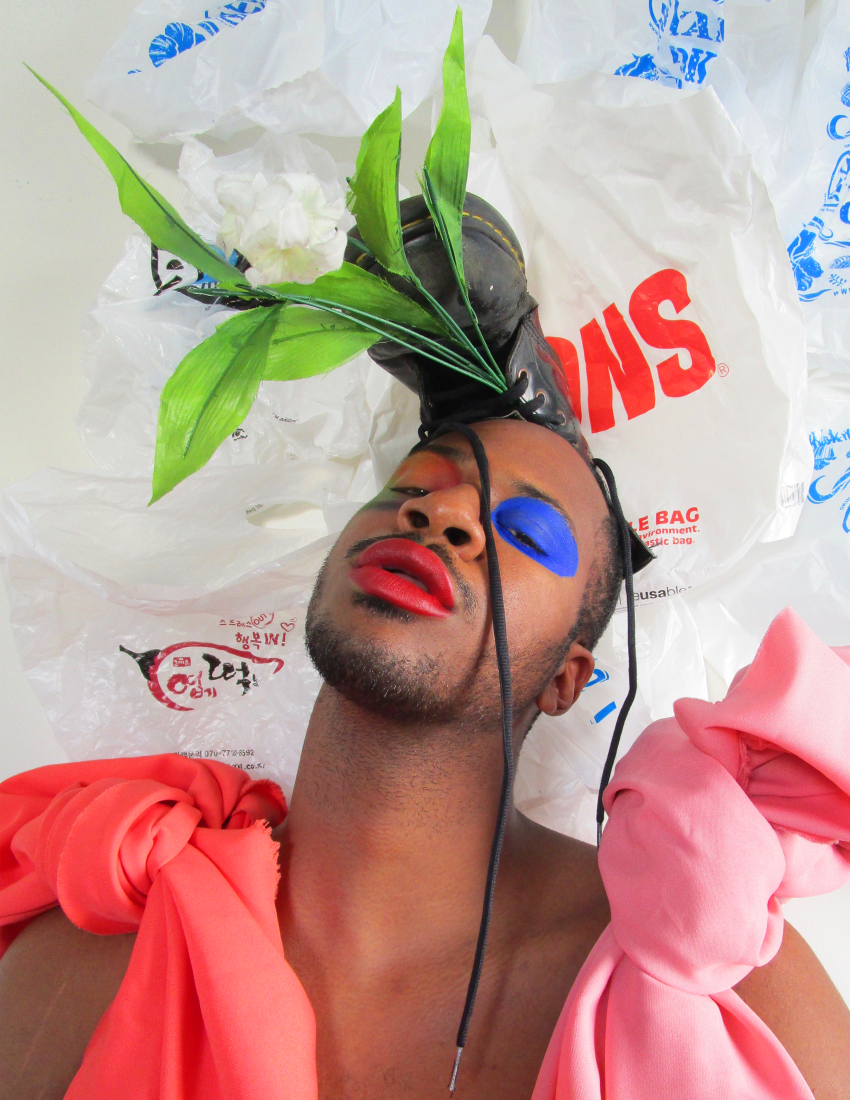
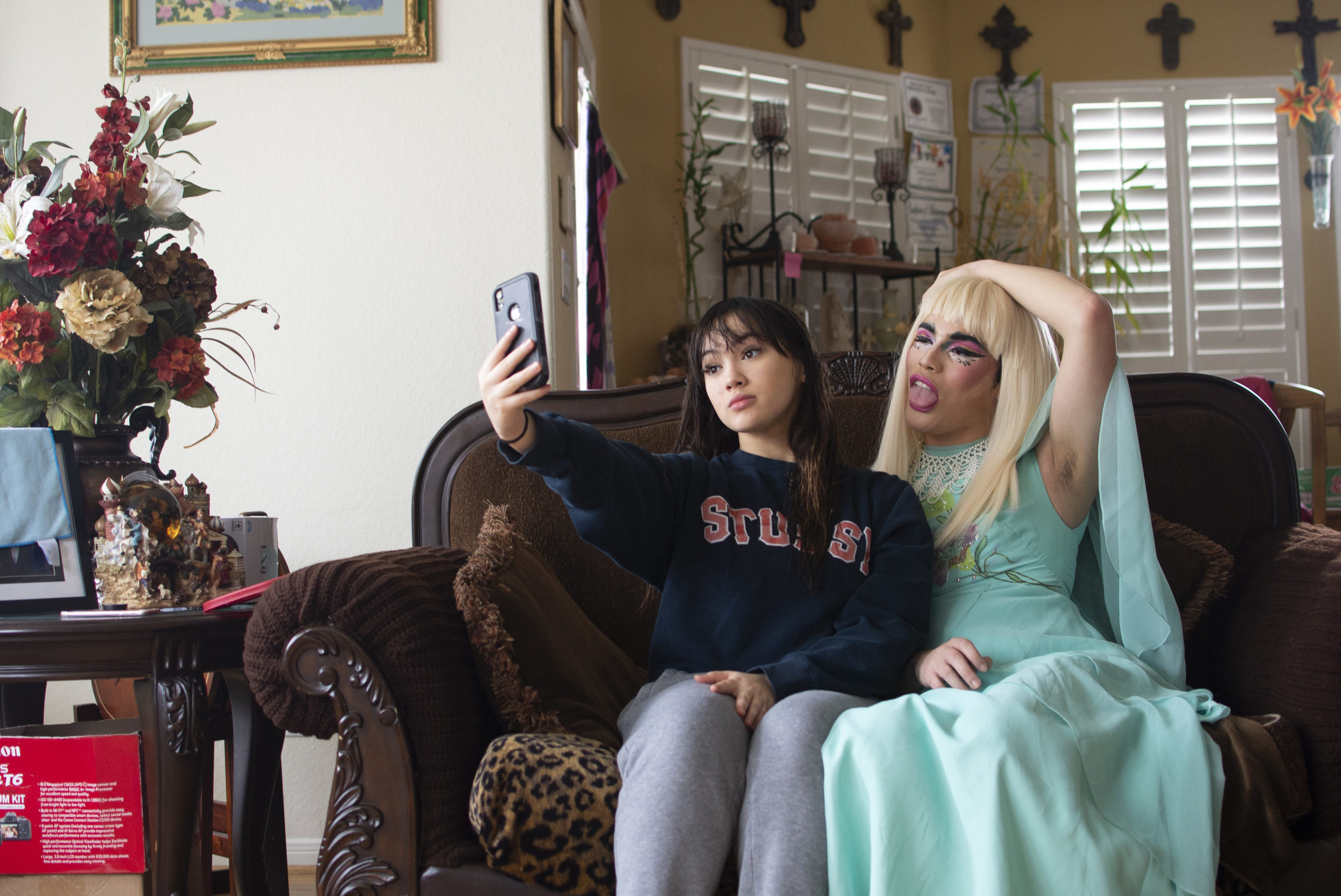
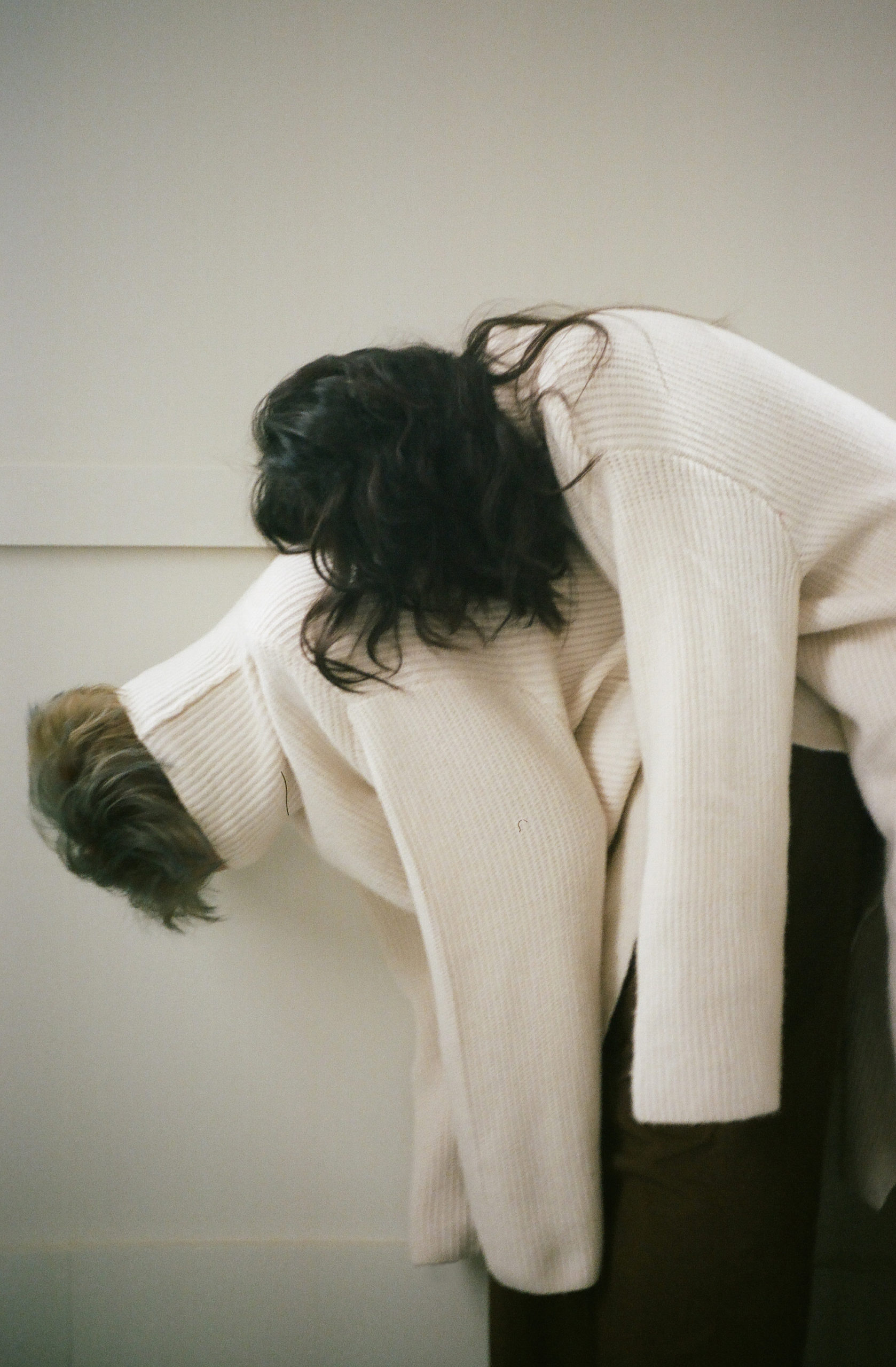
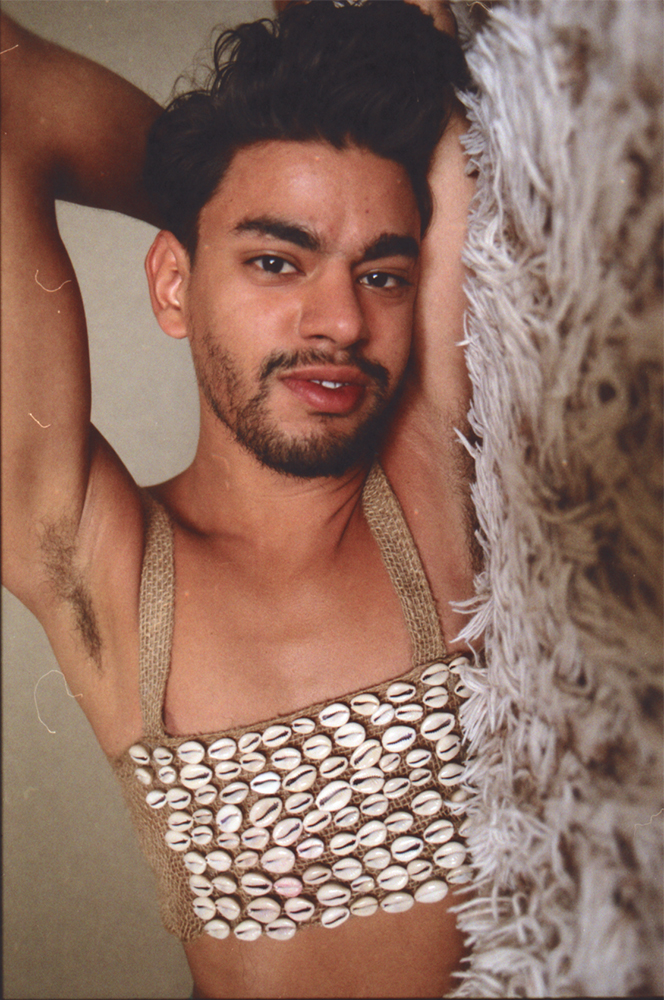
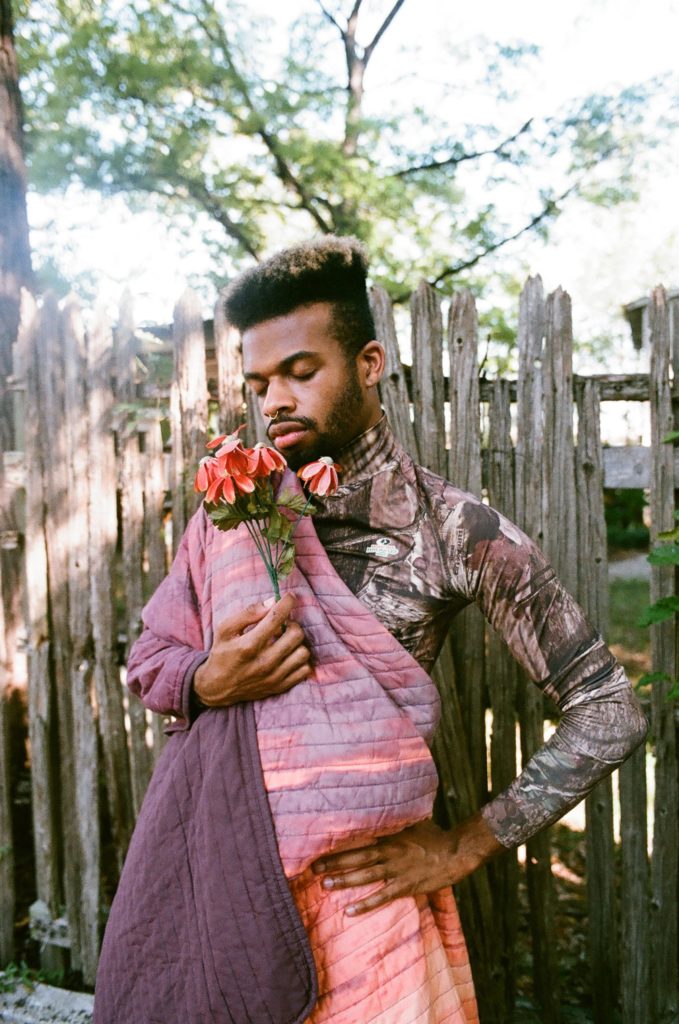
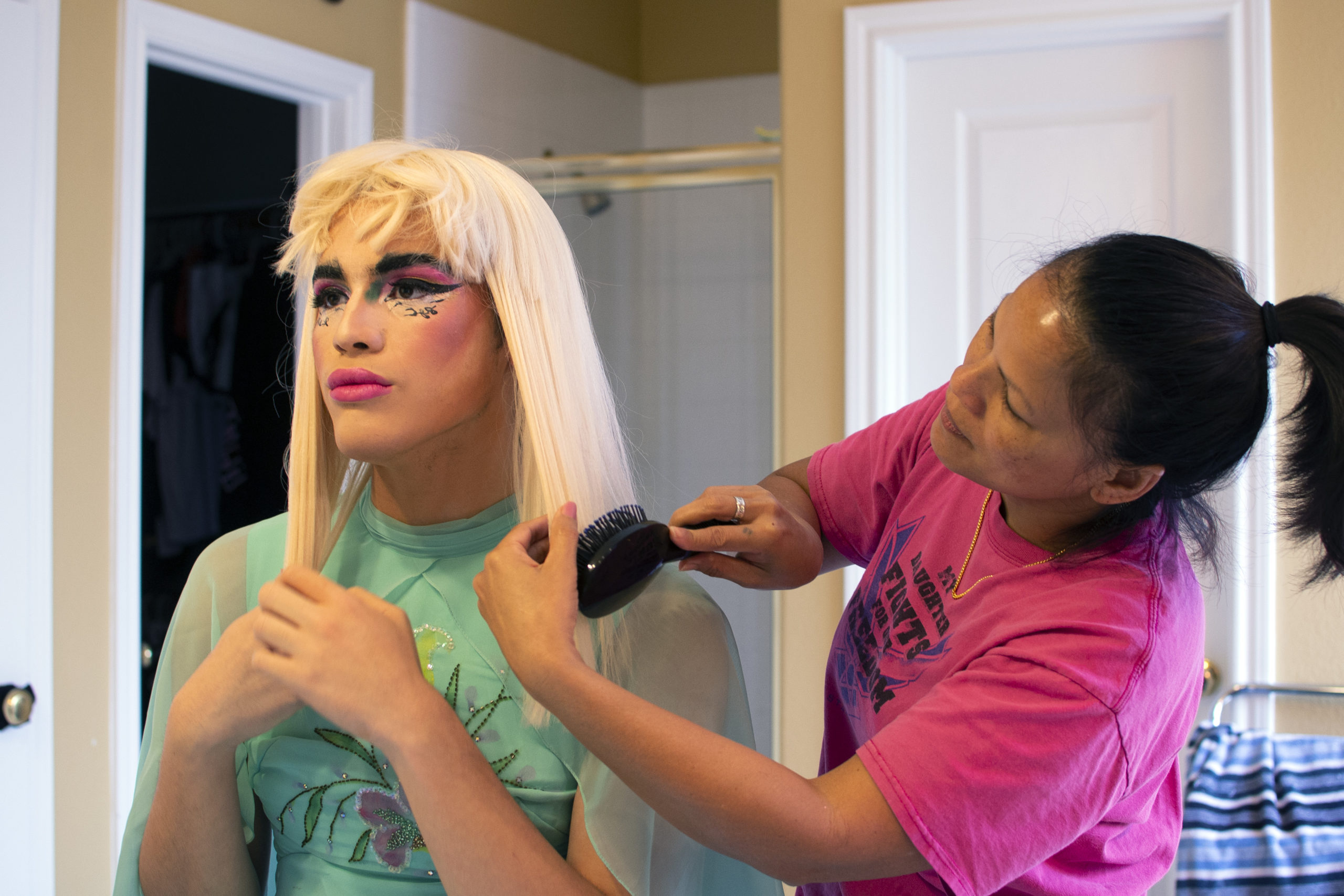
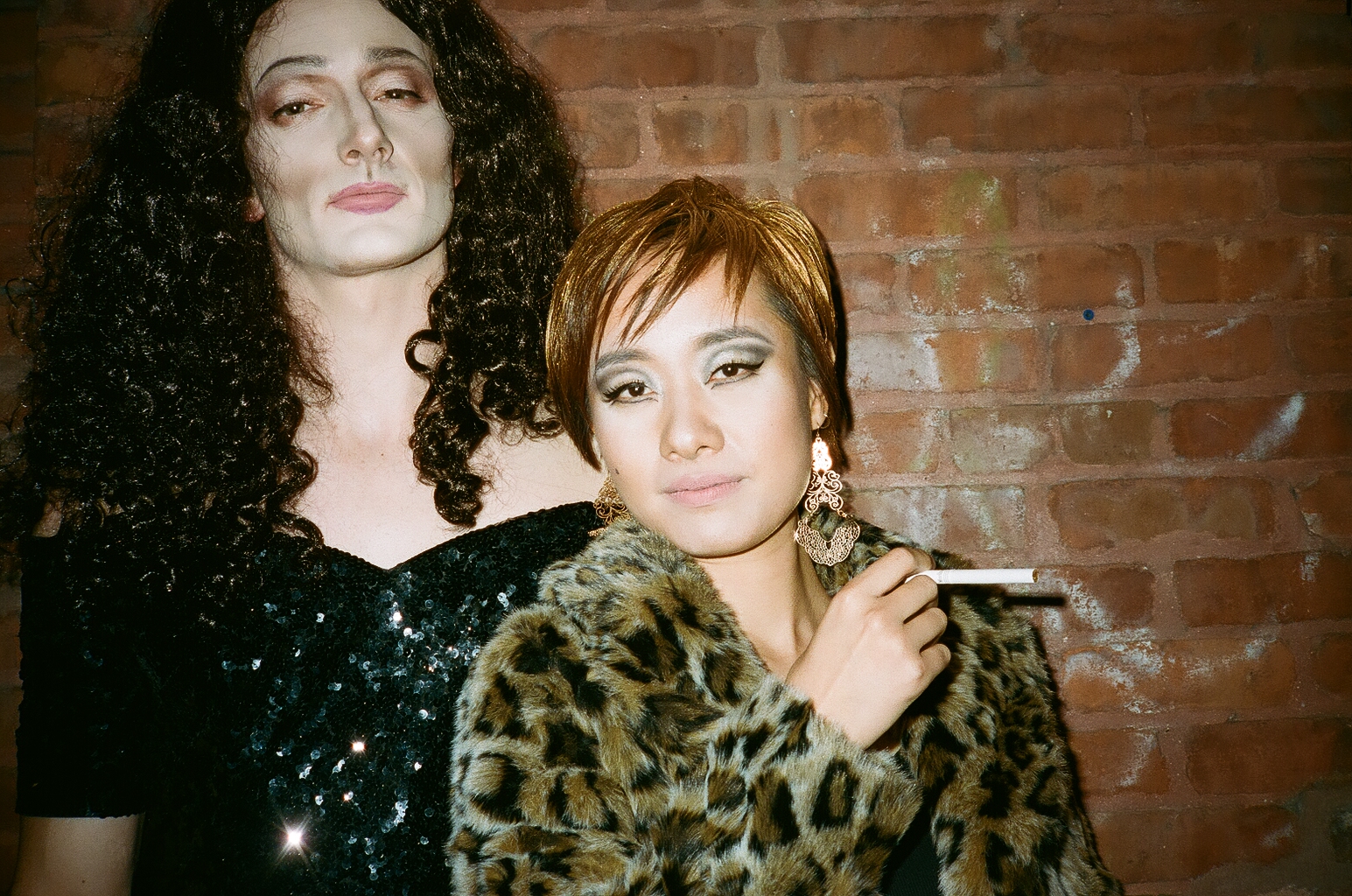
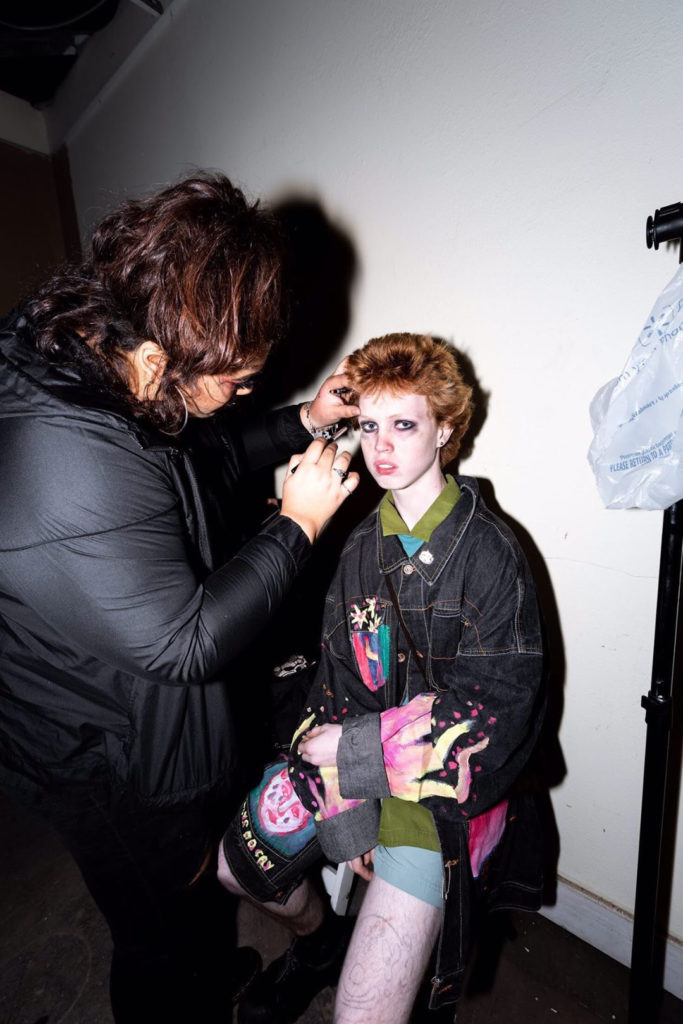
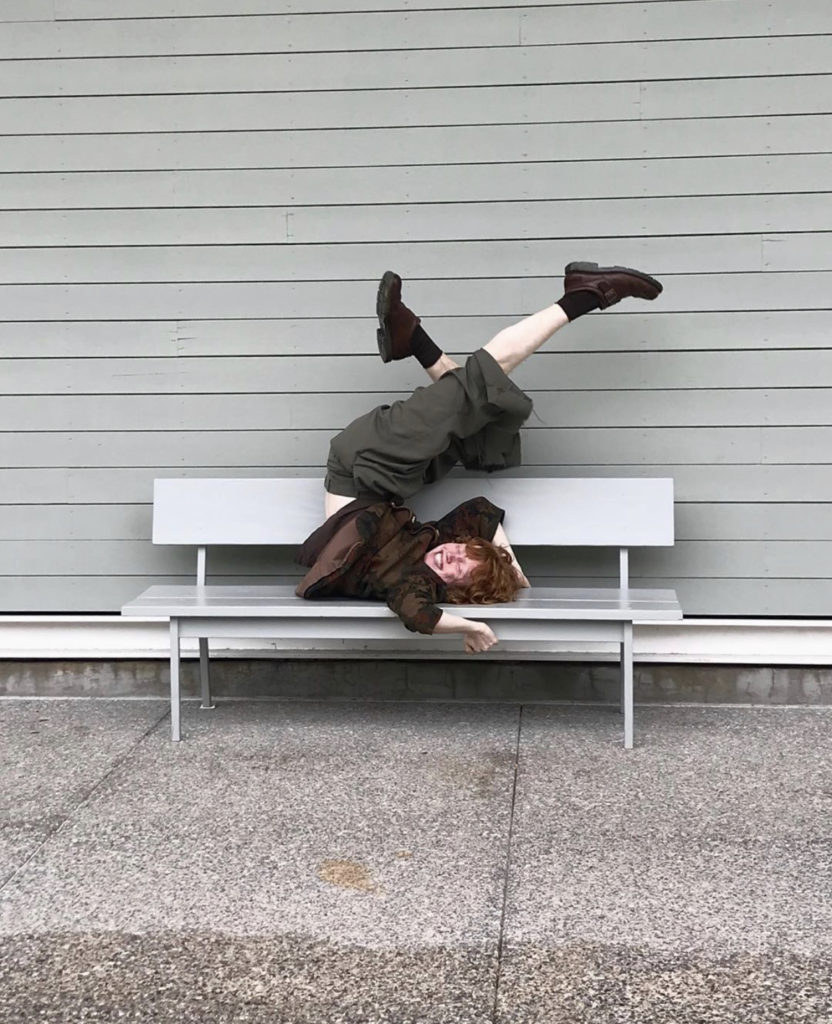
1. This first photo was taken backstage at timezone, a fashion show event that used to be organized by Channy Lucienne (@certifiedradical on Instagram) that I modeled for. The clothes are mine, but they were just doing my makeup before I got changed.
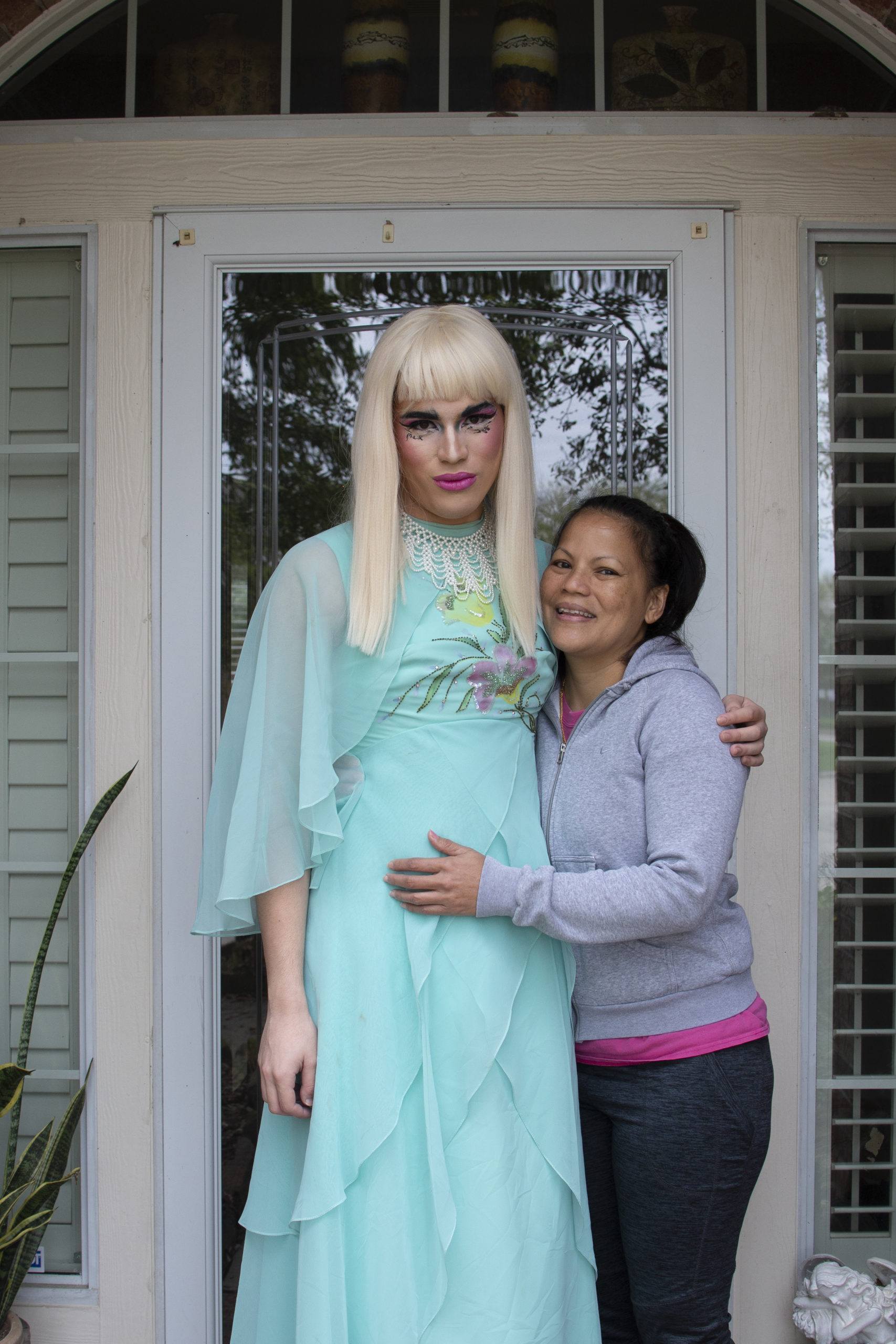
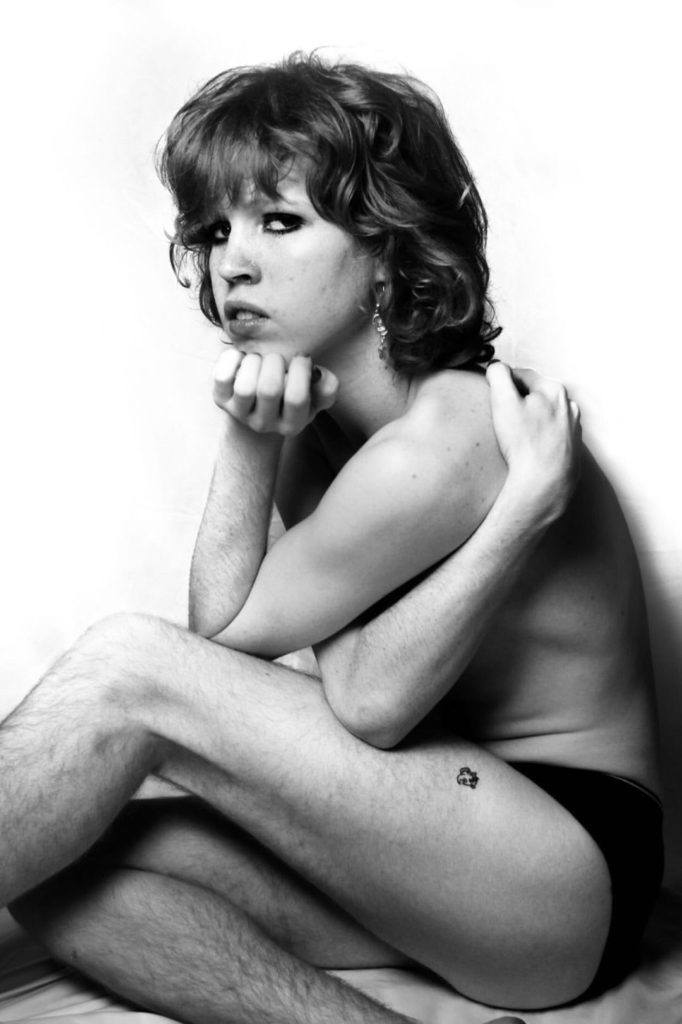
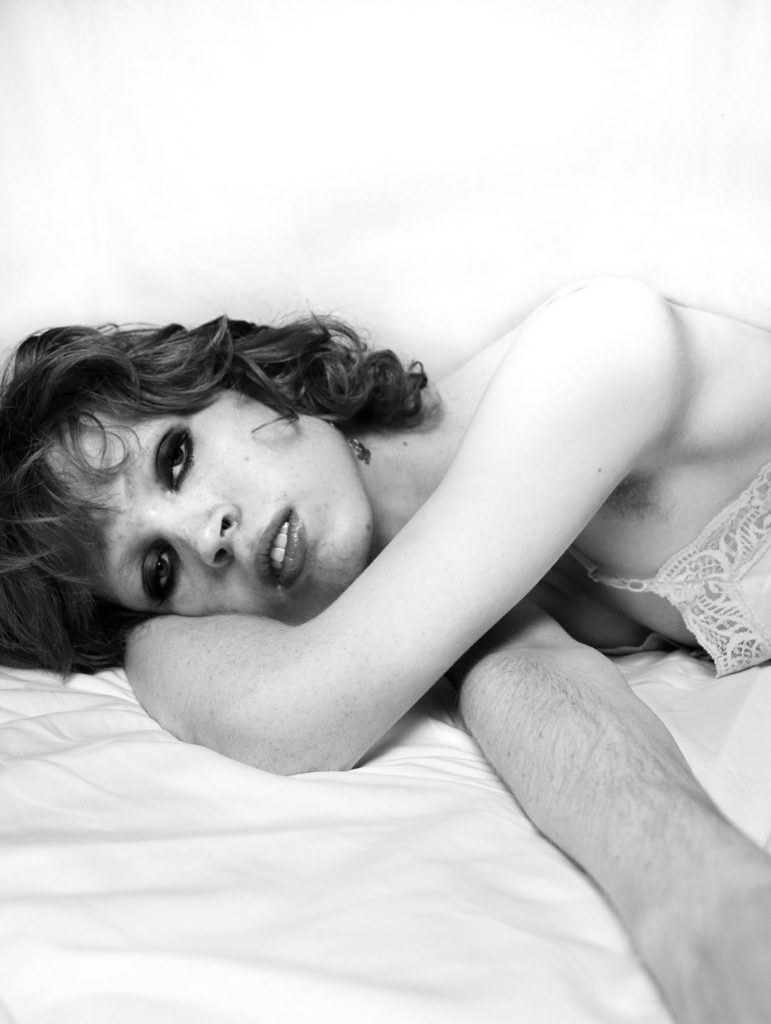
2., 3. Anna Schooley, a high school studnet in Cypress, took these. We’re pretty good friends, and we took these in my bedroom after we had set up a janky white backdrop and lights.
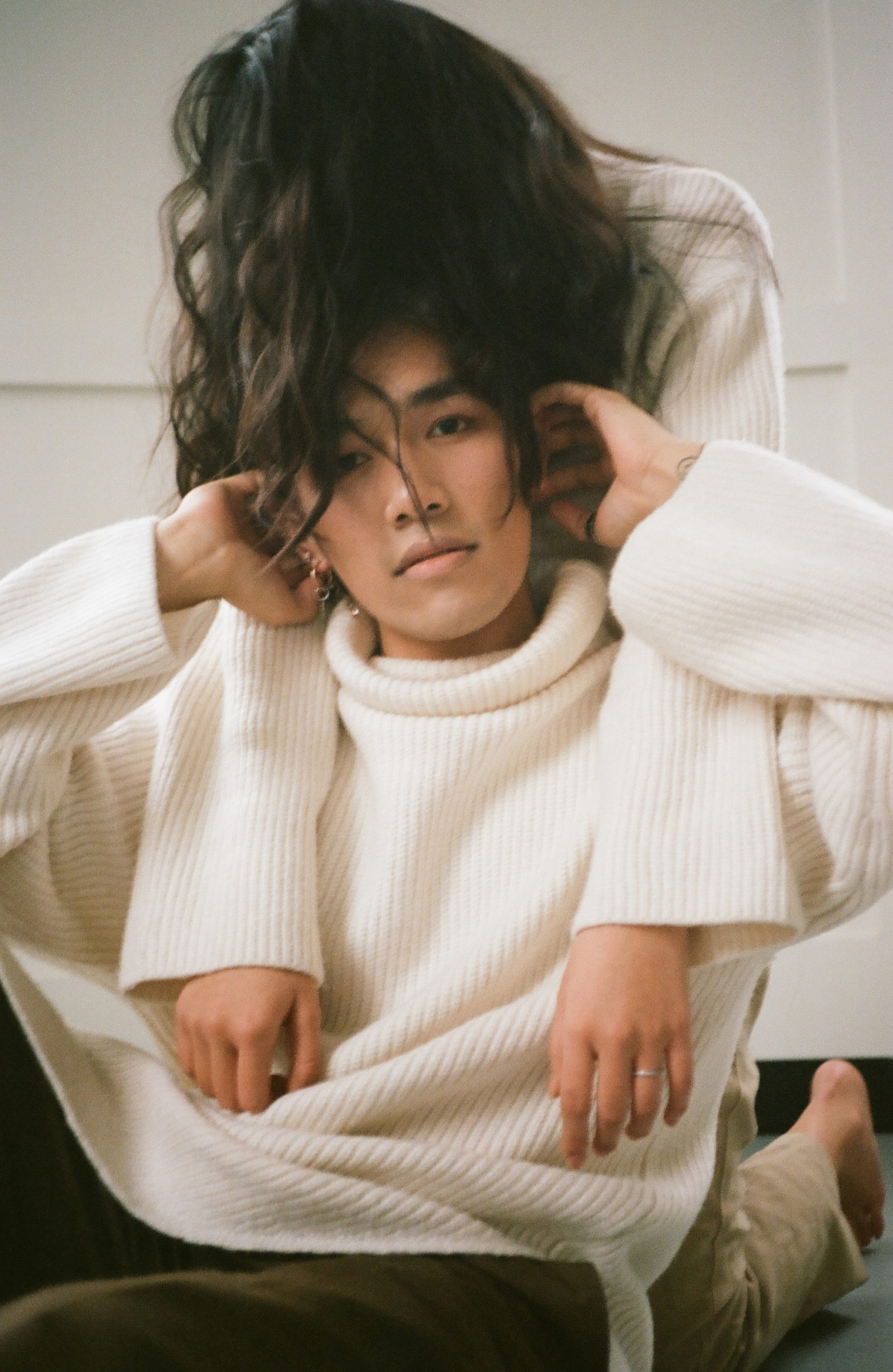
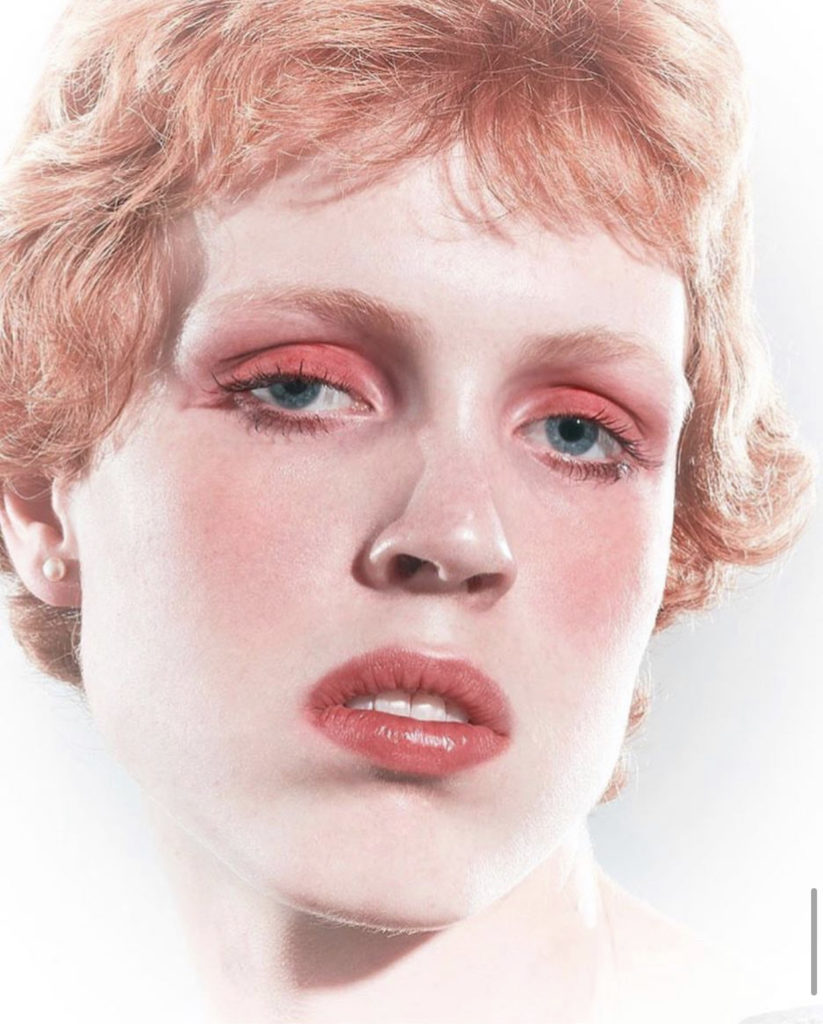
4. Richie Talboy, a fashion photographer I met at a party, decided to have a test shoot in his studio for funsies. This was taken in the Spring in New York.
5. This was taken by Cary Fagan, who’s my good friend and a rising fashion photographer. We were at the medical center and I styled the look and this just came out of us hanging out.
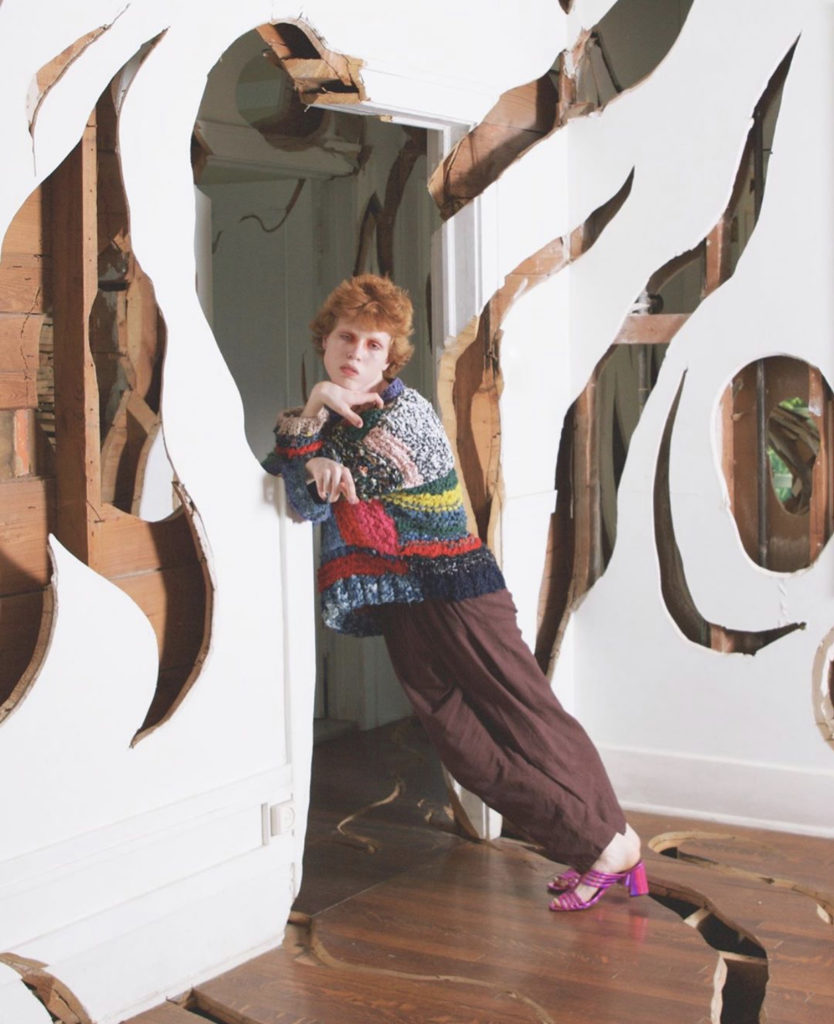
6. This photo was taken at Cherryhurst House and the clothes were designed by Isabel Wilson. We were taking photos for her website just before her fashion show.
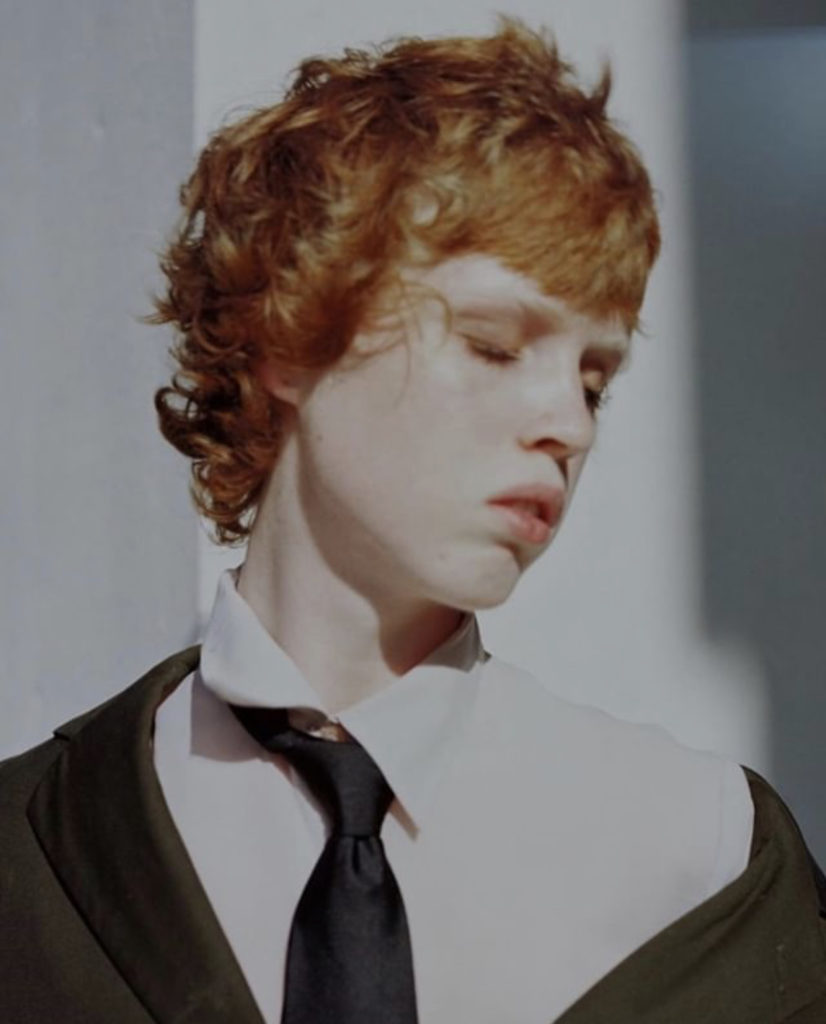
7. I was with my friend outside of the Menil when this photo was taken. I got the jacket in a German flea market when I was visiting my brother, who lives in Munich.
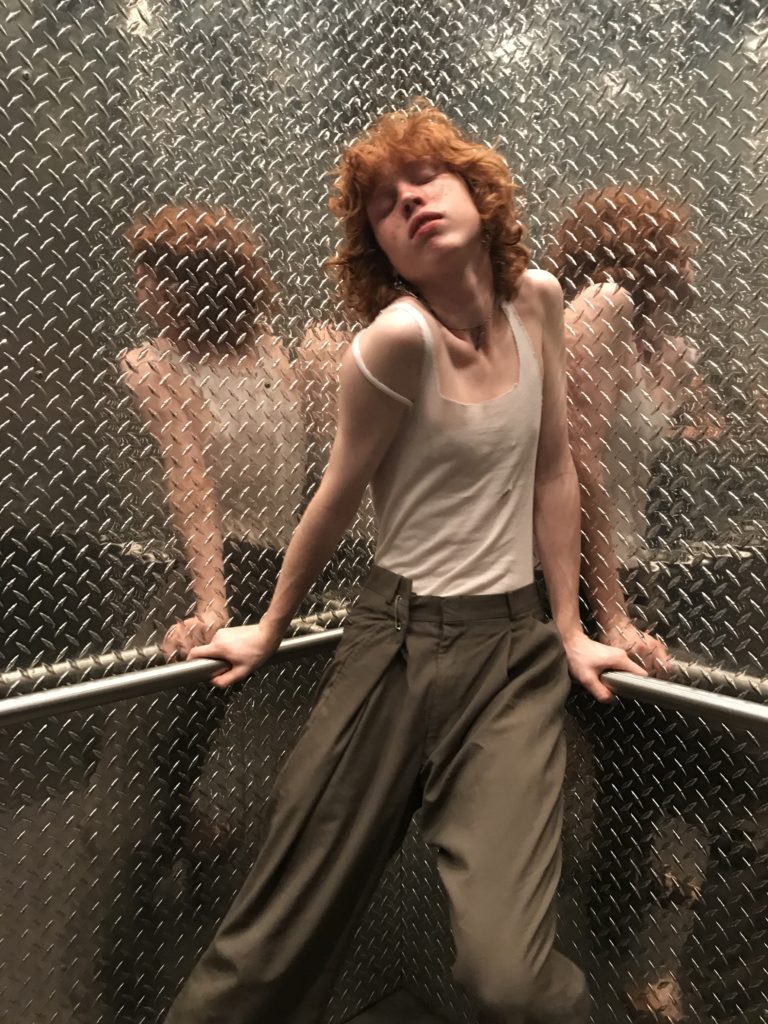
8. We took this photo in my friend’s elevator to her apartment. I deconstructed the wifebeater myself, but I gave it to my friend in exchange for a tote bag that she’d paint her boobs onto (as part of a series).
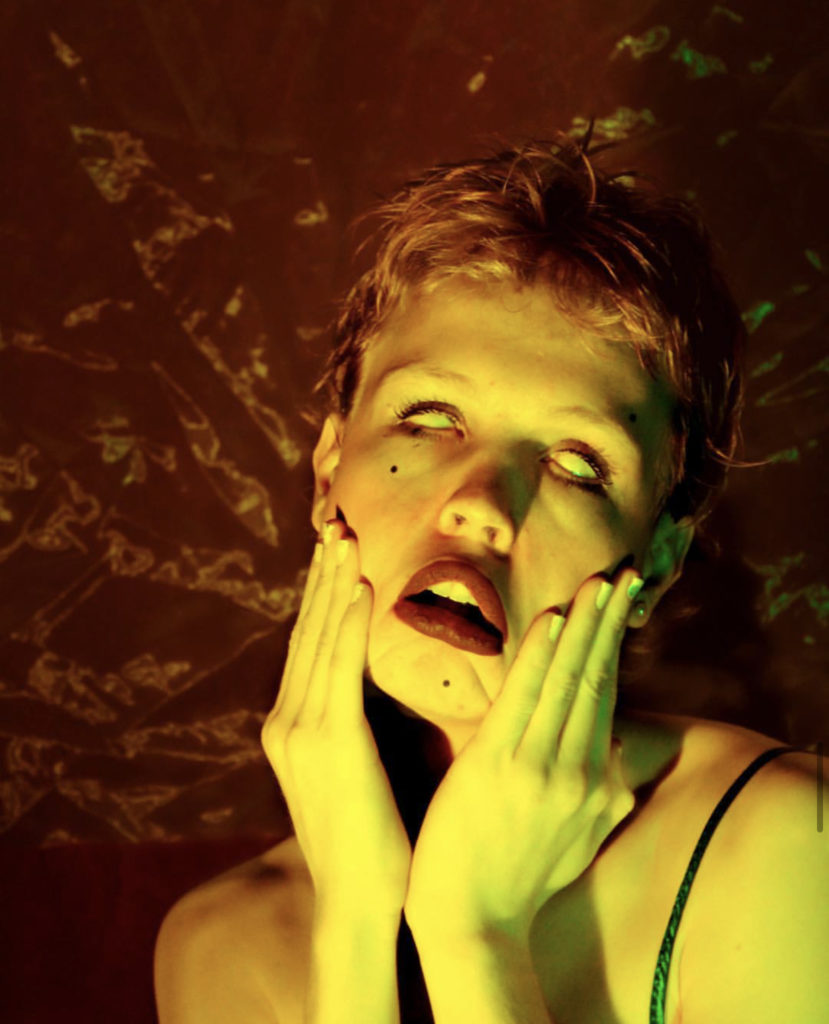
9. Julia Rossel, who is studying visual arts at HSPVA, took this photo for a piece she was working on at the time.
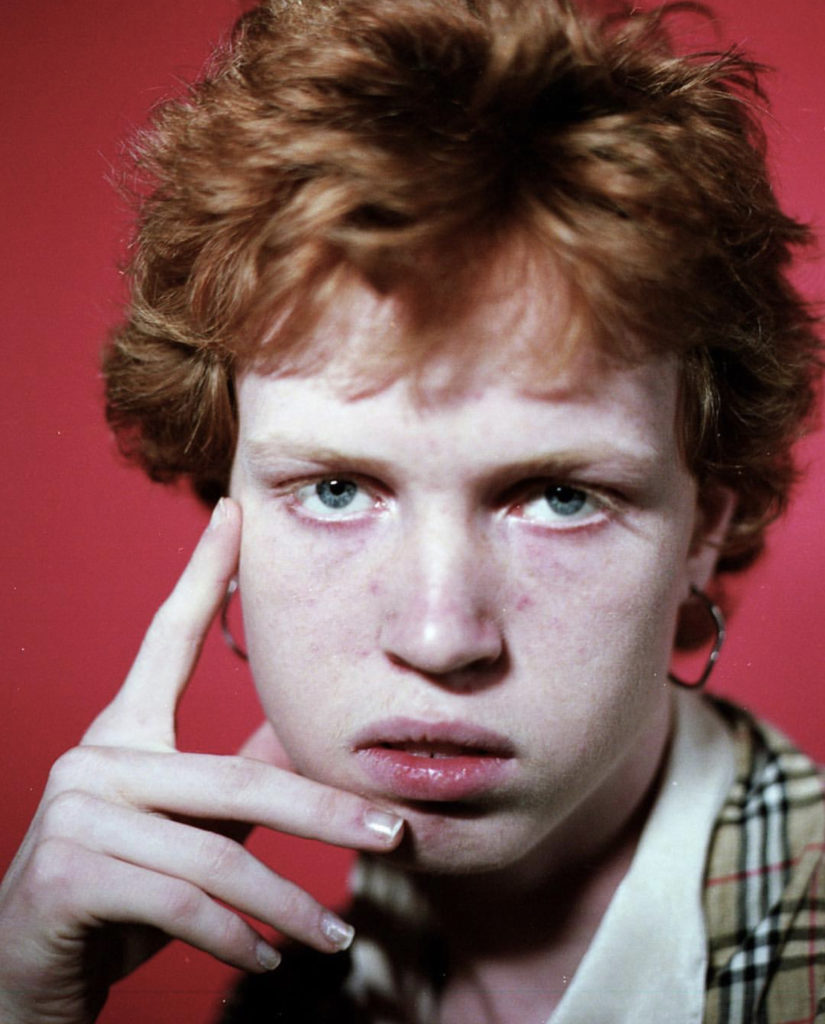
10. My friend Alec Martinez took this portrait.
Connor Wright is a 17-year-old senior at High School for the Performing & Visual Arts in Houston, Texas, where he studies classical double bass. He has been featured in Nicotine Magazine.
Manic Panic or (A Micro-Nonfiction About Annie Clark and How She Helped Me Grow)
I
almost threw up the first time I internalized St. Vincent’s “The Party.”
It
was the first time that music really sounded like poetry to me. I pictured my
own relationship fizzling out like a dying candle, having gone stale due to
inaction or indifference. Much like St. Vincent’s narrator, we would try to
salvage what we had, but alas: The party is over and we both look the fool.
I
grew up on dad’s Van Halen and mom’s Garth Brooks – music you can really tap
your foot to, sure – but upon discovering the music that spoke to me, I was smitten with a queer woman who
stood no taller than 5’7” and could shred on a guitar with more emotion than
that of the Pietà.
Under
the neon sign of the Continental Club in midtown, I sat on the concrete, tacos
in hand, and listened to her myriad catalogue on shuffle. I was working for a
now-defunct music festival on their public relations team. If I was to produce
content to promote Annie Clark – who would be lighting up one of our stages
that year – I had to make sure my angle was perfect. Masseduction had
just dropped.
“Who
is Johnny,” reporters ask her ad nauseum. He first appeared in the title
song of her 2007 debut album Marry Me as a “rock with a heart like a
socket I can plug into at will,” and returned in her self-titled project in the
track “Prince Johnny,” a person of interest to her who was lost in a downward
spiral – as she was, too. “Johnny’s Johnny. Everyone knows a Johnny,” I
remember Clark saying in an interview once.
Beneath
the neon glow on that midtown sidewalk, somewhere between “Slow Disco” and
“Happy Birthday, Johnny,” I remembered the folks in my life that I’ve lost
connection to. The manic panic of Masseduction’s wild
Holzer-when-not-pastel palette fell away, and while Clark could have been
talking about a former lover, a brother, a friend, I thought of my birth
mother.
At
the time, I didn’t know where she was and the longing to know her was deep and
heavy. She had left when I was two, and was in and out of jail thereafter,
farther estranged with every passing year. I hadn’t seen her since I was six?
Eight? I had a wonderful mother who raised me with my dad, but the woman who
birthed me, I couldn’t help but wonderwho she was.
Her
favorite song. Her favorite color. If she was still alive?
As
Clark crooned, “When you get free, Johnny, I hope you find peace,” I wept into
my barbacoa.
I
might never get the chance to answer those questions. Despite her flaws and
transgressions, she was a human life that I valued for reasons I never learned
to articulate. Did I want to know her so that I could infer whether I would
parent my own children the way she did (or didn’t)? If my own tendencies were
inherited?
When
the festival went live that year, St. Vincent was in good company. The lineup
was female-led, in which Clark fell in rank with such powerful femmes as
Solange, Phantogram, and Pussy Riot. My impossible task became trying not to
think about my meds for anxiety, depression, and sleep when she rattled off the
lyrics to “Pills.”
This
was the first time I’d been confronted with the Masseduction-era aesthetic without the lens of a Spotify album
cover. The latex. The thigh-high boots. The blazing red – everywhere – and the
dual-tone blues and oranges of the digital art behind her. It was otherworldly.
It was mid-modern with healthy deviance. The Holzer influence was back during
“Sugarboy,” when Clark promised me that she was a lot like me. Alone like me. The lyrics ticked across the breadth
of the stage above her perfectly slicked hair while she and her guitar wailed,
and wailed.
I
stared up into the white December sky flanking the Houston skyline which
sprouted up from all around us. The chill of the air was only interrupted by
the backpack of the woman ahead of me. Jumping while we all danced, her
backpack jerked me back into reality every time it hit me in the chest. Only
when she turned around for a selfie with her squad did I realize it was Pussy
Riot themselves. Until I recognized their faces, they had blended in with the
other festival attendees; after all, they were without the neon ski caps that I
had seen them don earlier in the day, when they’d performed on our largest
stage with a banner that screamed, GOODNIGHT WHITE PRIDE.
Who
else can say that they danced to “Masseduction” with Nadya Tolokno?
It’s
been several years since that day I met Nadya and saw Clark live for the first
time. And from the first time I heard her music, nearly a decade had passed.
I
was in high school and still toying with the idea of coming out of the closet
to my family when I came across her first album. Real recognizes real, or queer recognizes queer, and I was
pulled in by the sound of the weird girl who could shred. The weird girl from
Texas who sang about the most visceral things and paired it to the most floral
music – at the time, a sound that betrayed her look.
In
the years since her first release, her style evolved to create the commanding
presence she is today. The bite was always there, but it came from a package
that appeared meek, not unlike discovering cayenne in a dish you thought you’d
clocked. The pretty-vicious of Marry Me and Actor and the avant
weight of Strange Mercy could have only led to the larger than life
near-future dystopian head of state we heard in St. Vincent.
The
parallels of Clark’s evolving queer style and my own aren’t lost on me. As I
came into my own, I enjoyed the push of a harder, sleazier aesthetic as she
rebranded and took the reins of her career for herself. I was inspired by the
power dynamic present in her clothing, makeup, and promos – the clean cuts, the
focus looking down on the camera – and hoped I could emulate it as I came into
my own in college, despite never seeing this side of my own self before. But if
she could do it, why couldn’t I?
By
the time Masseduction came out, I was
feigning confidence. This album and the leather, latex, and barbed lines it
brought with it had me realizing I had fallen in line again with what the work
meant to me – sexually confident, uncomfortably nostalgic, and abundantly
queer.
Throughout
Clark’s career, the laureate lyrics remained while the aesthetic advanced, and
I strung along like a dog in tow. Over coffee and over the course of months and
years, I studied from an unknowing poet how to turn a phrase and tell a story,
while losing my mind with how well the lyrics applied to my own experiences – or
how well I could apply them myself.
In
“Year of the Tiger” and “Strange Mercy,” I pictured myself as a child, faced
with the impossible news that my birth mother was going to jail, prison, rehab,
another city. I was never granted the opportunity to talk to my well-meaning –
if not entirely misled and hurt – unknown parent through the double-paned
glass. For me, the glass was replaced with other family members, the jail
swapped out for a holiday gathering. Aunts and uncles were uneasy to discuss
her whereabouts because they, too, were hurt by her life. Forever protected
from the image of her pale, pocked, and exhausted face under harsh
fluorescents, I was left to send messages to her through family who may or may
not have answered her collect calls.
After
the festival that year, I went home to my studio apartment, less than a mile
from the festival site. The 1930s apartment building was a reprieve from the
hustle but was not immune to the noise of it. The train, the sirens, and the
neighbors reminded me I was not alone in this world, and never would be, but my
conscious focus on my brief history, my unrequited exertion to break into the
scene as a young writer, and my apartment heater that didn’t work pulled me
onto the hardwood floor. Perhaps it was the rhythm of the music or the mania
itself, but I played St. Vincent’s catalogue on repeat again, sprawled on the
rug with my dog curled into a donut at my side. It was a futile attempt to
leverage history with the present through lyrics that weren’t written for me
anyway.
Unbeknownst
to her and without consent, I had been using Annie Clark as a muse, assigning
her very personal lyrics to my own very personal – and vastly different – life.
In this time as I flailed about in my unchecked mood swings and longing for a
life that I didn’t know (nor did I know I would want should it be granted to me),
I had failed to register the hopeful uptick of the final bars of “Smoking
Section.”
In
predictable fashion, I put the song on repeat. I walked my dog to Hermann Park
and back. I was in Houston on those streets, in practice, but certainly not in
theory. My mind was everywhere else all at once. Had the drama been real? Or
was I still strung out on my own insecurities, the longing to know anything
about my birth mother, and the exhausting coming out experience and the years
that followed, from being on the brink of poverty to the struggle to find a
job?
As
much as I wanted to fling myself from the roof of my apartment building like
the narrator of “Smoking Section,” I had to believe Clark when she posed, “What
could be better than love? It’s not the end.”
It’s not the end.
It’s not the end.
In
“I Prefer Your Love,” a tender ballad about a mother’s love – the only St.
Vincent song actually about a mother
– I thought of the mother who raised me, and not the one who had left. “All the
good in me’s because of you,” she whimpers, underscored by a haunting
disembodied vocal describing a “little baby on your knees, ‘cause the world has
got you down.” I wrestle with the solace that I must feel in that my birth
mother left so early on. Because of that, I was raised by a mother who fostered
the growth, the writer, and, well, the good, in me. Something the other
couldn’t do.
My
mom took on a lost feral child. Maybe, if St. Vincent wrote a song about that,
I would send it to my mom as an apology for all the years I spent as a lawless
youth, a questioning and quiet teen, and eventually, an unapologetically queer
adult.
Or,
perhaps she did write one and I just haven’t interpreted it that way yet. Give
me time.
As
a hungry 27-year-old in New York City’s East Village, I stepped foot into a
tattoo parlor. After about an hour or so, I left with a lifelong marker on my
right thigh:
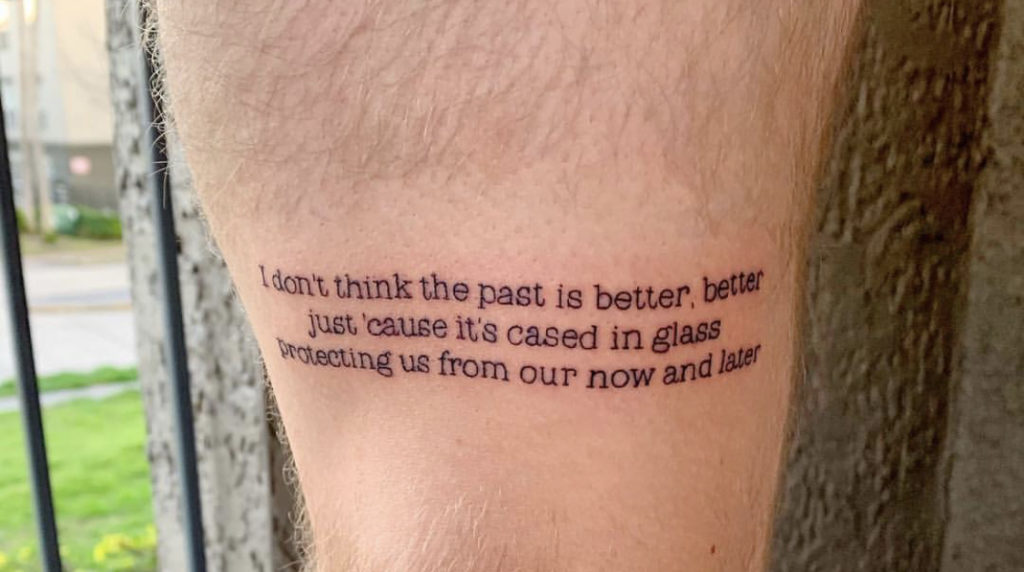
I don’t think the past is better, better Just ‘cause it’s cased in glass Protecting us from our now and later
Annie Clark taught me that nostalgia – good or bad – is skewed. Your memory is not in context, and if you aren’t careful, your past will hinder your future if you spend too much time lost in it in the present. I smiled into the white February sky flanking the Manhattan skyline which sprouted up from all around me. The chill of the air interrupted only by the voice of my roommate, grounding me in the present.
Barrett White is a print journalist, editor, and dog person based in Houston. He attended University of Houston in the esteemed Creative Writing program and has spent close to a decade in queer media, lending his voice to both regional and national outlets alike. He is also a co-host on The 2081 Project, a podcast that looks deeply into the issue of LGBTQ+ equality in America, due to premiere in January 2020. To pay for his coffee and his dog’s pampered lifestyle, he writes full time for communications and government affairs in the realm of healthcare.
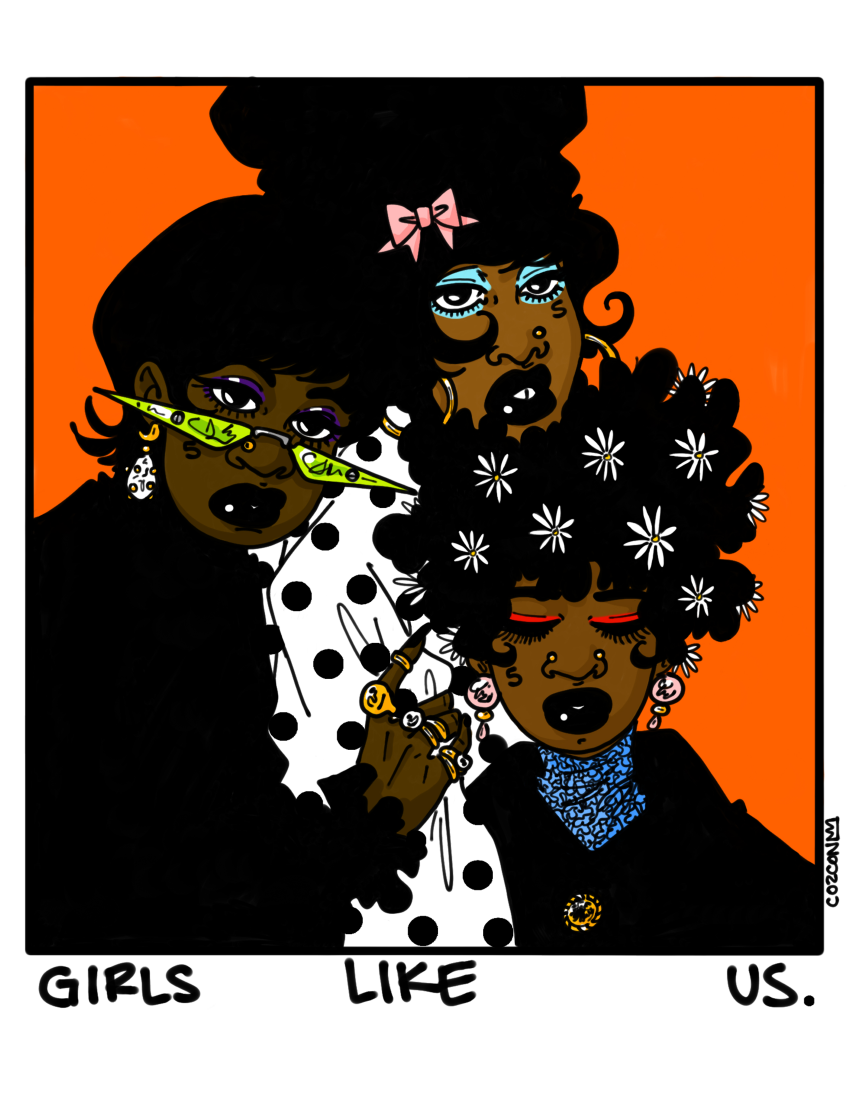
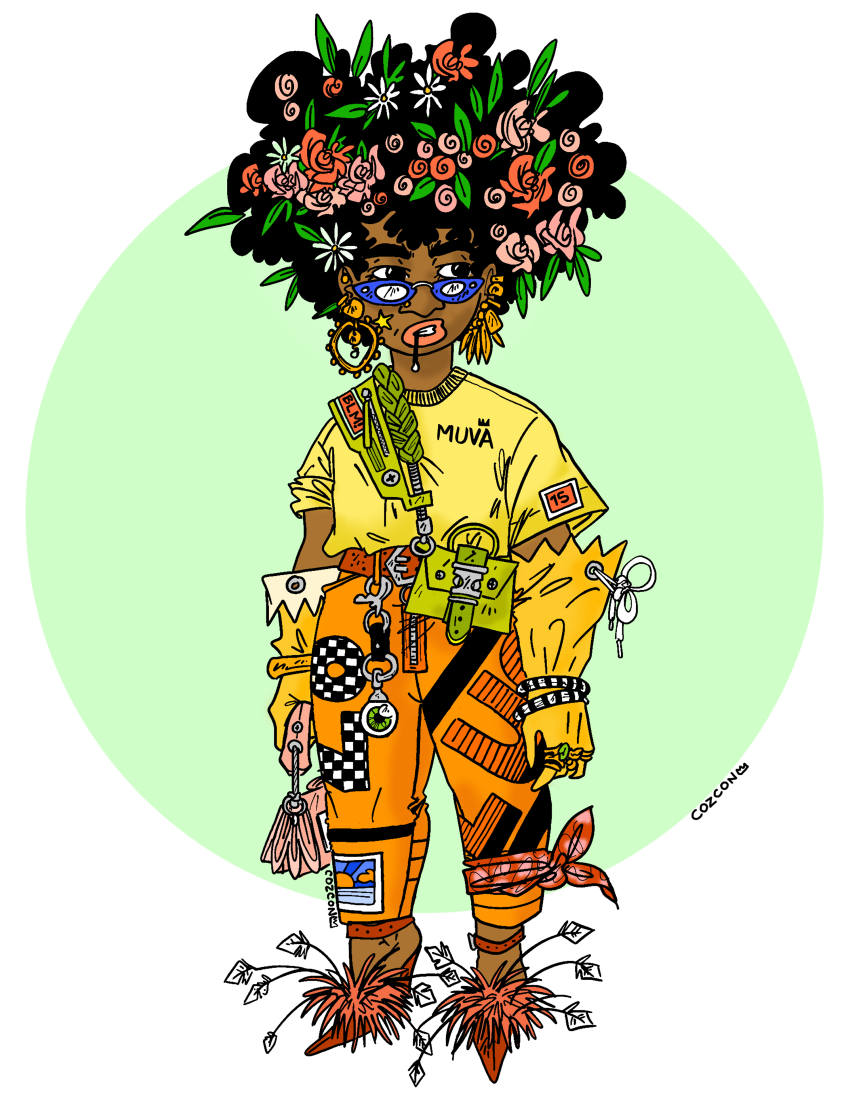
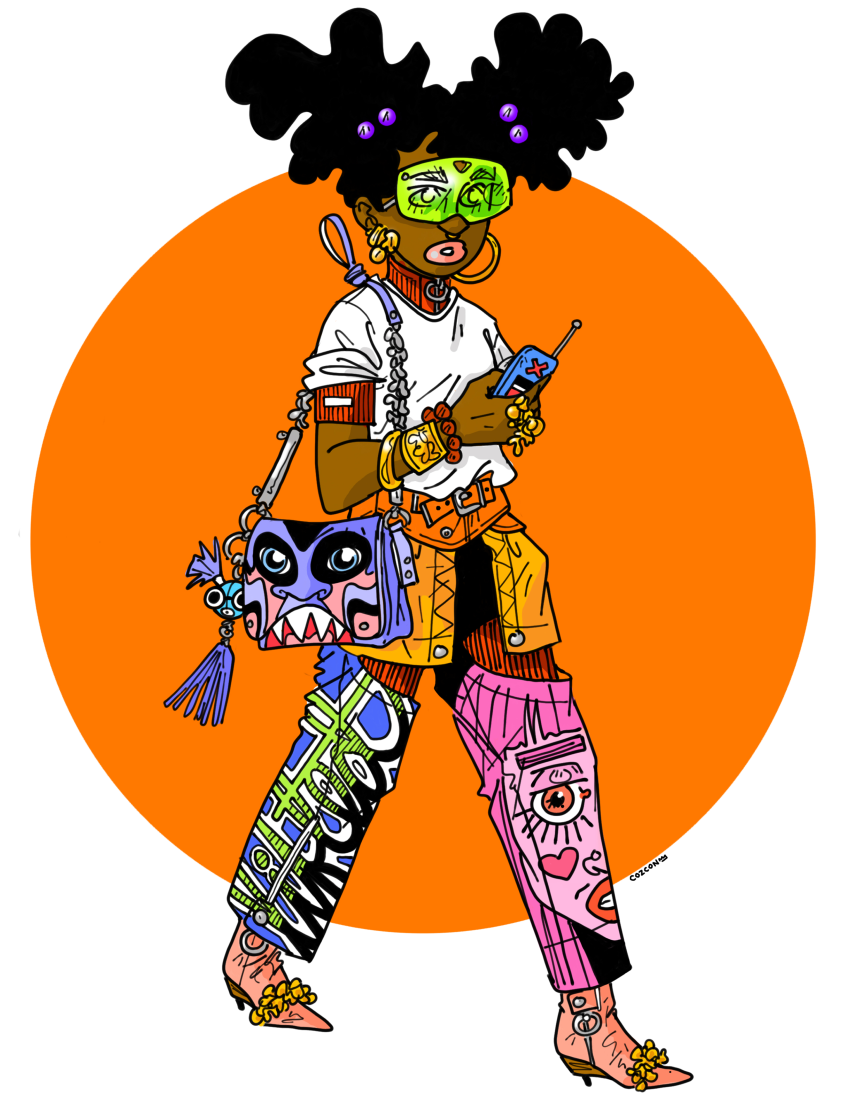
Ultimately, my goal as an artist is to “Robin Hood” pop culture. I want to free up and reclaim the vibrance trapped in exclusionary aspects of culture like high fashion and contemporary art so it’s accessible in a way that helps other queer and brown folks to tell their own stories. I want our narratives to have access to every color in the crayon box.
I was wearing a black silk bone corset off the shoulder department store cocktail dress from 1942 & the river looked clean that day & Canada was so close I felt its wet nose pushing up against my naked clavicle. I burned a 4-inch strand of my brown brown hair until it was rust colored in Julie’s basement that same afternoon, then stained it purple with dye in a metallic silver bottle I bought at Sally’s Beauty at Eastland Mall for $4. You’ll know Hart Plaza by the suspended stone Joe Louis Fist that points toward it like a battering ram & my admission was paid for by cashing in on the bottle deposit of 250 of my parents’ Corona empties. Since the sun was still out I sat under a tree with Michael who came out that August & we shared a lemonade, the kind you get at county fairs that’s filled with lemon halves & costs $6 & only has this much water in it. He was obsessed with Djarum Blacks, they smelled like Christmas set on fire, I had one for the first time. In a near adjacent suburb, my ex-boyfriend, Alex, who came out after college, was sitting at a round table with a white table cloth in a very black suit & too much hair parted on one side, as was the style in 2006. Once it was dark we walked into the concrete earth where the best music was playing & I ate a superman-shaped pill which led to actually dancing, my god, George W. Bush was still president & would be for a while. There was Lauren from Las Vegas who was in my algebra class wearing white & we pushed our bodies together in the softest shimmer of a light & we kissed—it was the first time I kissed a girl which is exactly what everyone dreams will happen at their gay prom. I felt like I was in a movie with glitter on my cheeks & butterflies clipped in my hair & a D.J. playing something swooshy & full of bass. (The last time I saw her was when she moved into her first apartment, a garden unit in the part of town called the Cabbage Patch & it had cement brick walls & we sat on the carpeting & I asked her to turn the radio to 90.9 FM for the nightly jazz program but I can’t even remember her last name anymore.) What I remember is how the crowd looked like one big shadow with thousands of fists rising up. It took an entire day for the yellow white & red lights on Jefferson Avenue to slow down from a smearing beam into a single point & even longer for me to write this down.
Hesiod’s Skirt
Hesiod is credited with writing the Greek creation myth: the chaos of nothing, then suddenly, the earth is a woman.

Hesiod is the first known Western author; this, too, is another kind of birth.

In your world, everyone is named Hesiod & all of them have the dresses they want.

Hesiod grows out their body hair & no one ever stares at their legs.

Hesiod wants to wear sequins & tall wigs, but instead, is wearing your white bedsheet like a toga, stained with sweat.

Hesiod goes to the salon & reinvents the razor. They shave their own head, smash an umbrella through an SUV’s windshield, says No one is fucking around here anymore.

Paparazzi with bulbs exploding in millions of big bangs try to capture it: Hesiod’s transfiguration, Hesiod wild as a swan, Hesiod with all the magnetism of a flat earth, Hesiod’s new beauty flowing off the edge & taking ships with it.

Hesiod lifts up their skirt, grabs a grove of crotch & aims it at all of us & the world is a unified gasp, & the world is renamed a creation myth, the nothing of chaos giving way to a birth.

Hesiod unhinges their jaw & whispers Daddy & their tongue is a red carpet.

Gods parade it, descend to the pink glowing pit of Hesiod’s belly.

Each one is a litany of eaten names & mass graves; every story Hesiod tells, now, overthrows the king gods that came before.

And when Hesiod’s belly is as swollen as a cosmos, they name it theogony, meaning a world that is born but never dies.
HESIOD’S THEOGONY
If a queen bee dies, you must try, immediately,
to lay an egg.
Hesiod tells this story with knees crossed, a glass of neat bourbon between their palms.
At the start of a story with nothing but beginnings,
the sky’s mouth was so wide it had hips.
The river is as quiet as a needle through thread. Your cycling tape recorder blinks with chirps. Hesiod has removed their wig, their eyelashes, has smudged their face with a soft cotton wipe. The sky looks distant and is glowing dark red.
Oranos wanted to be a king forever, so every night
he fucked Gaia between her oceans, & when she
birthed his children, he’d shove them back inside.
Gaia named her favorite son Cronus, meaning time.
He would eventually kill his king father & become
his king father, like a raised hand replicating itself.
Hesiod finishes the drink, lips puckered and wet. You ask, How did Oranos die? Hesiod lights a cigarette before you can protest, then, exhales:
Gaia asked her favorite son to hide inside her womb
with a scythe, & when Oranos arrived there, his
groin was severed through. Cronus took his
dismembered sex, tossing it into the ocean.
The blood & salt foamed in bright strings of pearls,
like a glass of cold milk, until it formed Aphrodite,
which is a way to say all loveliness is born
of male destruction.
As they say this, they undo the sash of their robe, unfurling the tapestry of their body. Sweating, you want to plunge your maleness like a comet into their belly. You remember Zeus with the force of swan wings. Rain beating against glass. The milk-warm ice is being swilled by Hesiod’s backwash. You ask, What became of Oranos? Hesiod, curtained by the moon, has eyes that spark with the risk of Prometheus, stealing fire for the world:
Like a wet nurse, each night, Oranos kills us a little
by pulling his blue black blanket of cosmos across
the sky.
Hesiod’s Storm
Now the street is filled with the split backs of trees. You have a collarbone as sweaty as a downed powerline. Now here comes the lightning. It is the color of bees. You have dreams about it—men in bee costumes come and name you. He. Si. Od. See odd he in the bowl cut fringe on the ice skating rink. Peter Pan comes to mind. At some point, I come into the story, like a morning mist, floating out of a field. I wear an apron filled with walnuts. You & I smash them open with a stone. Meanwhile, the Nutcracker sits by the chimney, waiting for Christmas. As you get home, you throw it into the fire & watch the smoky white beard become a puff. Once the hurricane passes, it will be nothing but nuts for weeks. You’ll mourn every carcass of trunk & every decapitated stump, even when you are the only one left mourning. Everyone else goes back to work, gets married, has strawberry-shaped babies. You go out into the street every day in your black veil & weep. Then, one day, when the growth rings have rotted down to the zero point in history, you go back inside & put on my apron.
Hesiod’s Pythia
When I cosplay as the Oracle of Delphi, I dip my torso in vanilla oil until I’m drunk. I line my eyes with black wings & massage shimmer cream into my shoulders and cheeks. I light my face by a glowing screen & go live on cam.
I take the username Pythia & the chatroom is filled with men, each named guest[number]. They can see me in my bedroom wallpapered with ferns, how I splay across the pink satin bedsheets.
I take the name Pythia after the Oracle who sat above the fissure of Delphi & gave me a tarot reading that predicted my death.
She was the closest thing I’d seen to a goddess in person, souvenir tokens of her face sold at carts for miles around her. She warned me I’d die in a temple of Zeus.
guest1256: are you a boy or a girl
My hands are small enough for chisels. I use them both to shuffle my tarot deck. I divide the cards & smash them back together again. I cut the cards & pull one from the mist of intuition.
pythia: the queen of wands guest9898: take your clothes off
Pythia untucks the towel like a drape, and I am her, my flat nipples rouged by the fumes around me.
pythia: ruled by Andromeda, nude princess chained to a rock in the sea.
In my free hand I turn the wand inward, push it deep inside me.
The flicker of the chatlog scatters light like a disco ball.
guest1256: i want to make you wet, girl
guest0660: i want to smash the back of your throat
I think of Pythia, with her all-seeing eye, the deep blue of her iris staining the skirt of her robes. I think of her robe as an opening sky. I try to read the tasseographs of clouds.
I think of Zeus’s salt & pepper beard, how I want to die lying beneath it, flickers of white like starlight as undying as the sky.
The wand vibrates like a summer lightning storm inside me. My blood is blushed with buzzing.
pythia: fuck me, daddy fortune, take me to your grave & my death will make a temple to you, daddy lightning, daddy misery, let me light your image with the light of my effigy
If I’m going to come then come, Death, come in my spread, reversed, come bring slowly building transformation & rapid ecstasy. Oscillate my insides into a hum. Coruscate my night-blank face with hot white stars.
Stephanie Lane Sutton was born in Detroit. Her short prose can be found in The Offing, Black Warrior Review and The Adroit Journal, as well as in the micro-chapbook Shiny Insect Sex (Bull City Press). Her poetry has appeared in Glass, Tinderbox, and THRUSH Poetry Journal, among others. In 2019, she received her MFA in creative writing from the University of Miami. Previously she lived in Chicago, where she taught performance poetry at Phoenix Military Academy.
We dressed our « unseemly » selves in meadow
lark and lusted. We « blue » rose up in • smoke, cock
sure and • in our cunning, slipping into the hands
of women as they paused • or beneath « in rest, » statues’
subcutaneous automata, erotica
lly concealed under fabric’s stony folds. Chaste
ned by the gods when one moon’s mitosis-made twin drew coy
ly close, cant | ering the « roiled » tides askance, we crept
beneath the earth’s • mantle to weather our win
ter. In our subterranean bomb shelters’ circular
routes, street dogs and hooded children dozed • mid-blizzard;
there, we « as hawks do » inhabited « idly » idle hands
and • made them do our • work. In their lunar work
shops, the « dirty » gods turned pestle-burdened, pound
ing flour, but in shadow they crept « as devil
ry » down to us to stanch our lust • quiets a doubter.
Of Glamour
In the years of our ruin,
                                            the suicide

vest is haute couture;
                                     others wear anklets

connected by a brief chain, so short
it can’t dirty itself

with the street’s dust. On the roof-
tops we sleep

where before we’d prayed; then the radio
repeated its mandate: to build effigies

no longer to the gods, but of them. Pyre-
bound, they burned to bones and rose

to the heavens, released

from the burdens humans had bestowed
on them. Below them, deer bound-

ed through the streets, and boys
made themselves minor gods

in the abandoned workshops, golden flecks
of gold leaf flecking their tongues

                                            where they’d touched
one another. When I die, I want

to watch myself
ascending and know I look good,

says one, gold
a balm on the lips, a dusk

shading the onion-
skin

of his eyelids.
Of Merism
Of your body, it was like a vicuña’s, all legs
and spit. Your hair, what a bunch of eels

writhing just past your field of vision. Ears
abalone rejecting their pearls, and your fingers

each a little green garter snake swimming
in my brackish swamp, or closed to make a fist

in a forest. Your smoker’s scent, the meta-
tarsal musk of an animal gone under-

cover. Your gaze milky as marble, distant
as the square-irised eyes you’d filched

from a goat at a taxidermist’s convention. Your tales
of pomp and swagger, of victory’s hounds

losing your trail, a peacock’s tail: mostly lies.
[“In the old days and unemployed, I’d idle in the alley…”]
In the old days and unemployed, I’d idle in the alley
ways smoking or snipe-hunting unspent butts, uncertain
in even the elegant manner I held my cigarette as if pipe
wrench (spanner) for the motorcycle I imagined I’d own, enrapt
ured then by men bound by their own devices in leather, strap
ping. Unburdened, I imagined, amid crisis days
I knew better than to be enchanted by, even then, but was; I was
a child then: sexless, formless, practically pig – going to
and from the school I’d quit a year before – tailed to see a senior
I thought I loved (but actually wished to be), who daily
emerged in leather jacket from behind a steel door, slamming
so sudden (as pigeons exploded from sidewalk roost) ly
I nearly leapt out of my skin each time, my metaphor a magic
spell I wished to cast upon myself. Then passed by, this – a nod,
no more – girl I’d spoken to scarcely once before.
Photograph by Tonatiuh Ambrosetti
Miriam Bird Greenberg is a poet and occasional essayist with a fieldwork-derived practice. The author of In the Volcano’s Mouth, her work has appeared in Granta, Poetry, and The Baffler, and been recognized with fellowships from the Fine Arts Work Center and the NEA. Some of her poems in this folio also appear in the limited-edition letterpress artist book The Other World (Center for Book Arts, 2019), designed in collaboration with master printer Keith Graham.
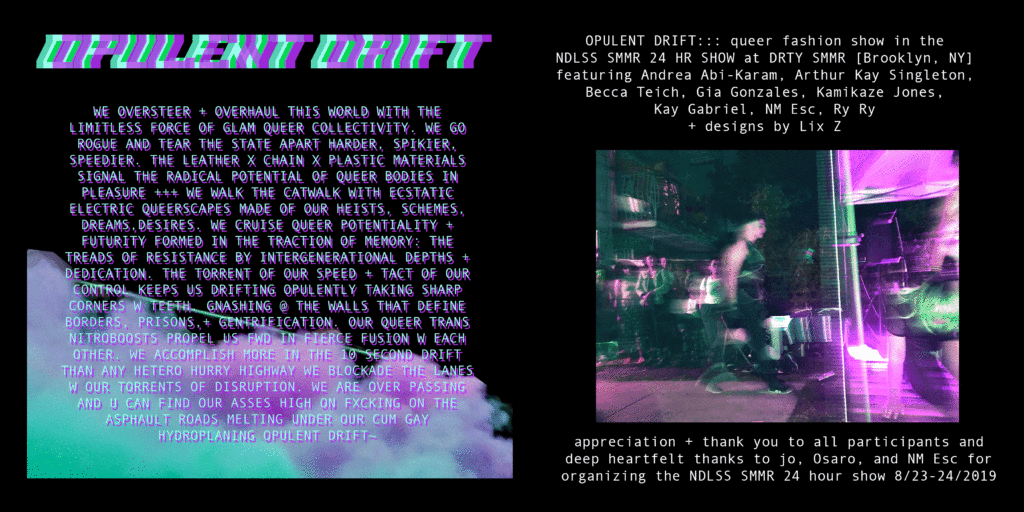
Lix is a multidisciplinary artist and fetishwear designer based in Brooklyn. Their art is enmeshed in opulent queer desire and participation in collective resistance. They also enjoy writing smutty sci fi, poetry in their diary, and performance texts. They perform as a contortionist and nonbinary drag pop star. They work as an educator in textile art and sculpture.
I often imagine my husband dying. It’s morbid, but it’s true. I worry that he’ll get sick or be killed in an accident. And after I’ve turned these obsidian events over and over in my mind, most often, the very next thing I think about is what black dress I’ll wear to his funeral.
**
Sometimes, when I’m naked in my apartment, I feel a light electric sensation on my skin and imagine it’s gender, searching for a foothold on my body. Finding few, it slides to the floor, where I press it beneath my bare feet.
**
When I was younger I was incredibly frugal. I lived in a garage, worked two or three days a week, and made things: plays, dances, poems. I used to think my life then had a sort of bohemian glamour, although now, looking back, I wonder. Certainly, there were many beautiful nights, warehouse dinner parties that stretched for hours, studio visits that turned into dancing that turned into morning. Looking back now, I can see how all of this was happening in a closed circuit. No one was watching us, and so these events ultimately remained closed off from glamour, which requires, above all else, a viewer.
**
During that period, I was working on a show inspired by the life of a seminal gay performance artist, known for filling his plays with casts of fabulous freaks. He’d pluck them from street corners, saunas, the backrooms of dirty Greenwich village bars. He’d put them on stage, where they could stand proudly, where the point was to stare at them.
It was spring and everything felt unstable with life. The director told us to pull together outfits that would turn us into one of these freaks, garish and glowing, mixing and matching signifiers. I wore a ruby crushed velvet maxi dress, an oversize moss-colored cardigan, and huge paste diamond clip-on earrings. My nails were painted slut red. I rolled up a strip of paper for a prop cigarette and gesticulated wildly, my limbs loose and my tongue looser. My voice was free to swing up and down through its full register, and I felt that electric feeling on my skin. I felt invincible. Feeling the hem of the dress float over the tops of my feet, I had an epiphany. All of this, the dress, the nail polish, the earrings, these were tools available to me outside of the white walls of the studio. I gasped.
The next day I let a burly man pierce both my ears with a needle that was much larger than I’d expected it to be.
**
Luxury was never something I allowed myself. I was raised in a plains city, where luxury, if it ever appeared, was so eroded by the constant wind that it was nearly unrecognizable. Extravagance had to be secreted away, disguised in ‘simplicity’ and ‘quality’. What I find most puzzling, in retrospect, is that people still enjoyed luxurious things, but the enjoyment of them was private. Now that I understand better the deep pleasure there is being seen and watched, I think, ‘Why would you even bother?”
**
My lips are stained and I’m on view in the museum, can feel the tourists’ vision catch on my face, stuck for a moment. I watch them puzzle. I stiffen, project power. I want this, though it terrifies me. I do not understand it, yet I want it. I am sure.
**
Recently, I described a dress I love to a friend. It was an expensive dress, the most I’ve ever paid for a piece of clothing. I described how I worship the designer, how I’d seen the collection on the runway, how I’d anxiously awaited its appearance in stores. I told him how I had visited this dress in the store several times, first just looking, eventually trying it on. I told him how, when I first saw it on my body, I audibly gasped, then began to laugh. I told him how I thought about the dress when I was moving through the world, imagined living with it. When I decided to buy it, I felt such a sweet rush, as if I was gambling but at a game I knew I was guaranteed to win.
When it arrived, I put it on, looked in the mirror again, and was met with the same uncontrollable happiness, a lightness I could feel in my joints. Later, talking to him, I described it as ‘body joy’, and said one of my great recent realizations was that this feeling was absolutely worth the money.
I realize now that perhaps I’d spent that much on a suit before, or at least had that much spent on a suit for me by someone else. But the number of dollars spent, in that context, doesn’t produce the same friction.
**
I love black dresses, find myself compelled towards them. Upon entering any thrift store, my first stop is always the dresses, hopefully sorted by color, where I begin pawing through the black garments, looking for something long, something draped, something to mask my shape, make it mutable.
**
Sometimes I rehearse for my own future griefs. I do it more since I’ve been married. I imagine losing my husband, or him losing me, imagine the feeling of living with his absence, our apartment off-balance, our dogs depressed. I imagine our dogs dying, our parents dying, our city disappearing in the white flash of a bomb, both of us made nothing in an instant. There’s a terror, to be sure, but there’s a pleasure on top of that, for it feels for a moment as if I’m living in the heightened register of poetry, which is, perhaps, another way of saying an enlargement of feeling to make room for death to come in.
**
On good mornings getting dressed feels like a sort of spell, one that transforms the empty ground ahead of me into a path I can walk on.
Magic is a language like any other. You start out less than adept, speaking blunt words, summoning blunt objects into being. As you continue, you learn to see and feel the useful edges of these objects, how you might sculpt or place these edges in order to make them more precise, more specific, more powerful. You apply these new knowledges, these new points of leverage, to get farther or to go deeper into the recursive space of the magic, where the articulation of itself opens up new landscapes to explore. You conjure a world and then enter it and learn from it how to pronounce more complicated spells. This continues.
**
For my thirtieth birthday my husband wants to buy me a dress. Of course, I want something black. My husband says that one condition of the gift is that he has to approve of the dress I pick, and that nothing black is going to meet his standards. He wants it to be pretty. I twist against this proclamation, part of me annoyed that it’s preventing me from having access to the austere black Miyake column dress, so wearable, that I saw in one downtown boutique. But another part of me likes the submission implied by this rule, that the dress must be something that pleases him. And because I like pleasing him, this gives me pleasure. I cannot see his obvious strategy, the way he is pushing me towards something I’m trying at all costs not to recognize.
**
We go to my favorite store. I touch everything. I’m looking for the dress that will feel worthy of this gift, which comes at a period in my life when I’m actively grappling, maybe for the first time, with how uncomfortable it makes me to receive love. We walk through floor after floor, searching, but nothing sticks. I try on several dresses, and although I like some of them, none of them give me that rush of immediate joy, a feeling in my body like I’m a field of grass after heavy rain, full of an excess that will rush out at the slightest touch. None of these dresses make me that overfull, so we leave them hanging in the fitting room, waiting for their attendants to return them to their proper place.
I wonder if my mind is working against me. If, denied its usual path of submergence and avoidance of receiving love, it has merely opened up a trapdoor I never knew was there and is now performing a series of actions out of my sight. I look and look for a dress, but nothing feels right. The neck isn’t as high as I’d like, the flowers are too floral, the cut is somehow femme in the wrong way. I oscillate between feeling as if I’m being thorough, methodical, responding to this gift, so clearly thought out, with an equal effort and diligence, and feeling as if I’m refusing the many instances of pleasure available to me, right at my fingertips, hanging off my shoulders, as a way of refusing the sentiment behind the gift. Perhaps I’m reverting to my old habits. I believe myself unworthy and so conspire, wittingly and unwittingly, to make the world confirm that belief.
I still feel uncomfortable spending time thinking about clothes, jewels, perfumes. As I’ve been shopping over the past few days, I’ve walked through mists that seem to cover the radius of a block or two, and inside these clouds I despair at what a shallow person I’ve become. I think about what else I could be focusing on, spending money on, obsessing over. But then I step out of the shadow of a building, cross the street into the sun, and something about the warmth dispels the self-criticism. I’m left with a clear view of the mystery all this seems to orbit around: my body and my mind want to meet in a certain configuration, want to move through the world wearing a specific set of armor. I know that this search for a dress is actually a search for the suit of armor that will best grant me access to the type of daily joy I seek, that I have inklings of being possible. And I know that when I see my armor, in a window display or hanging on a rack, flanked by other sets of armor perfect for other people, inside my armor will be a form that grants me access to a new set of rooms and halls within my life. I can hear the party happening inside them already. I don’t feel late, or rushed. I just feel ready.
**
There’s a small voice in my head that speaks up whenever I whisper to myself, lips unmoving, the word genderqueer. It says, from far away, “Haven’t you gotten enough already?”
But what could be enough? At the heart of that word there’s a blankness that gathers its own momentum, feeding back on itself. Rules fall away, structures you think govern you are revealed to be two-dimensional sets, left out to rot in the warm California air. And beyond them? Blue. Space and stillness. Flowers blooming. And further still, a bleaching. Bones in the desert. The desert slowly covering them with the tenderness of a father putting his first child to bed.
**
There is a click. I get too stoned on accident and on the train ride to Washington my husband texts to ask if he can tell his best friend that I’m identifying as trans*. Actually, he asks if he can tell her that I am trans*, and in the train tunnel, which feels overlaid with time, I blanch internally. It spooks me. I spook myself, maybe. To hear the process I’ve been going through named so casually and so explicitly is like a jolt, like a knot, long worked at, suddenly giving way and dissolving into a sag of string.
I spend the journey alternating between experiencing my past sliding off me, checking twitter to read the latest on the newest US bombings of Syria, and wishing I’d bought Cheetos when I had the chance. I feel not allowed to be trans*, or to use that term, or to ask other people to go through the work of caring about it. But I think really what I feel unable to do is ask them to go through the work of caring about me.
I think of the power I feel, as the train rockets forward into the future. I text back that I can feel how I’m travelling forward into summer, the couple hundred miles of difference between New York and D.C. putting me in a different climate. I feel like I’m being fast-forwarded.
I’m not a man, and I don’t want to be a woman, exactly. I don’t feel dysphoria in my body, but my body is working towards something, and trans* is a label that suddenly makes sense of what’s been happening just beneath my awareness.
All the bits of foreshadowing of this moment step to the front of the stage in my mind where I sometimes go to try to perceive myself, and the lineup doesn’t just include events from the past year. It includes almost-forgotten moments from my childhood, moments when the prevailing social attitudes taught me that what felt natural was not allowed. I sit facing that stage in my mind. The light is dim but growing brighter, and as it comes up I attempt to see all of these moments as both individual and part of a whole.
I feel like crying, but I am too stoned to understand what kind of crying to do, so I just sit, feeling the almost imperceptible rumble of distance disappearing beneath and behind me.
**
I’m not different, but the things that rest upon me are. The things I feel passing over the landscape of my body as I walk through the world have changed. They’re more shapeless, draped. They’re accompanied by low flute tones. They like moonlight, and every kind of flower, and the movement of fabric in wind.
**
I wear black dresses whenever I can. Now I understand how mourning is a process shot through with celebration. Someone or something is gone. They have taken on a new form, one unencumbered by the old burdens of the body. Weeping marks this change. We see ourselves crying before we move forward into the chain of days. At the end of this chain a transformation waits for all of us.
How lovely we look as we walk.
Photograph by Brendan Callahan
Iris McCloughan is a transfemme writer and artist living and working in Brooklyn. They were the winner of the 2018 Stanley Kunitz Memorial Prize from the American Poetry Review. They are the author of the chapbook No Harbor (2014, L + S Press) and their poems have appeared in American Poetry Review, juked, Gertrude, Queen Mob’s Teahouse, and decomP, among others. Learn more at irismccloughan.com.
At first, a mere whisper.
Not a secret murmur through
clumsy cupped hands, but a
sigh of silk on silk slithering
over bare skin. Covering hairpin
hips, the wave of curves, small
nipples caught behind armored
chiffon. The opposite of
shedding. She casts
her natural body aside binding
new skin to someone else’s
bones. Duct-tape wound tight
wrapped like the dressing
of a wound.
Leather Speaks: II
As leather speaks, it’s
reflective lips quiver open
with tiny silver
teeth. Like the locked
fingers of clasped hands. But
now split and spread
apart. Inside a gash. A pale
skin smile. Slowly, slowly
a coy whisper slips out
of its metallic mouth, low
and soft. Does it tickle
your ear? Come
closer, lover. Lean in
when leather speaks,
beckons you
to listen.
Leather Speaks: III
Caught in a silent
picture, dripping in
leather’s sweet skin. This
layer an opaque veil. A
negative transparency. Velvet
curtain. Do you want
to know what goes on
underneath? To take
her apart, see what makes
her: warm light and
wavelengths, filled with
your desire. And when you
finally touch, finally feel
her on film stock, you are
stopped by a sudden
sound. The fantasy broken,
fucked by a hard gasp, a
crying out. Not from
her mouth but second skin,
now a shroud made of shadow
the leather stops your
touch, commands instead
 Let her speak.
B. Woods is a creative nonfiction essayist and poet living in Huntington, WV. Her work has most recently appeared in Bacopa Literary Review and Storm Cellar Quarterly.
The queer community continues to be actively erased and forgotten, leaving few traces of our existence in comparison to the cis heteronormative history readily available. I picked up a film camera years ago in order to reinscribe our narratives into the history of film photography. These images are traces of friendships, encounters, and collaborations that bear witness to the fabulous resilience of our community. I’d like to thank every model for trusting me with their portraits, and for constantly inspiring me with their transformative creativity.
Antonius-Tin Bui (they/them) is a polydiscplinary artist invested in empowering queer communities through photography, hand-cut paper, performance, and community organizing. They proudly identity as a queer, gender-nonbinary, Vietnamese-American artist from Planet Jupiter.
CLOSET Something like crying but your eyes are a lock. Lazy buttons. But whether green is dirtier than choke. Or a green green dress with no sashes to whisper all a thing of raise and clock and supple and pardon warring to escape or give. If stomach impressing a band of stretch or hips to denim. A belt is a line of finely. And surely the implications of leather. How the stiff stiff yellow plus blue when out of. What of yield and yearning and boy stored comfort.
CLOSET Pressure in a body and the sense of the senses sensing. Or a thing without textile without tactile or closing or latching if always open like a gap in the wall.
CLOSET Waiting to reap in patchless denim. The time is now and the red scarf hanged in the doorframe. Death in bacon and a blue eyed mister mister. The one way out is a blue eyed boy silent and silencing. What a walk in. Troubles the time and the people feeding a feel of green. Suggesting something is a him by walking dangle. How doubt greens into. A surface sure found finding her. Oh what a wardrobe pleasure. Oh the boy is a seether. If pleasure then baked into cocksure. What is the belt like? It is not anything like pig it is not hanging from a hook it is not a green thing not a blue thing it is more hurt and has a little hoop.
CLOSET What a stench in the sleeves and the trenches of trenchcoat opening to the absence of an absence. This is most reasonable. The way a leg letting. If curves with no cure then the answer is simple. Like addressing shirk into dirty and sweatstains and silence and pursed and track marks. Deodorant. Spritz outside the uniron. It is harder. This is a mess.
CLOSET Suppose there is an I. Suppose the I is more places that are not shelves. If there is nicely it is a full closet. And sometimes an untorn. Nicely shirt nicely closet. Blouse blouse blouse blouse blouse blouse blouse. Lousy loose low shoes without loafers. If there are boots they are wide and trying. Objection to an ease without splendor.
CLOSET How red the impression of an absence.
CLOSET All slackly an attractive. A fluorescent a floral enmeshed and a chance to be hidden. How made in lace or handsome. How pretty. At any rate this room shows the whole of using. It is very likely roomy.
Elana Lev Friedland is a writer and performance artist. Their work has appeared in Cartridge Lit, Cosmonauts Avenue, Salt Hill, The Rumpus, Black Warrior Review, and elsewhere. Find them online at www.elanalevfriedland.com.

 BACK TO ISSUE