Shireen Hamza translating Ali Abdeddine

Revelations of Withdrawal – من وحي العزلةA Return to Rain

A thick fog obscured the view, and
changed the rhythm of life. A Trojan poet
renounced his share of loss, the dregs of
failure remaining in his heart. There can
be no despair when it rains.
And I am as well as can be expected, with
merely a shudder in the muscle of the
imagination, insignificant cracks west of
my left shoulder.
Language is safe from all harm.
It will traverse the distance of this
damaged moment.
And this time, there will be no tale of loss,
even as the echo dismounted, ancient,
hoarse, rotting, and fumed at me.
I will forget the fog, smoke tobacco and
memories rolled in oblivion,
I will fill an urn with my hoarse voice, give
it to the wind to spite the clouds that may
not rain. I will fold up my bones, tuck
them into seats for the everlasting wait. 
I will remove the hat of my longing, put it
aside, and recite the psalm of autumn,
“As we created the first failure, so we will
retrieve it.”

From “Letters to a woman unseen”

عود على مطر

ضباب كثيف حجب الرؤية و غير إيقاع
الحياة. الشاعر الطروادي تنازل عن حصته
من الخسارة لما تبقى من الخيبة في إناء
،القلب، لا يأس مع المطر… أنا على ما يرام
مجرد ارتجاج في عضلة المخيلة، شروخ
طفيفة غرب ذراعي اليسرى، اللغة سالمة
من أي أذى، ستواصل هذا المدى في ساعة
الحاضر المعطوبة…  سوف لن تكون هناك
حكاية للعدم هذه المرة، حتى الصدى ترجل
عن حصانه، شاخ، بح صوته، تهرأ مزاجه
واستشاط غيضا مني، سأضرب صفحا عن
الضباب، سأدخن التبغ والذكريات لفائف
للنسيان، سأملأ للريح جرارا من صوتنا
،المبحوح نكاية بالسحابة التي قد لا تمطر
سأطوي عظامي في مقاعد للانتظار
الأزلي، وأضع قبعة الحنين جانبا، ثم أتلو
صلوات الخريف، كما بدأنا أول خيبة نعيدها
“من “رسائل إلى سيدة لا ترى

Waiting for the Poem

The night announced its mourning for the
pain sitting cross-legged on the hearts of
the forgotten. Perhaps I will only concern
my imagination with silence and the
passing grief of the soul. Perhaps I will
wrap myself in blue and die, hugging the
Poem’s body. Nothing can justify joy while
the heart leans on emptiness and
confusion. I frantically seek out those
turns in the road which are unstuck
from the mire of things. I approach the
page, wielding my pen. I announce my
imaginary war with the demeanor of a
philosopher, who has corrupted
everything. The rhythm of sentences does
not concern me; I care only to retrieve the
freedom of things. My complete freedom
from falseness and delusion. 
There is nothing quite like death on the
body of the poem. There is nothing like
receding from the falseness of
attachment. I belong to nothing but the
Poem. I carry the guitar of orphanhood,
that I may embroider its clothing. How
sweet are the drops of love pouring from
the face of the Poem, as it kisses me! It is
enough to wail over the wound I cradle.
I caught a glimpse of Rimbaud, hiding in
the African brush, surrendering to
temptations, leaving his Poem to sail
eternally. I saw Darwish’s beloved,
hanging the oppressors with cherries of
defeat, bemoaning the afflictions of her
people and her life. I saw the Poem,
freeing itself from Plato’s curse.
I discovered that life without the Poem is
lusterless shadow, or, at least, it is for me.
It behooves me to put everything in order,
as I wait for it. I transgress borders and burn
doors. I clean my room and the
bedsheets of longing. I polish the window
glass. I clear the darkness from Narcissus’
vision. I air out my jacket from the stench
of prose. I pour the wine, filling two
glasses. I banish the clamorous fly,
submerge the honeybee of dreams in the
lake of my Soul. I recall the dreams of
Shahrayar, and banish Shahrazad. I ally
myself with Imagination. And I allow for
the spilling of blood of all things. I
embrace death with a surging gentleness.
I dig a grave. I betray my lover and grant
the Poem my pillow. I idolize thought and
sensation. I free myself from the gargling
of meaningless chatter and the banalities
around my neck. I bury my inspiration in
the dirt of my heart, and plant dream-
trees around it. I sanctify the tree and the
statue. I hang the feral cats of politics,
wrench the wheat of the poor from their
ribs. I liberate the caged childhood. I fill
the dungeons with ravens and the
enemies of Freedom. These are dynasties
deserving of disgust.
Waiting for the poem, I long to be myself
and no one else. I wish to loosen the binds
of hidden desires, to free the Buraq of
madness from Myth’s prisons. Perhaps I
have become who I wish myself to be,
waiting for the Poem.

 في انتظار القصيدة

  يعلن الليل الحداد من أجل الوجع الذي
يتربع على قلوب المنسيين. يمكن أن أفرد
مخيلتي للصمت وللكآبة العابرة للروح. يمكن
أن أتلحف الأزرق وأموت عانقا جسد
القصيدة. لاشيء يبرر الفرح عندما يتعمد
القلب بالخواء والتيه. أبحث جاهدا عن
منعطفات بريئة من وحل الأشياء. أقترب من
الورقة، شاهرا قلمي. أعلن حربي الوهمية
بمزاج فيلسوف أتلف كل شيء. لا يهمني إيقاع
.الجمل ما يهمني استعادة براءة الأشياء
.براءتي من الزيف والوهم

،لاشيء يضاهي الموت على جسد القصيدة
،ولاشيء يماثل الانحلال من زيف الارتباطات
لا أنتمي إلا للقصيدة. أحمل قيثارة اليتم كي
أطرز ثوبها. ما أحلى قطرات العشق التي
تندلق من ثغر القصيدة حين تقبلني. يكفي أن
.أنتحب على الجرح الذي أحضنه

،لمحت رامبو يختفي في الأدغال الإفريقية
مستسلما للغوايات، تاركا قصيدته تواصل
إبحارها الأزلي. رأيت حبيبة درويش تشنق
الطغاة بكرز الهزيمة. تنتحب جرحها القومي
والإنساني. رأيت القصيدة تتخلص من لعنتها
.الأفلاطونية
،اكتشفت أن الحياة دونها، مجرد ظلال باهتة
على الأقل حياتي أنا. يتعين علي أن أرتب كل
شيء في انتظارها. أخترق الحدود وأحرق
الأبواب. أنظف غرفتي وشراشف الحنين
ألمع زجاج النافذة. أفرك الغبش عن عيون
.النرجس. أتخلص من رائحة النثر في معطفي
أصب نبيذا أصيلا وأملأ كأسين. أطرد ذباب
الصخب.  وأغمس نحلة الأحلام في بحيرة
الروح. أستعيد أحلام شهريار. وأطرد
.شهرزاد. أنصر المخيلة. أستبيح دم الأشياء
.أحضن الموت بحنان جارف. أحفر قبرا
أخون حبيبتي وأمنح القصيدة وسادتي. أوثن
الفكر والحواس. أتحرر من غرغرة الثرثرة
والتفاهات في حلقي. أدفن ملهمتي في تربة
قلبي. أغرس حولها أشجار الأحلام. أقدس
،الشجرة والتمثال. أشنق قطط السياسة
وأستخرج من أحشائها حنطة الفقراء. أحرر
الطفولة السجينة. وأملأ الزنازين بالغربان
.وأعداء الحرية. إنهم سلالات تستحق الغثيان
في انتظار القصيدة أحرص على أن أكون أنا
لا أحد غيري. أحب أن أطلق الغرائز الكامنة
من عقالها، وأحرر براق الجنون من قيود
الأسطورة. ربما صرت أنا الذي أريد أن
.أكونه في إنتظار القصيدة

The Forgotten Man’s Room

A person is forgotten, disappeared,
leaving behind him a pile of things which
remained to announce his death. A grey
sweater hung on the wall, an overturned
cup on scattered books, a layer of dust
atop well-read stories, a painful image, an
old notebook of memories, a broken
pencil, an eraser nibbled by longing.
This is how he found this room when he
returned, not knowing where he was. He
could have asked himself, but he didn’t;
the explanation of this myth seemed ever
more trivial than the myth itself. The room
itself awoke feelings aroused by the things
the dead leave behind. Maybe he is dead
somewhere, but here he is now, proudly
celebrating the experience. A little
sadness, and a lot of disdain for these things,
enjoying more longevity than their
owner. But feelings like these arrive and
depart suddenly.
The scent of books, wood, moisture,
coffee, bodies, perfume, dreams,
loneliness, being orphaned, being far from
home, panic, pain and forgetting…
The pallor of the cold chair, the dim light,
the toothbrush on the ground, the broken
glass of water, the dirty window, the wall
clock frozen at four, stopping time as it
waited for him. He sank into a chair,
thanked his things which remembered him
and waited for him in his absence, freed
his senses, submitting to the inner
monologue:
Those who hurry, fuel the machine of
death. But those who tarry can become
sand disrupting the speeding machinery of
time. Remember that popular proverb:
“you rush, you die.”
He became intoxicated with the thought
of oblivion.
Water leaks from holes in the imagination;
he drowned in his thoughts… He packaged
oranges and fish for the hungry, spent the
night conversing with the marginalized
and forgotten on the edges of the city,
banished the shrieking raven to the
streets, the bars and the tops of trees, he
called out, screamed, cursed, but no one
hears the forgotten. He will never again
appear the way he was. He has become
nothing more than a wounded letter,
wrapped in bandages.

غرفة المنسي

ويختفي، تاركا وراءه
،ركام أشيائه التي قد تعلن الموت بعده
معطف رمادي معلق على الجدار، كوب
مقلوب فوق الكتب المبعثرة، قصاصات
ملاحظات علاها غبار، صورة الأم، دفتر
،الذكريات القديم، قلم الرصاص المكسور
ممحاة قضم منها فأر الحنين.. هكذا وجد
الغرفة بعد عودته، لا يدري أين كان؟
بإمكانه أن يسأل نفسه، لكنه لم يفعل لأن
شرح هذه الأسطورة يبدو أتفه منها. وحدها
الغرفة كانت توقظ تلك المشاعر المماثلة
للتي توقظها مخلفات الموتى، ربما كان
ميتا في مكان ما، وها هو الآن يحتفي بتلك
التجربة بفخر، قليلا من الحزن ومزيدا من
الكراهية للأشياء التي تتمتع بديمومة
أكثر من صاحبها، لكنها أحاسيس تأتي
وتذهب فجأة . رائحة الكتب والخشب
والرطوبة والبن والجسد والعطور والأحلام
والوحدة واليتم والغربة والضجر والألم
والنسيان.. شحوب الكرسي البارد، الضوء
الخافت، فرشاة الأسنان على الأرض، كأس
الماء المكسور، زجاج النافذة الداكن، ساعة
الحائط التي تجمد عقربيها عند الساعة
الرابعة، توقف الزمن في انتظاره، استرخى
على الكرسي، شكر أشياءه التي
تذكرته وانتظرته في غيابه، حرر حواسه
مستسلما للمونولوج الداخلي. المستعجلون
هم وقود آلة الموت، أما المتمهلون فبوسعهم
ان يكونوا رملا يحول دون حركة آلة
الزمن السريعة، تذكر المثل العامي: “اللي
زربوا ماتوا “. وانتشى بفكرة النسيان التي
.يقبع داخلها

تتسرب المياه من ثقب المخيلة، يغرق في
الأفكار.. يعبئ صناديق البرتقال والسمك
للفقراء الجائعين، يسامر الغرباء والمهمشين
المنسيين في ضواحي المدينة ، يطرد
الغربان الناعقة في الشوارع والحانات
وفوق الأشجار، ينادي، يصرخ، يلعن، لا
،أحد يسمع المنسي، لم يعد يرى كما كان
صار مجرد رسالة جريحة تلفها ضمادات

Translator’s Note


Shireen Hamza hails from Woodridge, a suburb of Chicago. She studied at an Islamic seminary in Karachi, where she memorized the Quran, and then at Rutgers, the State University of New Jersey, where she studied literature and cognitive science. She is currently a doctoral student in Harvard University’s History of Science Department, studying the history of medicine in the Islamic world. She has been involved in organizing and performing at slam poetry venues with the Verbal Mayhem Poetry Collective, a space founded by Black and Latinx artists in the Rutgers and New Brunswick communities.

Ali Abdeddine was born in the south of Morocco, in the small town of Anguizem, in the region of Essaouira, where he memorized the Quran. For the past two years, he has taught Arabic language at the American Arabic Language Institute in Meknes. He has a master’s degree in Arabic literature from Moulayy Ismail University in Meknes, where he studied under the renowned literary critic, Benaissi Buhamala (بنعيسي بوحمالة). Ali is currently pursuing his doctoral degree in Amazigh literature at the Faculté des lettres et des sciences humaines Ain Chock, in Casa Blanca. His doctoral research focuses on the work of Muhammad Mustawi (محمد مستاوي).

Samuel Martin translating Jean-Christophe Bailly

Amid the Mounting Ugliness

Amid the mounting ugliness
            the resistance of flowers is strange, is amazing
            “say it with”
            say it,
            simply: I see them: such
            and in their numbers
along the lines the Cherubinic Pilgrim set down
for all time (immer) in his notebook:
            Die Rose ist ohne warum
            “The rose is without a why”
            (we don’t know it, we forget it)
no one’s rose: Niemandsrose: yes
            but iris and peony just as well
and these branches decked in white flowers
forming a luminous explosion in spring
: burning bush, Spiraea

two characteristics are especially striking:
            1. the ephemeral nature of these lives
            2. their distance from ours
            (they are our world, we live with them
            but they know us not)

I’ll develop 1, then 2

1. on the ephemeral nature of plant occurrences
and flowerings first of all
rhetorical flowering is known and frequent
but over flowers is always cast the shadow of human time
floral itself by comparison, they say
along with the refrain “a rose, she lived as roses do…” (which is ugly)
yet it’s not in these terms that one should judge the brightness
envisage what appears,
what can be seen
 – they are series of states in constant flux
leaning evolutions, bearings
curved wonders, and “wonders” is already going too far
if what takes place – what is – behaves that way,
in other words naturally, in other words without intention
: we pass within, in this world without intention that bears us
in this world that bears us and is not turned toward us
with the morning dew, for instance, and each one is perfect
even those already wilted
(the most spectacular wilt being that of the iris:
in place of fading eyelashes the color
of veritable rotting flanks, and sticky)
how much time, how much time, how long do they last,
flowers, how long do you last?
a few days at most, a rising of sap in glory
then the end, quite sudden, and this verb: they wither
none of the tiny units of meaning released this way says anything
a few queens or an entire people
like Mechlin lace, and that’s all: it was thus
but there is – and our knowledge of this is vague – there is
a heritage for these passers-by, lineages, dynastic forms
they come back
and so it is that these forms swallowed up by time become
the mark of time itself
time, in other words the seasons
as they happen, as they come
late, now and then, one announcing another or carrying its train
and flowers hardly stand to the side of this endless succession
for they are themselves the journey,
always journeying, carried away, whisked away,
whisked away without cause in their pure finery of effects
with which, as we know, a scent can mingle, a fragrance faint or strong
and delicious depending on the case
that is to say, the most heady and volatile thing of all
: a signature, but borne in the air and soon dissolved
hence a quiver of time and the very emission of transience,
of the unenduring
“dissipates,” that’s what they say, and we find ourselves in the shrouded night
and in the light of day, and that’s no doubt why
it’s after dusk (when night falls on day, darkens it, augments the visible
with a veil it was waiting for and welcomes, but so calmly,
like that which has been so long awaited)
after dusk that it trembles most, and rises, gently,
it’s this word, “gently,” that perhaps does not belong,
for it’s more than gentle, sunk into itself and drifting away
like the “vanishing sound” of Chinese music, remaining suspended
in the air around things, yes, the paradox of continuous vanishing
such would be the sendoff, the flight, the falling back.

2. What comes, where they are, are they?
in the forests, meadows, gardens, a rumor of echoes spread
in other words a noiseless mist, each flower come down a notch
in the silence: the without-a-why returns to us and is itself
astonished: “the ever-receding world of flowers,” wrote
Novalis, and with him we could go down the length of the catalog
each name withdrawing its name in an endless fall out of meaning
there where they came in the first place, there where we picked them
the hardest thing being to think of this as a cascade
in which we are immersed
which is not, cannot be, the way in which they come, leave
and return, it is strangeness to us, entirely,
without eyes, outside the law of blood, floating, without thickness,
fractal surfaces unfolded, opening out in space
like so many points or nodes
they go their way, they’re outward bound, always
in clusters or by themselves, we see them,
they have no words, they carry their names
outside the field of words
say it with flowers they used to say and so it’s a language
although silent and it’s as such that at the end they accompany us
in sprays and swaths over the dead I remember
an ocean of garlands and wreaths flooding
the crematorium steps
although captive there like the creatures in the zoo
and like them condemned to visibility
they continue to rebel against this capture
precisely as if, open, they were closing:
and the dead go their way flanked by the gentle fury of this silence.

Dans l’enlaidissement aggravé

Dans l’enlaidissement aggravé
            la résistance des fleurs est étrange, est énorme
            « dîtes-le avec »
            dîtes-le,
            simplement : je les vois : telles
            et dans leurs quantités
selon le mode que le pèlerin chérubinique, pour toujours (immer)
a consigné dans son cahier :
            Die Rose ist ohne warum
            « La rose est sans pourquoi »
            (on ne le sait pas, on l’oublie)
rose de personne : Niemandsrose : oui
            mais aussi bien iris ou pivoine
et ces branches couvertes de fleurs blanches
formant une explosion lumineuse au printemps
: le buisson ardent, les spirées

deux caractéristiques sont particulièrement frappantes :
            1. le caractère éphémère de ces vies
            2. leur éloignement par rapport à la nôtre
            (elles sont notre monde, nous habitons avec elles
            mais elles ne nous connaissent pas)

Je développerai 1, puis 2

1. sur le caractère éphémère des occurrences végétales
et premièrement des floraisons
la floraison rhétorique est avérée et nombreuse
mais toujours porte sur les fleurs l’ombre de la durée humaine
florale elle aussi par comparaison, disent-ils
selon le refrain « et rose elle a vécu… » (qui est moche)
or ce n’est pas à cette aune qu’il faut mesurer l’éclat
envisager ce qui paraît,
ce qui se voit
– ce sont des successions d’états qui ne s’installent jamais
des devenirs penchés, des allures
des prodiges courbés et prodiges est déjà bien trop dire
si ce qui a lieu – ce qui est – se conduit de la sorte,
c’est-à-dire naturellement, c’est-à-dire sans intention
: nous passons dedans, dans ce monde sans intention qui nous porte
dans ce monde qui nous porte et qui n’est pas tourné vers nous
au matin par exemple avec la rosée et chacune est parfaite
même les déjà flétries
(le flétrissement le plus spectaculaire étant celui des iris :
en lieu et place d’un évanouissement de cils dans la couleur
de véritables hampes pourries, et qui collent)
combien de temps, combien de temps, quelle est leur durée,
fleurs, quelle est votre durée ?
quelques jours tout au plus, une montée de sève et en gloire
puis la fin, très vite, et ce verbe : elles se fanent
aucune des petites unités de sens ainsi libérées ne dit rien
quelques reines ou tout un peuple
comme celui de la dentelle de Malines et c’est tout : ce fut
mais il y a – et nous en avons un obscur savoir – il y a
pour ces passantes un héritage, des lignées, des formes dynastiques
elles reviennent
et voici que ces formes avalées par le temps deviennent
la marque du temps lui-même
le temps c’est-à-dire les saisons
comme elles se font, comme elles viennent
avec retard, parfois, l’une annonçant l’autre ou en emportant la traîne
or de cette suite sans fin les fleurs ne s’exilent pas
puisqu’elles sont elles-mêmes le voyage,
en voyage, toujours, les emmenées, les emportées,
les emportées sans cause dans leur pure parure d’effets
où se mêle parfois, on le sait, un parfum, une odeur forte ou ténue
et délicieuse selon les cas
soit ce qui est le plus entêtant et le plus volatil
: une signature, mais portée dans l’air et aussitôt dissoute
c’est donc du temps frémi et l’émission même de l’éphémère,
du sans durée
« se dissipe », c’est ce qu’on dit, et là nous sommes dans la nuit du cache
et en plein jour et c’est pourquoi, sans doute,
c’est au soir (quand nuit tombe sur jour, l’assombrit, augmentant le visible
d’un voile qu’il attendait et qu’il accueille, mais si calmement,
comme ce qui a été tant attendu)
au soir que ça tremble le plus, et s’élève, doucement,
c’est ce mot, « doucement », que peut-être il ne faudrait pas,
car c’est plus que doux, enfoncé en soi et s’en allant comme
le « son disparaissant » de la musique chinoise, tout en restant en suspens
dans l’air autour des choses, oui, le paradoxe d’une disparition continue
tels seraient l’envoi, l’envol, la retombée.

2. Ce qui vient, où elles sont, le sont-elles ?
dans les forêts, les prés, les jardins, rumeur d’échos propagée
c’est-à-dire une brume muette chaque fleur descendue d’un cran
dans le silence : le sans pourquoi nous revient et c’est lui-même
qui s’étonne : « éloignement infini du monde des fleurs » a écrit
Novalis et nous pourrions descendre avec lui le long du catalogue
chaque nom retirant son nom dans une chute infinie hors du sens
là où elles sont venues tout d’abord, là où nous les avons cueillies
le plus difficile étant d’y penser comme à une cascade
où nous serions immergés
ce qui n’est pas, ne peut pas être, la façon dont elles viennent, partent
et reviennent, c’est l’étrangeté pour nous, entièrement,
sans yeux, hors de la loi du sang, flottantes, sans épaisseur,
surfaces fractales dépliées s’ouvrant dans l’espace
comme autant de points ou de nœuds
elles s’en vont, elles sont en partance, toujours
en grappes ou isolées, on les voit,
elles n’ont pas de parole, elles emmènent leurs noms
hors du champ des paroles
dîtes-le avec des fleurs disaient-ils et c’est donc un langage
quoique muet et c’est comme tel qu’à la fin il nous accompagne
en gerbes et en jonchées sur les morts je me souviens
d’un océan de guirlandes et de couronnes envahissant
les marches du crématorium
quoique captives alors comme les animaux du zoo
et comme eux condamnées à la visibilité
elles demeurent rétives à cette capture
exactement comme si ouvertes elles se fermaient :
et les morts s’en vont bordés par la furieuse douceur de ce silence.

Bailly’s poem originally appeared in issue 7 of the journal Hippocampe, April 2012, on pp. 115-117.

Translator’s Note

The title of a recent collection of texts by Jean-Christophe Bailly, L’Élargissement du poème (2015), sums up the task he has now been pursuing for over 40 years: that of expanding the poem, broadening its horizons while freeing it from outmoded generic constraints. After all, the verb élargir, besides meaning to widen, can also mean to release a prisoner – and “Amid the Mounting Ugliness” attempts one such rescue, plucking flowers from the syrup of poetic cliché. For all its imitation of an academic exercise, there is nothing clichéd or conventional about Bailly’s poem, down to the sparsely punctuated flow of some lines that may recall in passing the verse of Guillaume Apollinaire. (Bailly has a fond memory of being given a dictation from Apollinaire’s Alcools as a schoolboy, and his sense of exhilaration – not to say relief! – at the lack of punctuation.) Apollinaire’s irregular sonnet “Les Colchiques” (“Autumn Crocuses”) uses a similarly disrupted prosody to alert the reader that all is not what it seems, yet even with its bitter irony, the poem’s conceit – comparing a woman to a flower – tends toward the kind of anthropomorphism that “Amid the Mounting Ugliness” rejects. Bailly draws instead on a triad of German-language writers, namely Angelus Silesius, Novalis, and Paul Celan, all of whom invoke the irreducible distance between the realm of flowers and that of humans. These references already crop up in Bailly’s botanical musings from 1997’s Le Propre du langage, a book that revels in the evocative power of common nouns. “Amid the Mounting Ugliness,” meanwhile, leans more on its verbs, emphasizing the astoundingly active existence of the flowers that, once we unlearn the tired reflexes of lyric sentimentality and commercial appropriation, we may yet come to contemplate for what they are.


Samuel Martin teaches French at the University of Pennsylvania. His translations have appeared in The Adirondack ReviewDoublespeakVisions International, and Jacket2. His interview with Jean-Christophe Bailly, “Sillages de l’éveil,” was published in the March 2015 issue of The French Review.

Jean-Christophe Bailly is increasingly recognized as one of the major voices of contemporary European literature. Pushing the rich legacy of German Romanticism into the 21st century, his work lies at the confluence of numerous genres and disciplines, including poetry, philosophy, theater, art history, urban and animal studies. Among his recent books are Le Dépaysement: Voyages en France (winner of the Prix Décembre, 2011), Le Parti pris des animaux (2013), and L’Élargissement du poème (2015).

Hélène Cardona translating Maram Al-Masri

Ten Poems from Maram Al-Masri

What do you do, my sisters

                   15 March 2013: 5,000 women in Syrian prisons.

What do you do, my sisters,
when your breasts swell
and harden from pain?

When suffering
rips
your belly

when sorrow floods you

and the blood
flowing between your legs
darkens and hardens.

What do you do with the smell? 

What do you do, my sisters,
when your period starts
in cold dark
prisons

in prisons where they shoot and torture
in prisons where you are
chained
jam-packed?

From Liberty Walks Naked by Maram Al-Masri (Elle va nue la liberté, Éditions Bruno Doucey, 2013)

Arms falling

Arms falling
hands slightly open to the sky
like someone who hasn’t found even in God
answers to his questions.

I think he turned
on himself a thousand times
for despair
struck him like lightning.

Despair
killed him.
The way bombs
killed his children.

From Liberty Walks Naked by Maram Al-Masri (Elle va nue la liberté, Éditions Bruno Doucey, 2013)

Wooden crates, wooden crates

Wooden crates, wooden crates
rise lightly
as if made of air.
They turn, turn…
Men dance with them,
they sing
songs that burst in the sky,
melt mountains of pain.

Wooden crates turn, turn
as if on wings,
fly in the dance
from shoulder to shoulder, ascend, ascend,
and fall…

Bare crates
austere as the death of the poor.
With wooden, stifled cries,
dreams whose eyes closed,
smiles that no longer see lips.
With wooden wet faces,
kisses of a bereaved mother.

Caskets, caskets,
expensive gifts
for liberty’s wedding.

From Liberty Walks Naked by Maram Al-Masri (Elle va nue la liberté, Éditions Bruno Doucey, 2013)

In a sordid hospital room

In a sordid hospital room
a wounded man lies on a dirty bed.
A man with a pen and notebook
approaches and asks,
was it the army of outlaws
that shot you?
No, says the wounded.
The man continues:
You must sign here that it was the outlaws
who shot you.
No, says the wounded.
A gun closes on his temple:
sign here!
No, it was the government army.

A gun goes off.

From Liberty Walks Naked by Maram Al-Masri (Elle va nue la liberté, Éditions Bruno Doucey, 2013)

In a small Suzuki van

In a small Suzuki van
he laid his dead wife,
neatly arranged her clothes
as if she slept.

On the seat,
the bag of bread
she went to fetch
for her starving children
so her death
might not seem meaningless.  

From Liberty Walks Naked by Maram Al-Masri (Elle va nue la liberté, Éditions Bruno Doucey, 2013)

We exiles

We exiles
survive on painkillers.
Our country became Facebook
it opens us to the sky
closed before our faces
at the border.

We exiles
sleep pressing our cell phones
against ourselves.
Under the lit
screens of our computers
we fall asleep full of sadness
and wake up full of hope.

We exiles
lurk around our distant homes
the way the enamored
lurk around prisons,
hoping to spot the shadow
of their lovers.
We exiles are sick
with an incurable disease:

Loving a country
put to death.

From Liberty Walks Naked by Maram Al-Masri (Elle va nue la liberté, Éditions Bruno Doucey, 2013)

Liberty’s children

Liberty’s children
don’t dress in Petit Bateau.
Their skin quickly gets used to rough cloth.
Liberty’s children
wear used clothes
and oversized shoes.
They don the naked air or soil.

Liberty’s children
don’t know the taste of bananas
or strawberries.
They eat stale bread
soaked in the water of patience.

At bedtime,
liberty’s children
don’t take a bath
they don’t blow soap bubbles.
They play with tires, stones
and the debris
of bombs.

Before sleep,
liberty’s children
don’t brush their teeth.
They don’t wait for magical tales
of princes and princesses.

They listen to the sound of fear and cold.
On the sidewalks,
in the front doors of their demolished homes,
in the camps of neighboring countries
or
in tombs.

Liberty’s children
like all the world’s children
await
her.

From Liberty Walks Naked by Maram Al-Masri (Elle va nue la liberté, Éditions Bruno Doucey, 2013)

War rages

War rages in Rwanda
and I eat
War rages in Yugoslavia
and I smile
War rages in Palestine
and I sleep

but since they’ve taken you away
war rages within me

From The Abduction by Maram Al-Masri  (Le Rapt, Éditions Bruno Doucey, 2015)

Far from my arms

Far from my arms
you sleep in a bed that is not yours
you no longer see my face
nor my eyes looking at you with such love
you no longer take my hands
as was your habit
before falling asleep

at night you wake
to say Mommy
to a woman who is not me

far from my eyes
you will grow
go to school

and I won’t wait for you by the door
you’ll be sick
and I won’t be by your side

I won’t know your face or voice
I won’t know your smell
or the size of your shoes
you will remain in my memory
the eighteen-month-old child
kidnapped from me

From The Abduction by Maram Al-Masri  (Le Rapt, Éditions Bruno Doucey, 2015)

Under the bed

Under the bed
I found the teddy bear
you clasped and covered with kisses
the one you talked to, eyes wide open
waiting for the angel of sleep to come to you

do you remember how it stopped
the storm of your cries
when I waved it at you
the night of your eyes glistened
and even the Niagara Falls
stopped falling

you tore it from my hands
clutching it against you
soothed
it was your companion
to face the night
your silent friend
the one you neglected when busy
the one you looked for when sad

the teddy bear and angel of sleep
keep looking for you

From The Abduction by Maram Al-Masri  (Le Rapt, Éditions Bruno Doucey, 2015)


Hélène Cardona is a poet, literary translator and actor, whose most recent books include Life in Suspension and Dreaming My Animal Selves (both from Salmon Poetry), and the translations Beyond Elsewhere (Gabriel Arnou-Laujeac, White Pine Press), winner of a Hemingway Grant, Ce que nous portons (Dorianne Laux, Éditions du Cygne), and Walt Whitman’s Civil War Writings for WhitmanWeb. She contributes essays to The London Magazine, co-edits Plume and Fulcrum: An Anthology of Poetry and Aesthetics. She holds a Master’s in American Literature from the Sorbonne, has worked as a translator for the Canadian Embassy in Paris, and taught at Hamilton College and LMU. http://helenecardona.com

Maram Al-Masri was born in Lattakia, Syria, and moved to France following the completion of English Literature studies at Damascus University. She is the recipient of many prestigious literary prizes, including the Prix d’Automne 2007 de Poésie de la Société des Gens De Lettres, the Adonis Prize of the Lebanese Cultural Forum, the Premio Citta di Calopezzati for the section Poésie de la Mediterranée, Il Fiore d’Argento, and the Dante Alighieri Prize. Al-Masri’s sixteen books include Je te regardePar la fontaine de ma boucheLa robe froisséeElle va nue la libertéLe Rapt, and Cerise rouge sur un carrelage blanc.

Megan Berkobien translating Joan Todó

Letters

Just like every month, the postal clerk will hand you a pile of mail for the houses on the outskirts of town. You’ll stash it in your bag, hop on your bike, and set off on your way. It’s a route full of somersaults and roundabouts you worked out yourself. The only goal: that her house be the final stop. You’ll ride through residential streets settled by well-off, foreign retirees from the capital, many of them there only for the summer. But She lives there all year long, so you’ll drop off magazines, postcards, catalogues in every mailbox—turning and spinning like a bee nears a flower—with her letter, postmarked from a far-off place, saved for last.    

And like always, you’ll leave your bike in the shade beneath the carob tree and walk up to the country house, studying the outside wall, rusted and wild, now overrun with ivy. When you ring the doorbell the maid, Gertrudis, will answer, looking from side to side as if afraid someone might see. You’ll follow her into the unkempt garden with its overgrown grass and weeds, the weeping willow twisted into one big tangle, the palm trees drooping, the empty pool filled with brackish tree buds, and you’ll enter the house, the grand entrance hall, moving through hallways while the old woman mutters, like always, that this’ll be the last time, she doesn’t intend to participate in such sinful things, that this never happened when the senyor was a boy and his parents were still around. When you reach the inner patio opening onto the garden, toward the Montflorit forest, she’ll order you to sit in the velvet armchair and wait for the senyora, then quickly vanish, like always, through a door that, for an instant, will seem straight out of one of those songs your parents used to listen to.

You’ll rest there, on your own, among the roses and orchids. A few minutes will go by, and you’ll make good use of them by pulling out the letter, beginning to open it, giving it a quick once over before She arrives: fair skin, chestnut locks falling over slim shoulders, her eyes enormous and cheekbones high, pale lips, a delicate chin, shapely contours beneath her silken robe. Like always, She’ll be wearing barely anything and She’ll look at you with disdain, not saying a word, with a tripled contempt that She, since marrying so happily, has shown for people like you, the people from town, for workers like your father, for foolish eighteen-year-old kids like you. She’ll stretch out on the chaise-longue, right there before you, looking at you with a certain sorrow, requesting the letter; She’ll give it a quick glance and, like always, hand it back with anxious eyes, tormenting you with those long, long eyelashes. She’ll order you to read it:

            My love,

just how every letter starts. You’ll clear your throat while She closes her eyes and rests her head, revealing her pale neck, soft, lowering her head to her breast, only to raise it once more while you continue

the days pass, they slip by without ever having started, identical to one another, and all the while I cannot stop thinking of you

and She’ll always open her eyes saying, no, start over again but slower this time, and louder. And you’ll ask yourself why you, much as you’re the nephew of a postman—who offered you the job of delivering these distant letters for a little pocket change, he’s already getting old and doesn’t have children and trusts that you’ll follow in his footsteps—why you, if you, much as you’re one of few people who knows how to read and write in this little town, if you don’t like speaking, you’re soft spoken, you don’t enunciate the words well, you aren’t especially . . . But you’ll do it, you’ll begin again, pausing for a long time at every comma, concentrating on every sound, singing it almost, realizing that the words form chains in a current floating above the rustle of the nearby sea and seagull shrieks and her agitated breath while you read

I miss you all the time. The weather is possessed; it rains day and night and when it is not raining, the mosquitos come out to feed. I am constantly covered in sweat. What is this war in the heart of the jungle? I am drenched in sweat all day long, like a second skin. It is eating me up inside. Idleness devours me whole. Some of my men have fallen ill. But I am well, as well as can be expected.  I am hoping something will happen, but the wait is wearing me thin. It seems the enemy is closer each day, but never comes.  Much like Achilles nearing the tortoise, only now the tortoise—the tortoise is I—never moves. Members of the landing party grow bored and despair. I learned that when night falls, they offer bits of glass to the natives, as if they were jewels, in exchange for carnal knowledge. At times they offer provisions. I should detain them but feel incapable of doing so; I cannot lose them, I do not possess the necessary strength, and sooner or later every man will be indispensable. On the other hand, I understand them: I myself dream every day and night of you, my love! Dearest, you’ll never know how much I miss your body.

And like always, you’ll catch a sigh, you’ll stealthily lift your gaze and see how her hand, with its milky skin, moves slowly down the blood-red silk, caressing her belly, her eyes closed, mouth half-open, and for a moment you’ll think it’s as if you’re the one doing it, as if that transfiguring of flesh was by your absent hand, and she commands you not to stop

In fact, you are already famous: I have hung up your picture on the wall in the cabin that serves as my bedroom and office, and everyone has seen you: everyone praises your beauty. It comforts me to have you here. In the thick of this hell, it helps me to remember you, to relive your kisses, your voice in my ear, your tongue brushing against my earlobe, those first days as husband and wife in the village tower.

It’ll be like always, how your heart leaps when out from the corner of your eye you notice how She, stirring some, has pushed up her dress, moving her hand below and starts stroking, grabbing her breast with the other. Your voice will tremble like always, but as it’s not the first time, now that you’ve already come twice to deliver those first missives from her husband, when they invited you in, made you read the third letter, and She did the same thing, and you stopped reading, frightened and fascinated all at once, the sight of her pink nipple, haloed by her areola and hard between her fingertips, when she noticed and shrieked furiously, she wanted you to keep reading, you pervert

Frankly, I have too much time on my hands. We live in tense calm while the enemy approaches. I spend my days awaiting news that arrives in bits and pieces. Hardly anything every happens here. I study maps and walk about, trying to familiarize myself with the terrain. It will be two weeks now since we caught a spy. I shut him up in a wooden cage, where he could neither sit nor lie. I know that the other natives secretly gave him food, but you can never know which ones. They hate us: we freed them, but they hate us. I interrogated him. I tortured him. He didn’t say a thing. Bastards: they possess the discipline that my men lack. I decided that, at the very least, it would be useful to make an example of him, a public punishment. We tied him upside down in the middle of the village square, and with his legs wide open, naked, we castrated him and left him there to bleed . . .

You’ll know that her fingers will slide between her legs, between curled hairs and thick nectars, fragrant, a scent that comes to you mixed with flowers, her weak moans; that her fingers tangle up in those blackish coils, shiny, and then descend, separating those swirls, discovering a pinkish slit, silky, that unfolds effortlessly like petals bursting through

. . . for an entire day. We made clear that such a destiny is what awaited the rebels. Those who attack civilization. But I am not quite sure: the indigenous are obdurate, irrational. They do not understand us, nor do they want to. My soldiers drink, fight amongst themselves, fornicate every night. They have become abominable; I resist them all, taking refuge in music and reading. I never grow tired of playing Bach on the violin, or of reading Verdaguer. I do not know what I would do without them. I make a speech from time to time. I attempt to improve morale. But the intense heat has wearied us . . . every night I myself think of your mouth atop mine, your lips around me, the nights when we went down to the beach to take a dip and your skin all salty and the color of moon

Like always, you’ll have a painful erection, unbearable; but She’ll already be on her knees, coming toward you, naked, her eyes dim, blind with desire. You’ll have to raise the sheet of paper while She, beneath you, pulls down your pants and underwear, and after staring at your member, fascinated, she passes over it with her left hand, warm, she’ll kiss it one, two times, tenderly almost, and she’ll take you into her mouth. But you know that even so you’ll have to keep reading.

What’s wrong is that the soldiers’ behavior is undermining our relationship with the locals, who are tired of their fighting and singing at late hours of the night, of the thievery, the rape (of women, girls, and, I shudder to admit, of a little boy). So far I have succeeded in holding them back. I’ve offered every excuse: that they stop slandering my soldiers, for example. But I can’t pretend any longer. I need reinforcements, but the commanding officers refuse to help. I need men in order to be rid of these rotten apples. Because when the natives begin feeling more anger than fear . . . But better not to think about that now, we can’t have you worrying. This is war, and we already knew that, right?

She commands you not to stop, before climbing on top of you, putting her back to you as she lowers herself little by little, fitting around your tapered member, moving up, moving back down, her buttocks there before you, balmy, all of it mixed with that sweet, warm aroma. You won’t extend your hand to touch the softer skin in the shade of her breast, like you did once before, when she turned around and screamed, just what are you thinking, and you learned once-and-for-all what your role in this game was

You cannot know how I miss that house in the country, and Gertrudis’ scolding when we spent all morning in bed, rolling around or sleeping, exhausted from those first nights. How I yearn for those midday breakfasts, those evenings we spent resting in the garden. I hope everything remains the same as before: that beautiful landscape, those simpletons you cannot tolerate.

You’ll read on between gulps that cut your breath, before She drags you to the floor and turns, positioning herself on top of you, sporadically moving her legs that now you can hold onto, now you can touch her breasts that hang trembling, while she puts her hand in front of your face, as if intending for you not to see her, or as if she doesn’t want to know who you are, because she’s no longer there, now she’ll only cry out, cry out a name that isn’t yours, and all of a sudden you’ll realize that you already came, that it’s over, and a heavy weariness attacks. You should read the end of the letter, but; She will demand it, like always, after pushing you out of her, your bodies separating, and you’ll read the last sentences while she cries, covering her face with her hand—in that moment you’ll think she seems younger—before telling you to leave, for you to collect the money on the table by the door, for you to not tell anyone about this.

It’ll be one of those days, like always, that you can’t take it anymore and instead of the letter you wrote imitating his careful handwriting, you’ll read the official letter from the Ministry that arrived six months earlier to inform her that Colonel Puigdellívol had fallen in a nocturnal ambush.

Though I do little here, as I have told you, things remain so disturbing that there is no possibility of my returning home for a few days; otherwise, it would have already been done. You cannot know how I long to touch you, my little pink thimble. But more pressing obligations call for my presence here.

I love you,

Lluís

Translator’s Note

“Letters” is the kind of story that creeps up on you, like the roving ivy that covers old houses in Catalonia where author Joan Todó was born and raised. Our eighteen-year-old protagonist, a xitxarel·lo with little life experience of his own, delivers mail to the rich, often foreign, residents on the outskirts of town. Unlike his fellow postmen, however, he has been charged with a special errand: reading out a young commander’s letters to his wife while he’s away at war in colonial Africa. And acts of reading and warring and yearning and fucking tangle the bodies together in both anticipated and disorienting ways.

But there’s no sentimentalism here. No moral of the story. Todó isn’t offering us respite from the anxieties of war with a series of romantic or sexual fascinations. Instead, his disquieting eroticism allows us to imagine the tragic ironies of European imperialism as they might have played out in the most ordinary of worlds. And, in the end, it’s the ordinary that terrifies; it’s the ordinary that speaks out of turn.


Megan Berkobien is pursuing a Ph.D. in Comparative Literature at the University of Michigan. Her writing has appeared in Poets & Writers and The Offing, and her translations from Spanish and Catalan have been published in Words without BordersAsymptote, and Palabras Errantes, to name a few. When she’s not translating or teaching, she’s working on a dissertation about the politics of reproduction in nineteenth-century Catalan periodicals and museums.

Joan Todó (1977) is a writer and translator. To date, Todó has published four collections of poetry and short fiction, and his first novel, L’hortizó primer, was recently published by the prestigious press L’Avenç. A butxacades, the collection from which the story “Letters” sprawls out, is a sort of literary time machine, offering artifacts from across time and space. Todó’s literary criticism has appeared in several leading Catalan-language publications, including L’AvençCaràcters and Reduccions, and his most recent translation, a collection of Mark Strand’s poetry, came out earlier this year.

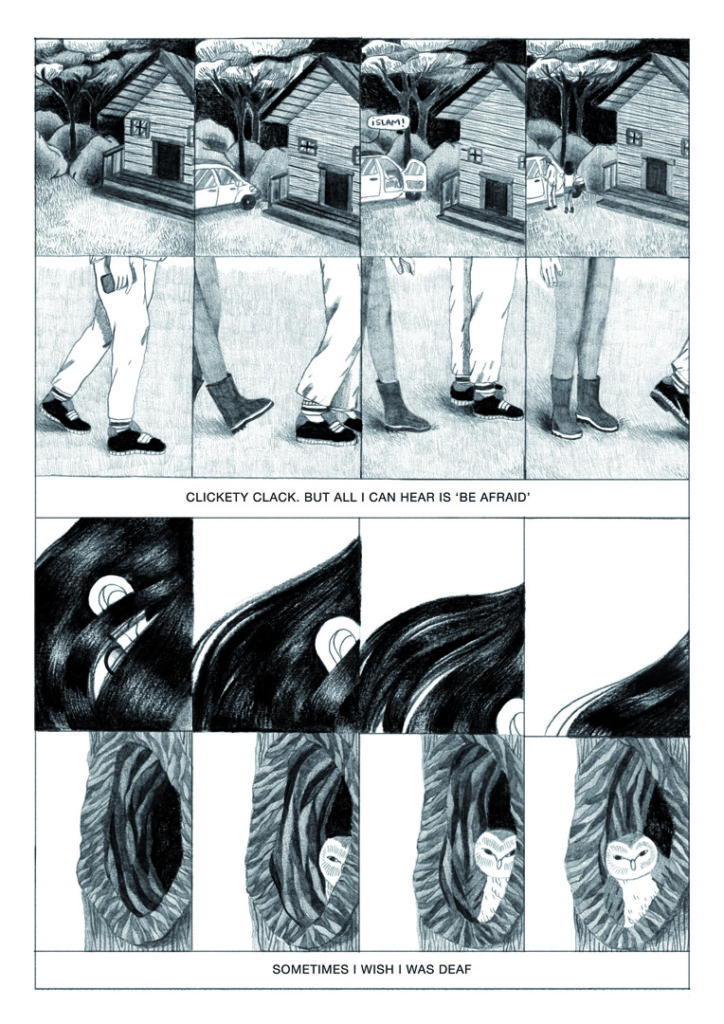
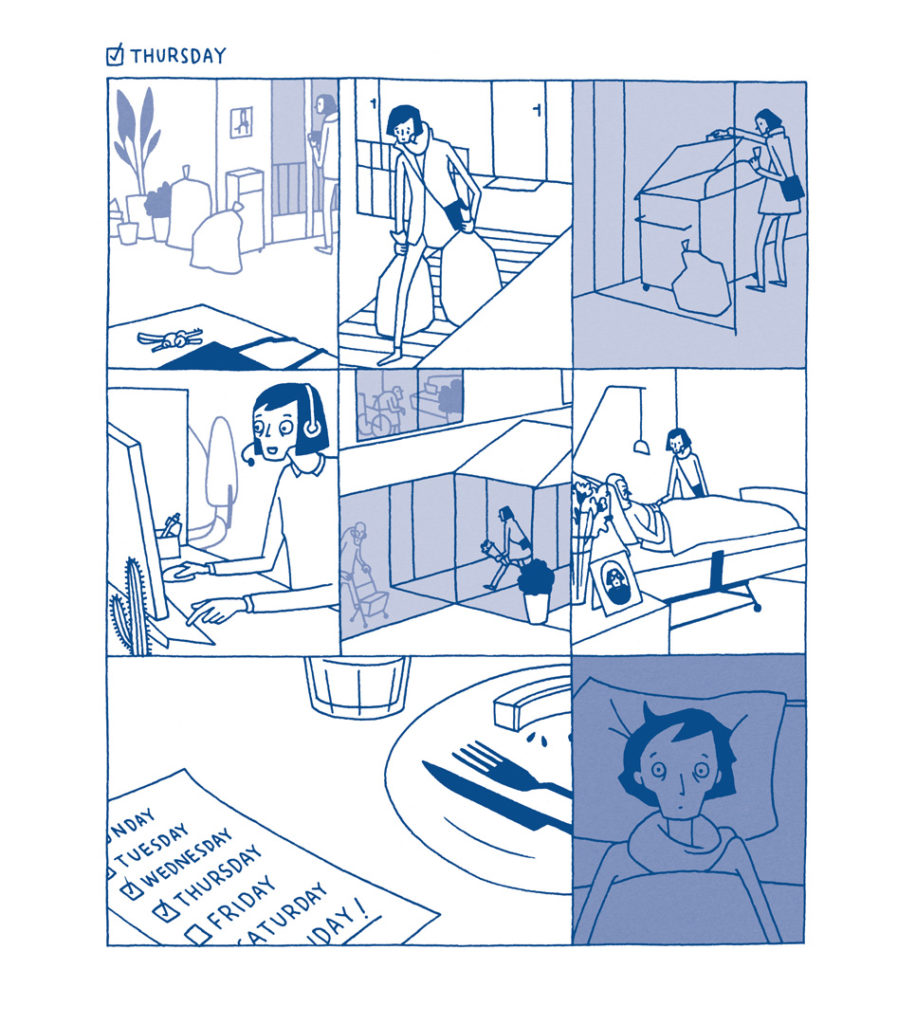
Anapurna

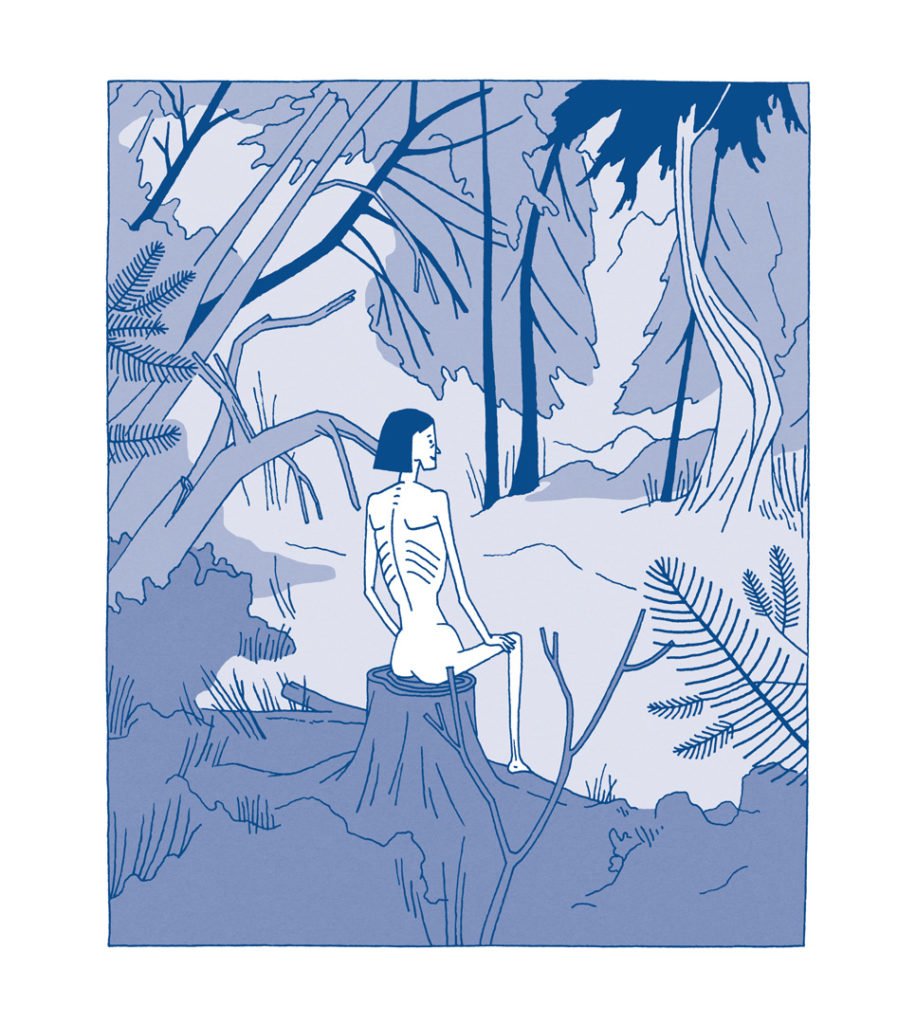
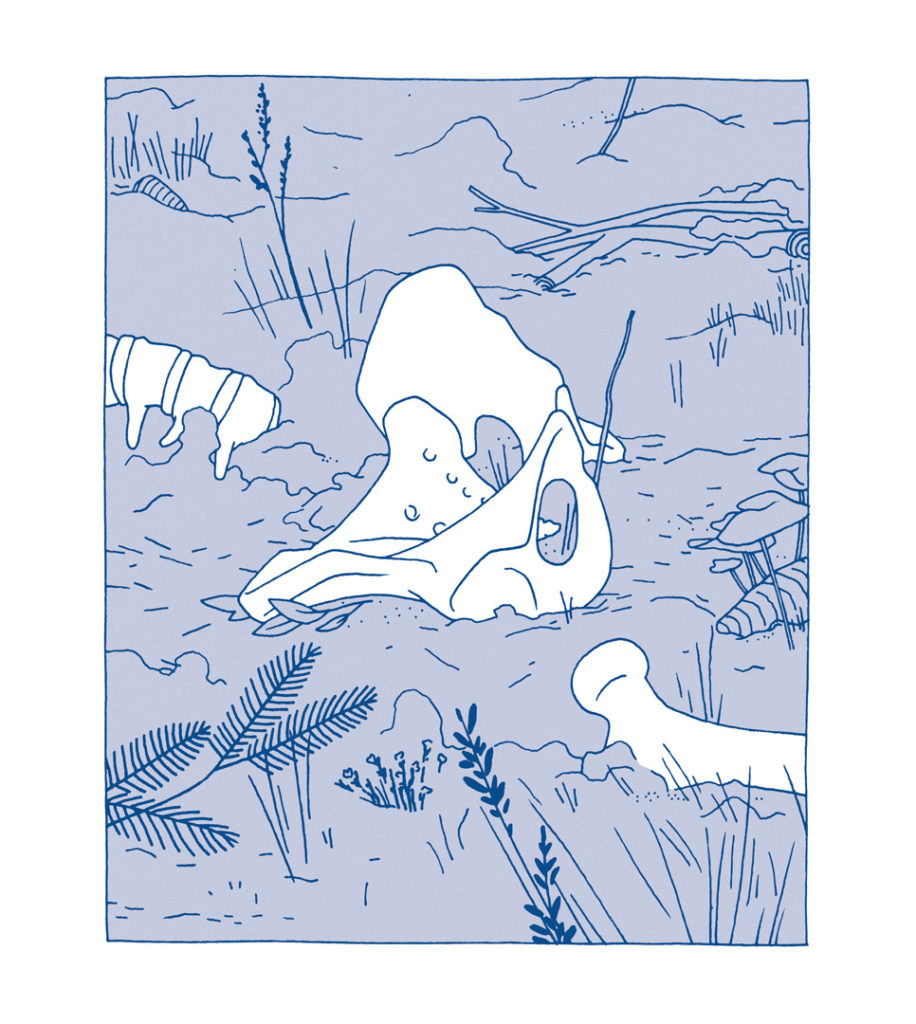
Forest Heart

Anapurna is the alter-ego of Ana Sainz Quesada, graduated in Fine Arts from Universitat de Barcelona and specialized in illustration and graphic narrative in IED Madrid. A Madrid-based illustrator and artist, she published her first graphic novel, Chucrut (Salamadra Graphic), in 2015. 

Working on different artistic disciplines and equally attracted by drawing, street art, painting, embroidery, and engraving, she loves making and reading every kind of comics. 

www.anapurna.es 
www.prunels.tumblr.com

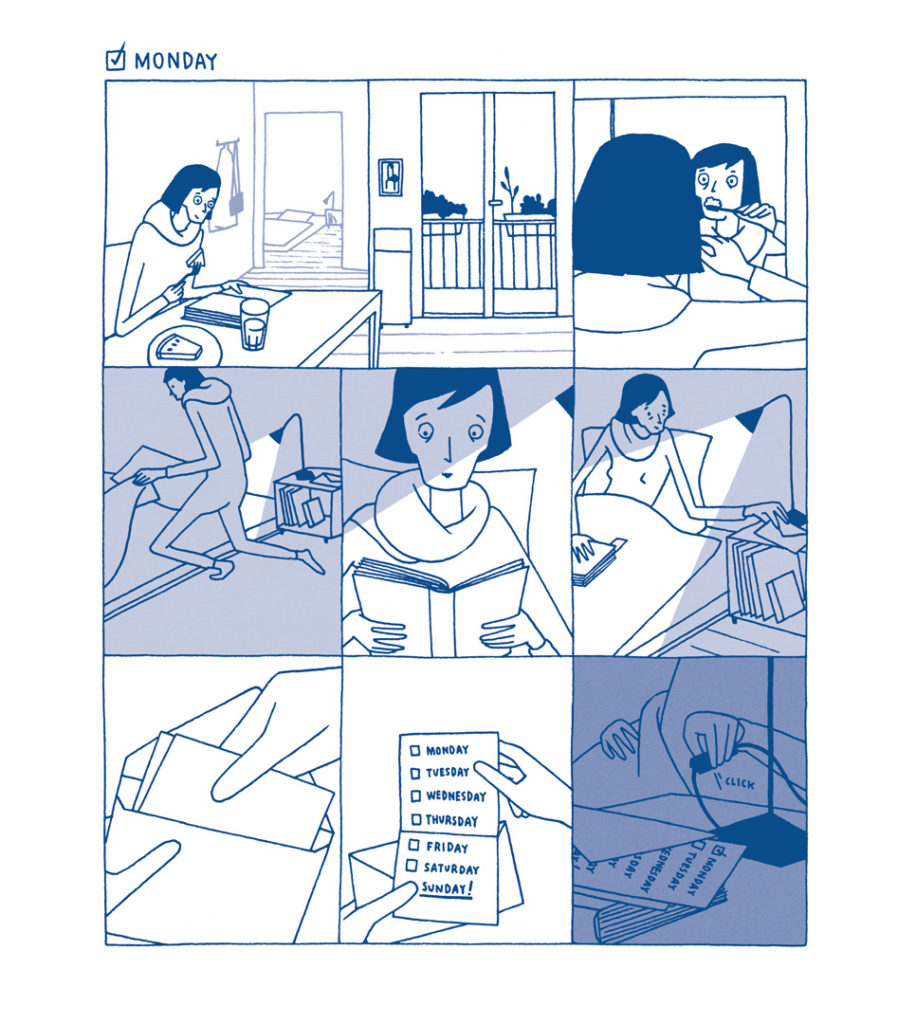
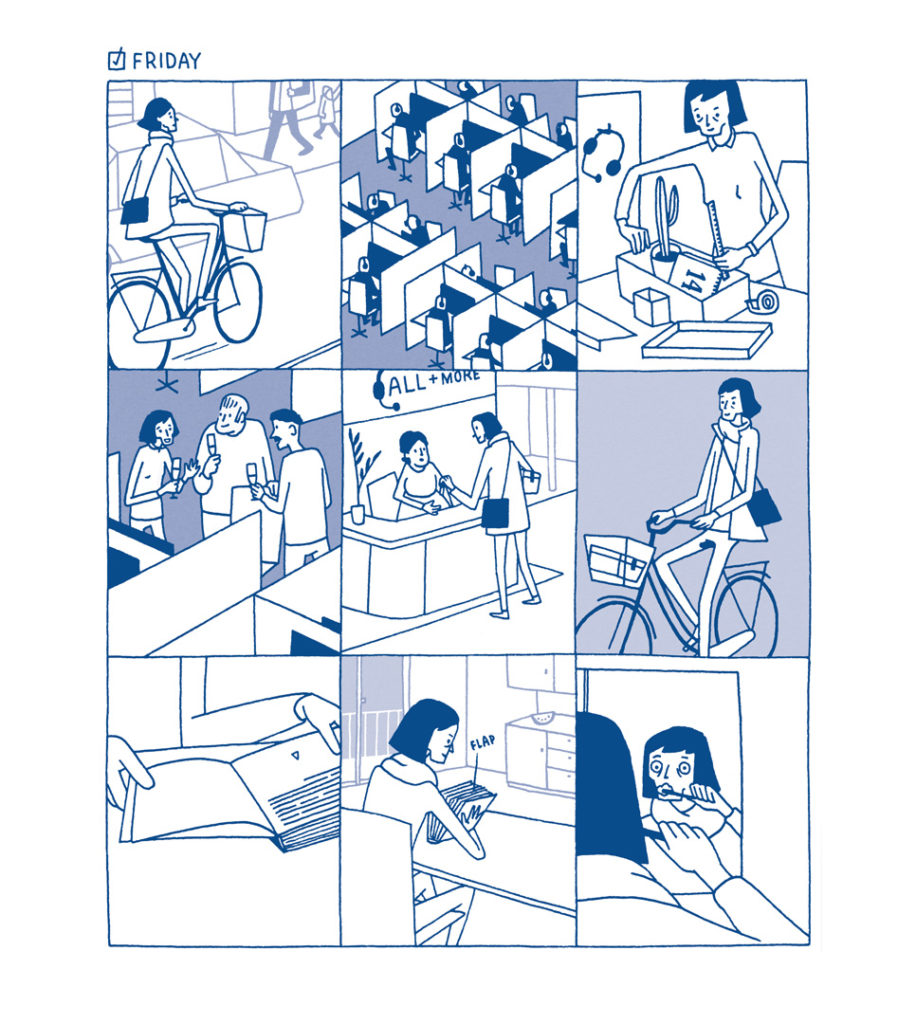
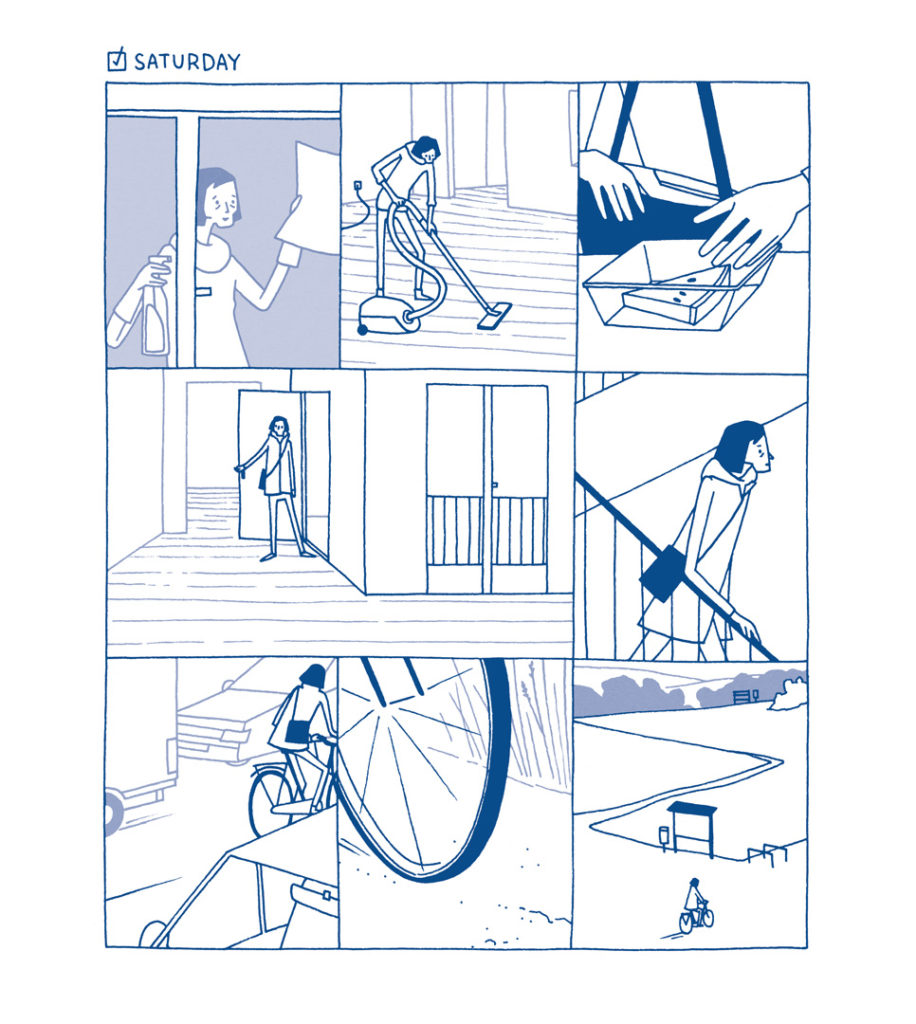
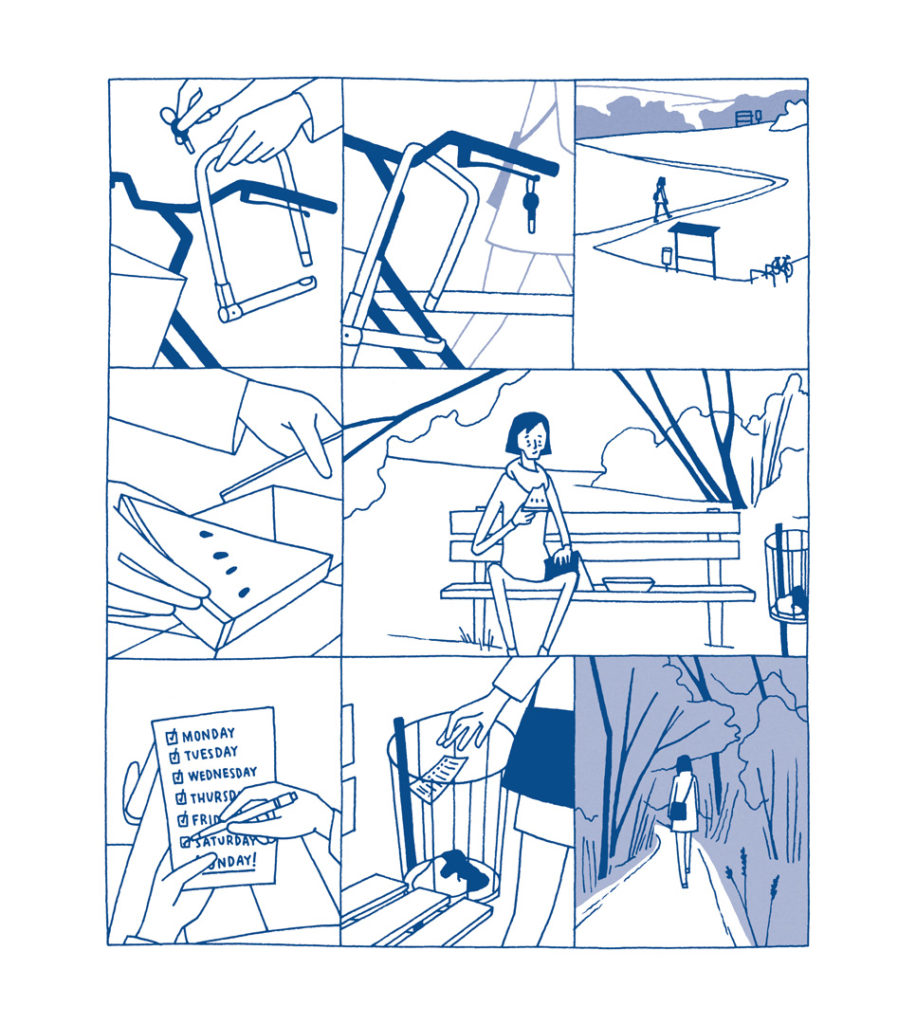
Anja Wicki

Control

Anja Wicki lives and works as an illustrator and comic artist in Lucerne, Switzerland. Since 2010, she and two friends have published a comic magazine called Ampel Magazin. Anja Wicki loves straight lines, printing and mountains. Her book The Meaning of Life is a collection of 12 short stories.

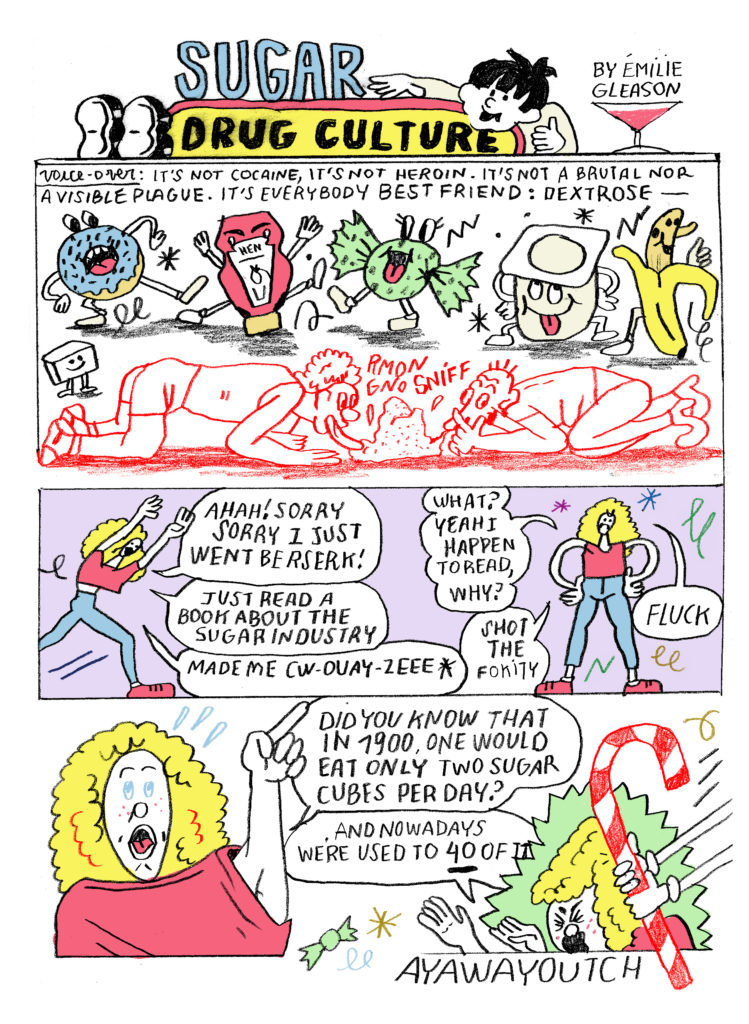
Émilie Gleason

Émilie Gleason is a belgium-mexican illustrator born in 1992. Sometimes she depicts a lunatic, oneiric, deformed society – because drawing still allows her to take an imaginary plane to go live a hundred lives all around the universe. Sometimes she spills out her hatred against this nonsensical way of living. But between us, she still hopes to drive a semi-truck within Canada in the future. Her work: emiliegleason.com

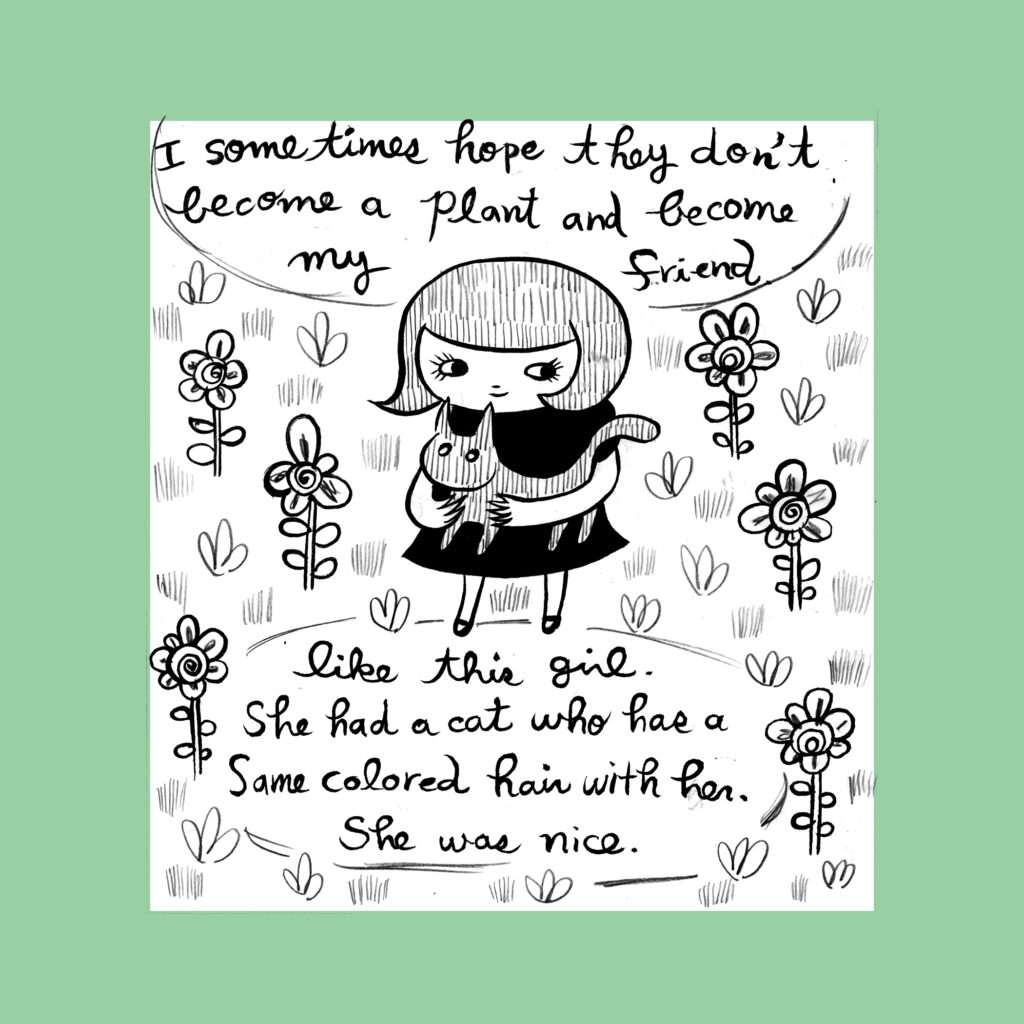
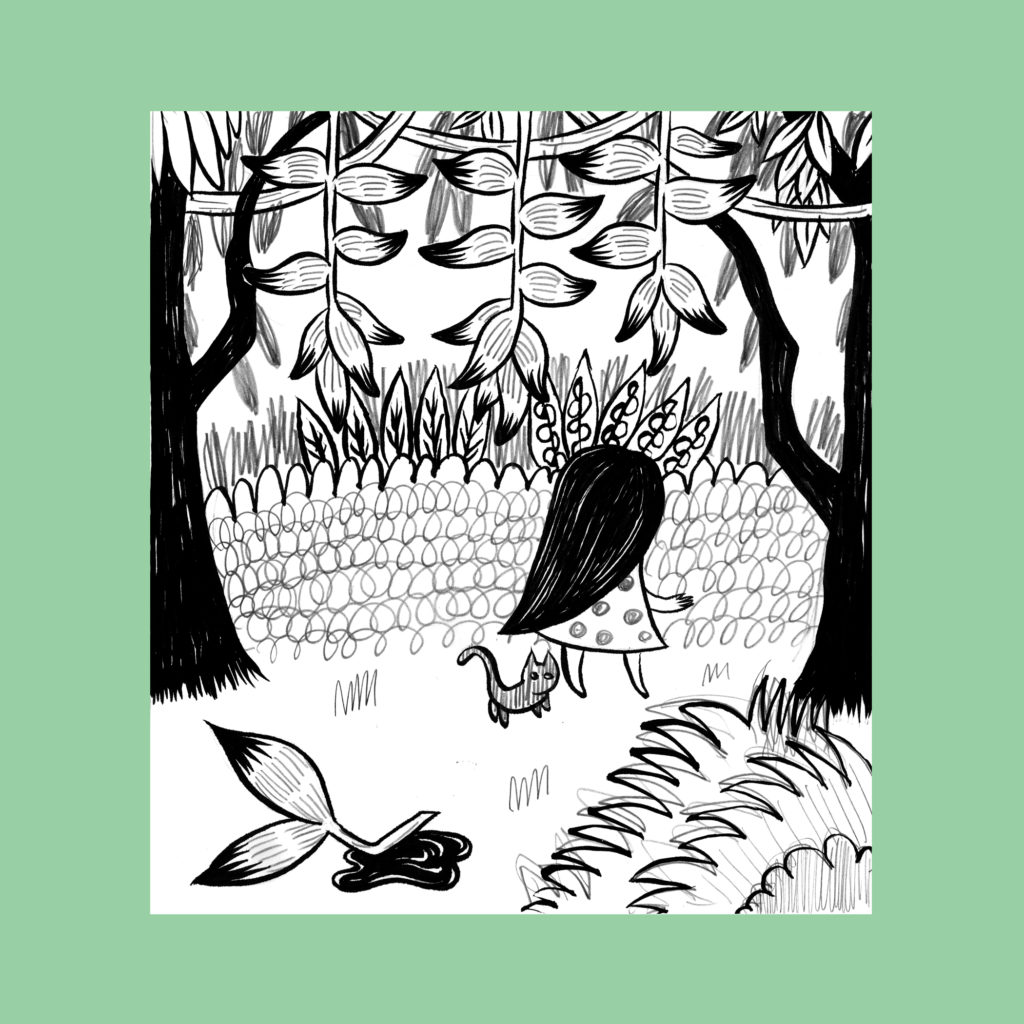
Aya Kakeda

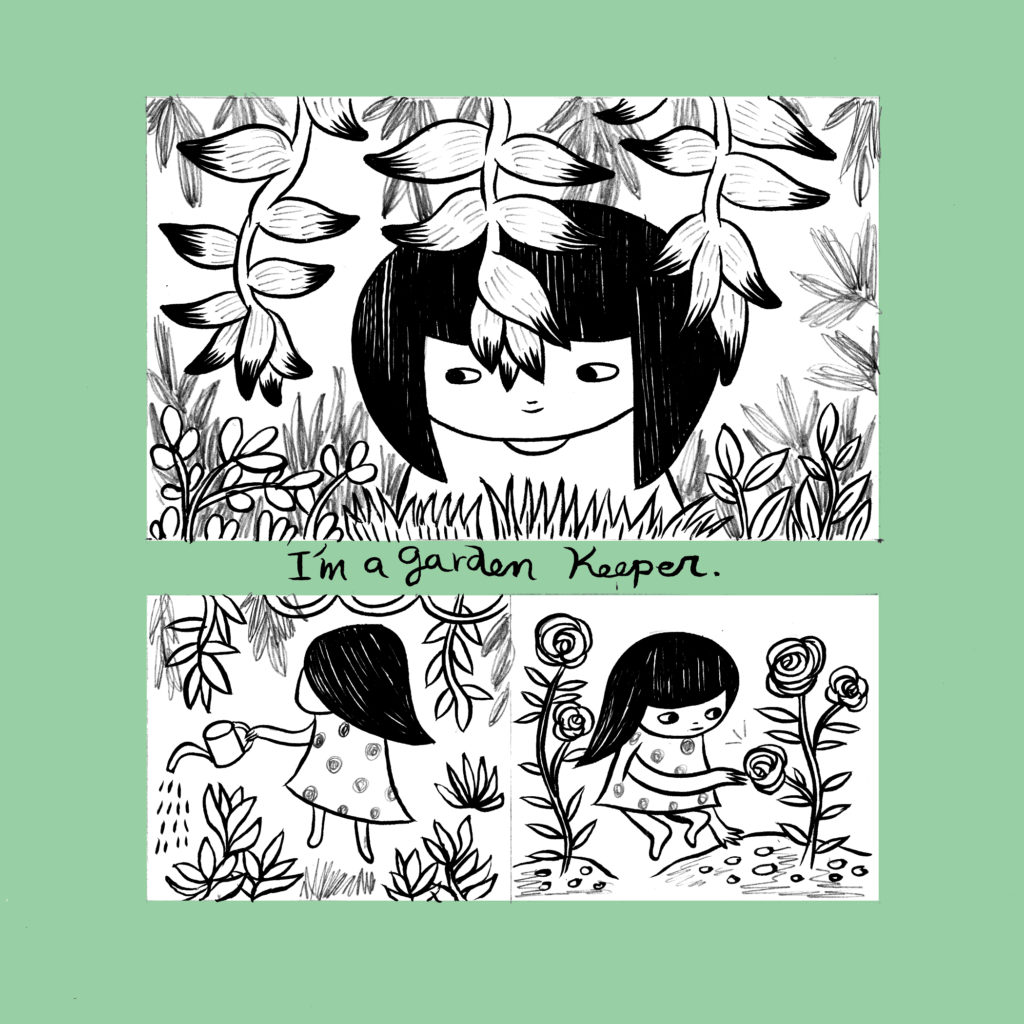
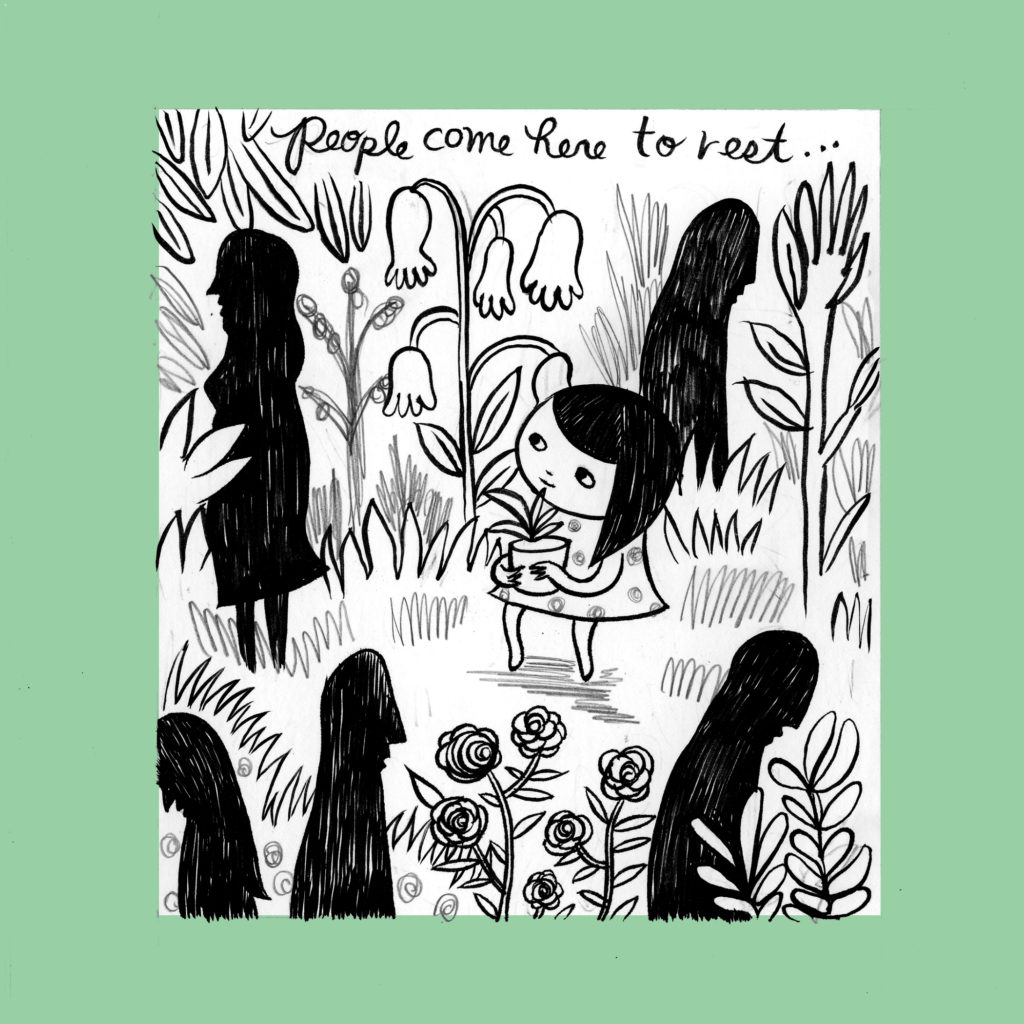
The Garden Keeper

Aya Kakeda was born and raised in Tokyo, Japan. Now she draws and creates imaginative worlds in Brooklyn, NY. 

She illustrates, teaches and takes her imaginary friends to travel, exhibiting in galleries and museums throughout the world.

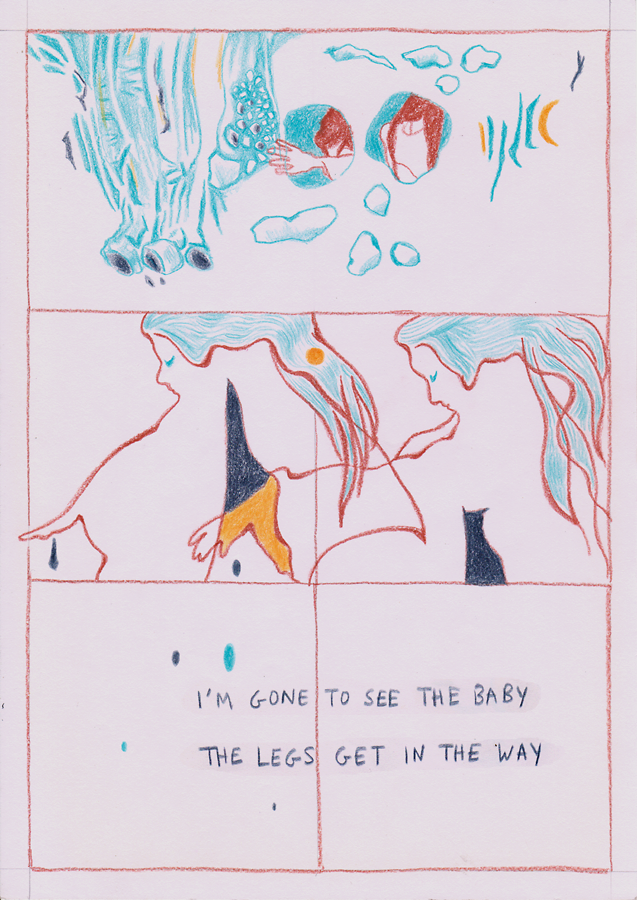
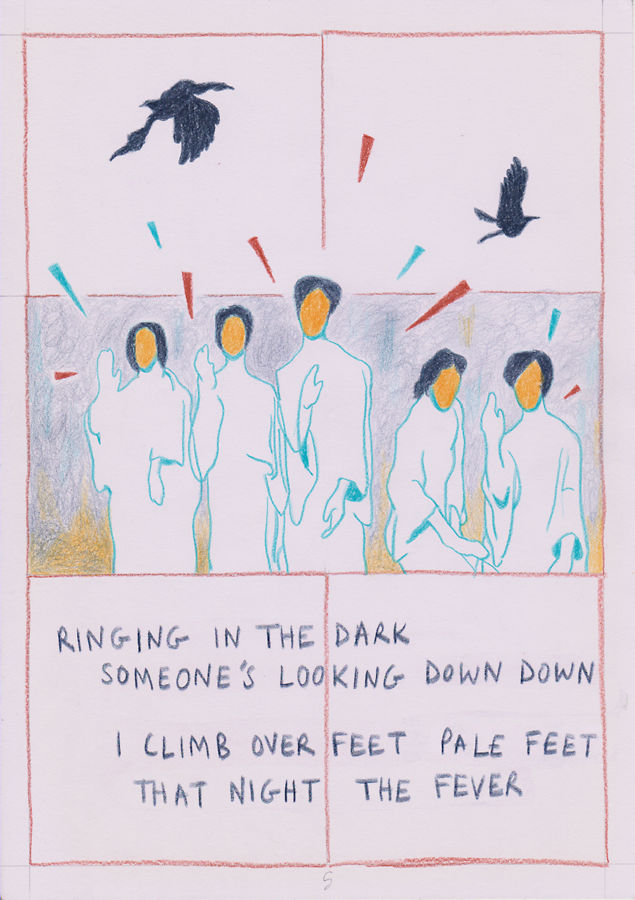
Ishita Basu Malik

Ghost Story

Ishita Basu Mallik lives in India; writes and makes art and comics. Work appears in Asian Cha, SABLE LitMag, otoliths, Ink Brick and other places. Look for more @ ishitabasumallik.tumblr.com.

George Abraham

Video Loop : Tel Aviv Airport panic attack

israel: land of creation

*

Travel Notice:
         תיירים יכולים לוותר מתביעה לפי
         200 דולר סחורה
         tourists can forego claiming under
         200 USD in merchandise 
         يمكن للسياح التخلي مدعيا تحت
         200 دولار أمريكي في البضائع

*

israeli man points / camera towards / himself, kisses / his wife, subtle / smile at sunset 

*

woman in white
-face, opera house
vignette – strips skirt;
flesh, bare white against
spotlight’s glare, 
seeking sunlight – 

*

Travel Advisory:

         the following are prohibited:
         weapons/ عملاء كيميائيين/
         المواد الإباحية / الكحول
         العطور أكثر من 3 أوقية

*

israel: land
of creation

*

violinist touches string
as he might a lover – 
soft vibratto, wrist
a delicate symphony – 
a woman’s soft lips 
against clarinet          [zoom out]
         full concert hall – 
         glaring spotlight –

(couple making aaliyah / cuts in front of / teleprompter – child / in hand, 3 children / in their shadow)

*

it’s been an hour // since they took Z // at security – he was //  the only dark-skinned muslim // in our group // my cross hangs heavy // around my throat // & name // & bloodline – 

Travel Advisory: 
beware of prohibited materials 
beware of أسلحة
tourists can forego (themselves) 

*

israel: 
land 
of creation 

*

[Tel Aviv 
shoreline] – sunset,
a bearded man kicks 
soccer ball – same Israeli
couple interlocks lips
& countries – spoils of 
conquest (90 minutes // Z 
Isn’t back
) knife caresses
wine glass 
full of another
savior’s 
blood,    again – 

*

the couple is gone. 
the airport, empty
aside from our 
collective pulse – 
i re-activate facebook
turn on my phone 
& relay the good news – 

         i’m home 
         ( no word from Z )

         i’m finally 

         Home –

Infinite: a history of parallel bodies

The following poem concerns a character, Elizabeth, from the video game Bioshock: Infinite. She has the power to form holes in the space-time continuum and travel between parallel universes.  The game begins in the reality where Elizabeth is confined in a dark tower which drains her powers, and is guarded by a metallic beast, the Songbird, in order to be studied as specimen and later brainwashed by their society’s dictator. In all realities, we arrive at Elizabeth by traveling through a lighthouse.
I. portrait of specimen in dark universe

in the beginning, there was
the body. a you, finite enough
to reside, compact, in the confines
of space & time –
                        but before there was
a you, there was the empty. that resides strong
in the body. a longing. a definition – can the body
exist without the Loneliness it counters
                        & inhabits –

yes – the Loneliness grew strong within
you. made a world of you, dark
& vast as the beast that guards it;
became a copper-lunged thing;
a throat that sings without breathing,
strips the music from your little
bones; winged beast of metallic
claw & its anthem of shredding wire:
all the delicate machinery built
to contain you –

but in this reality, you are tame
& young. small. hollow
-boned, yet shatterproof in all
your body’s oblivious histories.

you cannot know the way you split galaxies
with a single breath; the universes
your hands can unlock in a single strike –
your history, a petty matchbox; a thing that ignites
with friction & hands, always the hands;

you are oblivious of the scientists
behind the screens, who claim
they built you; observing the specimen
of you – who built a tower in you,
the Lonely that makes you retreat
into yourself; who wrote the books
you could never find yourself in; books
that claim they saved you & built all
the delicate machinery & winged
beasts that strip you of flight & sweet

entropy;
          wingless child –

the body is an infinity
you have yet to unravel –

II. portrait of specimen as apocalypse

what you know of         history is a conjuring                  of endless winter; in this
reality, a decade            of torture, cast upon your           body makes you body
of bloodied riot,              memory                                          jaded

                        collapsing under the dust
                       of you – of men & their science
    who built a dictator                       in you & the universe, you
                                                                                inherited – who        
                                                                                made Atlas of you –

                                      placed the weight of their
                                      universe on your shoulders
                                      & begged a genesis of you –

in this reality, you are a god
in some sense. Galaxies,

                                                                                                              collapsing under the rage
                                                                                                              of you, a drunk architecture

of limbs, horizons swept
into a singularity & all the stars

                                                                                                              on your breath; behold the weapon
                                                                                                               they made of your infinity –

in the wrong hands,
you are body of endless

rapture; the beautiful
devastation of endless

histories repeating them
-selves, of endless

fruition, a lineage
of hands, of endless

wreckage, of
body     endless –

    of endless

    of endless

    of endless

II. portrait of specimen as lighthouse, in spacetime continuum
or the ghost of my cis gender haunts the genderfluid topology of my body

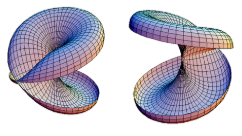
Instructions: cut and paste this poem onto a knotted 3-dimensional realization of a projective plane – a topological space that cannot exist, without knotting in
on itself at a single point, in dimensions lower than 4. The “you” is to be placed at the point of singularity; the paths stemming from the “you” merely conform to
the topology of the space. This poem is a trajectory
from the self, back to the self.

a lighthouse: there is always: a lighthouse: there is always:
a man: a lighthouse: searching: there is always:  hands
searching: the man: the lighthouse: the blood: on his
searching hands: there is always a man who claims
he built you: with his hands: searching: brief light
-houses: there is always the hands: that made: that
searched: that parted: history: there is always a history:
of hands: trapped between past: and present: hands
that built: a history: of you: there is always: a you: strong
-blooded: heavy-handed: a lighthouse: an infinity of them:
a trace: a lineage: a man: who claims you: and your non
-linear histories: a man: who searches: an infinity: of dim
-ensions: and impossible bloodlines: for the work: of his own:
hands: a map: there is always: a map: that leads him: to you:
his own: his blood: searching: a map: a lighthouse: there is always:
a lighthouse: a nail: a door: a man: searching: an infinity: of light
-houses: for you: a map: of history: of men: like him: who built:
an infinity: a bloodline: a you: to conquer: heavy-handed: there is
always: a you: a thing: with blood: and hands: trapped: between two
impossible: realities: there is always: the man: with an infinity:
of hands: who claims: he built you: always: a you: built: of man:
of hands: this man: these hands: this lighthouse: this search: this want:
this history: these hands: this infinite: bloodline: searching: reaching:

IV. portrait of specimen at baptism

you killed a man today.
let his blood darken
the waters he found
himself in; found his
god in; before he birthed
one; yes, the infinity
the history, the dim
-ensions placed on you
makes you god, child;
which makes you bloody
-handed, yes, but at his
expense, you escaped
the massacre of your
-self; made all the
necessary wounds to get
here, with your God,
his lungs emptying
beneath the surface
of his own making;
Father, isn’t this everything
you asked of your greatest
creations? to quiet
the pulse of every blood
seeking to end you?
what of the self can exist
after it destroys its maker?
isn’t this the most graceless
suicide; to escape not only
the body, but the history
it was born into –

V. litany for specimen as Songbird

praise the bones hollow enough
to fit a body in – the expense of wings;

teach me how to fly, despite the weight
placed onto my human form;

call hallowed the ones who can bare
this weight of me; cast their names

into an eternal promise to sunrise
& call them blessed ephemerality,

holiest impermenance; teach me to find music
in that, for where there is song, there is voice

& where there is voice, there is reason
to wander, to love, to rediscover

being; teach me how to wear my blood
without wanting to escape it;

teach me to be a thing that does not snap
btween my abuser’s hands;

teach me to be a thing not hunted
by its own magic;

to unlearn the body & its forsaken
histories; how it molds itself into godless iron

every wound, a battle song, a small rebellion;
teach me to find praise in that –

in this testimony of sacrifice; in the restless
homes I built in unforgiving stratospheres;

teach me how to sing without apologizing
for the space i take up –

teach me to find glory in flight, despite every
winter & migration this body inherits;

how not all resurrections are worth praise & ceremony
but that i still sing is testament to how my voice

& the voices of the lineage & ghosts i carry
still live, loudly; still sing praise to every god

who failed them, reminding them of this lineage
of the bold blooded; how we tear down entire universes

in a single breath & apologize for none of it,
in spite of every apology we write our bodies into;

despite everything that claims us weapon,
or terrorist, or specimen; despite every wall,

every scalpel, every blade that clipped us of flight,
               we sing –

                                              we rise –

                                                                             we fly

                                                                                                    Home –

George Abraham is a Palestinian-American Poet, Activist, and Engineering PhD Candidate at Harvard University. He is the author of two chapbooks: al youm, winner of the Atlas Review’s 2016 chapbook contest, and the specimen’s apology, forthcoming with Sibling Rivalry Press. His poetry has appeared or is forthcoming in Vinyl, Apogee, Kweli, Hawai’i Review, Tinderbox Poetry Journal, and anthologies such as Bettering American Poetry 2016, Nepantla, and the Ghassan Kanafani Palestinian Literature Anthology.