Chip Livingston

K’s Cloud

a gray day by the breakfast lilies
your ninnies’ nest dog-eared
the bed you dug to bury
dirty money panes away

ferning into low clouds
spider grass spidering
invisible Veronica Lake
H drove you to hosp  

K’s fat fingers clasp the big Z
tap the early 1970s
palsy stained paperback

There was drinking in the carriage
There was a house joint
Now not a leaf turns
But there is a cloud

Chip Livingston is the author of the novel Owls Don’t Have to Mean Death; a collection of essays and short stories, Naming Ceremony; and two poetry collections, Crow-Blue, Crow-Black and Museum of False Starts. Chip teaches in the low-residency MFA program at Institute of American Indian Arts. He lives in Montevideo, Uruguay.


 BACK TO ISSUE

 BACK TO FOLIO

Alexandria Peary

In the plastic chair, I am learning as a young child that my body can be cut, peeled, suctioned, probed, grafted, stapled, and sutured. The body previously thought of as mine is opened and rearranged by many blue-gloved hands.

The Pill That Made Me a Poet

C18H20O2

I rub a hand across my bare belly,and it transforms into heavily bleached terry cloth. Turning my head on the pillow, I see a drive-through window, like the kind at McDonald’s, but the brightly illuminated room and the crib-like bed are five stories off the ground. Every few seconds, a different adult appears on the wall, pauses, and is replaced in a carousel of slides. An absence I sensed as a presence had recently administered to me, an angel different than Lorca’s counterpart to duende; than Rilke’s “Angels, (they say) don’t know whether it is the living / they are moving among, or the dead”; or Iowa City’s Black Angel. A wet towel had been placed on my chest to keep down a fever on an ascent past 104 degrees. By turning my head, I looked beyond my little self who was often still lying on an operating table or in a recovery area.

As a six-year old, I am wheeled on a gurney into a pre-op or recovery room and transition from first- to third person. This child patient opens her eyes despite anesthesia. She sees undressed and unconscious adults in a pre-op area bathed in sepia, the lighting dim as inside an appliance. Hospital sheets are draped like tarps. A slack adult face lies on a gurney a few inches away, a man’s bare arm and open hand with wedding band dangling outside a sheet. The patient can’t tell if she’s headed into or out of surgery. She shifts slightly but doesn’t feel the backspace of pain or restriction from IV tubing and the urine bag, which will be attached to a hole in her right side. The patient closes her eyes.

“I’m not ever myself; I am a metaphor of myself,” I say to my husband about what it’s like for me as an adult to talk to a doctor, any doctor.


Exposure

Dr. V explicates from his side of the desk, and my mother and I sit in low-slung plastic chairs, diminutive seating even for a six-year old. We watch slides Dr. V projects onto a narrow screen atop a bookcase between artificial plants and binders, a screening area suggesting he was in the habit of documenting his work. When I recently Google his name,“Harvard,” and “urologist,” what comes up is a white-haired Leprechaun’s face and the usual internal narrative of gratitude. How lucky I was that he’d been on sabbatical in central Maine, how he saved my life, how otherwise I “would have been on a dialysis machine.” Dr. V was the type of surgeon who practices “heroic medicine,” as Susan Bell says of specialists from elite teaching hospitals who helped girls and young women when hometown practitioners couldn’t diagnose birth defects.

In the plastic chair, I am learning as a young child that my body can be cut, peeled, suctioned, probed, grafted, stapled, and sutured. The body previously thought of as mine is opened and rearranged by many blue-gloved hands. Organs normally invisible are outed, glistening because of their disturbed privacy, their involuntary functions made the subject of inquiry. Something does pass out of the body—levitates, sees the self from above, third-person, to be captured in the surgeon’s dictations:

The patient was given general anesthesia and placed in the supine position. A Pfannestiel incision was made, sharp dissection was carried across the anterior rectus fascia. The recti were separated in the midline. Allises were used to grasp the bladder. The bladder was entered. The bladder was so retracted as to expose the left ureteral orifice. It was situated at the dome of a moderate sized ureterocele. Pictures were taken of this anatomical defect.

The patient was given general anesthesia and placed in the lithotomy position. The urethra was calibrated and accepted up to a #22 Otis bougie without difficulty. A #17 cystouresthroscope was introduced into the bladder. Inspection of the trigone revealed the following: the right ureteral orifice was stadium in shape. The right intra-mural tunnel was approximately 8mm and not on the interureteric ridge proper. It was in face lateralized. 

The patient was returned to the Recovery Room in satisfactory condition.


Molecular mass of 268.35 g/ml

I was born with a tray of birth defects. I’m like the board game Operation or the surrealist parlor game Exquisite Corpse. Make a sidewalk outline of my body and draw four scars inside it—an equal sign on my lower abdomen, the bottom part made in 1976 and the top in 2005, a dime-sized circle on my left side also from 1976, and a four-inch line on my neck from 1992.

Just as flimsy tweezers move around plastic organs in the board game, parts of my anatomy were moved to different locations in my torso—a tube twisted so far to the right that it fires off aimlessly, like a street lamp (still illuminated) struck by a car—another part not attached at the right place on its organ. My anatomy was redesigned using unexpected shapes, occasionally primordial, with the incongruity of a lion’s head drawn on a plant stem. An organ revised into a crescent shape. Gill slits that manifested on my neck during my first month studying poetry at the Iowa Writers’ Workshop. The defects made themselves known over widely separate moments—malformation at age four, grape fruit-sized cyst at age twenty two, twelve weeks premature birth of my first child when I was thirty five.

Something toyed with me. It ran its chemical influence over me, that ball of rapidly evolving cells which now types this sentence. Normal development of the head and neck muscles occurs in the fifth gestational week and from gill-like pouches in the throat area of the seahorse-like fetus. In weeks eight through ten, a hormone is secreted in male fetuses the absence of which in female fetuses turns Mülerian ducts into the uterus, uterine tubes, and vagina. For females, urinary tract abnormalities occur in tandem with Mülerian anomalies.


5mg/day in weeks 7 and 8, increased to 10 mg/ day every other week through the 14th  week

Beginning June 1969, Hawaii. Mother age twenty one, father age twenty-six.

1 gestational month July20, 1969: Apollo 11 Moon Landing

2 gestational months Mother suffering from hyperemesis gravidarum or persistent morning sickness. Cannot keep even cottage cheese or ginger ale down. Quits job at counter in gift shop.

2 gestational months August 15-17, 1969: Woodstock

3 gestational months September 1969: Parents move from Hawaii to Somersworth, New Hampshire. Mother possibly given a cocktail of endocrine disruptors by different obstetricians with father’s job relocation.

4 gestational months Mother is nearly twenty pounds lighter than before pregnancy.

6 gestational months December 1969 First military draft “lottery” for Vietnam War and first strain of HIV arrives in the United States.

7 gestational months Mother continues to have difficulty holding down food despite medication prescribed and is now thirty pounds lighter than before pregnancy.

Birth, March 1970, in Douglas Wentworth Hospital in New Hampshire, at the same time as my neighbor one house down on my street volunteered as a candy striper in the maternity ward.

March 1970 In a photograph mother wears a shift style dress with lace-up go-go boots and is skinny as Twiggy.

1971:Article published in New England Journal of Medicine links in-utero exposure to the drug Diethylstilbestrol (DES) to a rare cancer in girls.

1973: Research begun on psychosexual side effects of DES on males exposed in utero.

1983: The year in which Merrell Dow Pharmaceuticals stops producing Benedictin after a flurry of “preconception” tort liability lawsuits alleging gastrointestinal and limb defects in the wake of uproar over Thalidomide. Claims about Benedictin subsequently disproven.

2013: FDA reinstates Benedictin under the name Diglesis

August 2015: The FDA issued warning to Kim Kardashian to stop promoting Diglesis on Instagram where she had posted, “OMG. Have you heard about this?”


Diethylstilbestrol

DES or Diethylstilbestrol, with a molecular mass of 268.35 g/ml and elemental configuration of C18H20O2,was synthesized by a graduate student, Leon Golberg, at Oxford University in 1938 in research funded by the UK Medical Research Council. The United States Food and Drug Administration later approved DES for a wide range of uses: as an inexpensive hormone therapy for menopause, a lactation suppressant, a treatment for advanced prostate and postmenopausal breast cancers, as a treatment for infertility and miscarriage, and as chemical castration for sex offenders.

According to the Center for Disease Control, around 5-10 million patients were given DES in the United States between 1938 and 1971, including pregnant women and the daughters and sons of those pregnancies—called DES Daughters and DES Sons. By the 1950s, the drug was administered to tall girls to prevent excessive height, despite the fact that as early as 1939 researchers had seen indications that DES might be carcinogenic. For pregnant women, the recommended regimen was 5mg per day in the seventh and eight weeks of pregnancy, increased to 10 mg per day every other week through the fourteenth week (or just beyond the first trimester, the most vulnerable time in fetal development), to 25 mg until the fifteenth week, and then to 125mg in the thirty-fifth week of pregnancy. A 1971 FDA bulletin warned physicians against prescribing DES to pregnant woman, and by 1975, the FDA banned the sale of 25 mg and 100 mg DES pills.

DES, one of the first carcinogens discovered to be able to cross the human placenta, is now known to cause two side effects: clear cell adenocarcinoma, a vaginal and cervical cancer that was extremely rare in young women before the introduction of DES, and structural alterations of the reproductive tract that can result in infertility, pregnancy loss, and preterm labor. The drug is currently prescribed for urinary incontinence in dogs, though a foreboding “bone marrow suppression” is listed as a side effect for canines.


DES Daughters

 A 40-fold increase in risk of clear cell adenocarcinoma of the vagina and cervix. T-shaped uterine cavity, hypoplastic uterus, endometrial cavity constrictions and adhesions. Gross cervical abnormalities are visualized in about 20 percent of exposed women. Twice as likely to experience infertility. An 11.7 percent excess risk of ectopic pregnancy (14.6 versus 2.9). Increased lifetime risks of spontaneous abortion (53.3 versus 38.6 percent). Loss of second-trimester pregnancy (16.4 versus 1.7 percent). Twenty percent risk of miscarriage versus 8% in unexposed women. Pre-term delivery (53.3 versus 17.8 percent).


53.3 percent

The thick cables of the new Tobin Bridge in Boston pass above me in the ambulance, like a giant centipede or a timeline alit in the night. I am losing the baby, I think because that’s what I’ve been told with medical certainty, as I am arrowed toward the emergency room at Brigham and Women’s Hospital, wheeled, rushed, swabbed, scanned, injected.


Patient is educated woman, is unmarried and has recently moved to area, feels depressed, says 9/11 has made her decide to have child, declined post-op prescription.


Because your twenty-one year old mother’s English is broken, umlauted, because it is 1969, because she did not finish high school in her bombed-out country of origin, because the white coat man speaking to her is Dr., because she follows authority and does not listen to Magical Mystery Tour nor does she smoke wacky tobacky, because she can barely stomach it (and often does not) when her husband spoons maple walnut ice cream out of the carton, because she can’t hold down cottage cheese and saltines, because morning sickness is like lying in a hammock in trees covered in Spanish moss inside a snow globe and wanting to sleep all the time in the bracken water light, because she moves with the man she married after knowing him for three months from one military base to the next, from a tropical island to a rugged New England coast line, because her friend in the apartment building who was writing a dissertation in mathematics is also experiencing hair loss though not from pregnancy kept her company between her rushes to the toilet, because she barely saw her own father and remembers how he took her age seventeen to the airport when she left her country, one shore to the other, the surf pounding, stomach roiling, balcony overlooking the Pacific. It’s not because of a class you took, a book you happened to notice on a shelf marked Poetry, a supportive adult or ten minutes with a college advisor, not because of a childhood literary prize or special inner ability, but because of some man who thinks he knows best, who sits across a desk from a young worried immigrant who has come in twice that week, man who is thirty-four years into his medical practice and two years out from retirement, who isn’t in the loop about latest medical developments or controversies, who doesn’t attend medical conferences, his practice located in rural New Hampshire or on a distant island, who hasn’t renewed his journal subscription since 1961, because it is 1969, and because all women seem unsure, if you were my daughter, I’m telling you what I would advise my own daughter, because as he flips through his notes next to the dic-ta-phone, the note pad from the pharmaceutical rep, can’t keep down food, the young woman who does seem thinner is looking at her hands in her lap, because though this medication is prescribed for miscarriage not morning sickness but maybe it’ll help, because he is also thinking that if she carries this pregnancy to full term he might ask if she wants to give the baby up, how to carefully inquire, he has that older couple in mind, you’re so young, you have a lot of time ahead of you, your husband moves for his work, wouldn’t it be easier to travel without a child?, because this is what the doctor told her, because she can’t handle throwing up again this afternoon, she puts the capsule to her lips, then the glass of flat ginger ale, then swallows.   


Wantstobeadoctorsomeday

The microscope is 7.5 pounds without lens on the bathroom scale. A bronze and black monocular with a horseshoe-shaped base, equipped with a triple nose piece and a 10x eyepiece, the microscope was probably manufactured between 1895 and 1934. Rusting letters on the base say Spencer Lens Co., Buffalo, NY. A pink sash, tied by my daughter, makes the dusty microscope a portly general at a beauty pageant. I move close to the microscope for the first time in three decades. It has the smell of dust and much-handled dollar bills. Lacking specimen slides, I drop a corner of the sash onto the viewing platform, rotate the taller of the lenses, and shift the mirror.

Turning the knobs, the microscope tower slowly descends like a cautious apartment elevator. The “shiff shiff shiff”evokes my childhood bedroom, its pinkness and vacuum tracks in shag carpet. What I see through the lens is a mottled light—mold has infiltrated the lens—and the ear-nose-and-throat specialist who hung around my parents’ convenience store whenever my mother was working behind the counter. It’d been his microscope in medical school, and he’d gleaned that the freckled girl playing in the grocery aisles wantedtobeadoctorsomeday in the way children sometimes embrace a profession that had given them a traumatic past—social worker, police officer, teacher, surgeon.

A few years later, from a passing comment, my mother suspected he’d been in the operating room with the surgeon, his golf buddy, and that they both removed her varicose veins in a botched procedure in which she would lose too much blood and return home with legs covered in staples. Goldfish under dissection on a rainy after school afternoon. Eyes raised from the microscope to the way the light looked in the April grass on the leach field. Library anthology of poetry. The sudden feeling of wanting to write a poem—the exact break-away moment when I escaped becoming one of them and used what I had experienced in hospitals and in their offices in my own way, for poetry.


Well-nourished, healthy Caucasian female, age six

In medical records, you are undressed in the third person and put in the johnny of jargon and pseudo-objectivity. When I have requested my records, I have been surprised by the subjective house calls about my intelligence or socio-economic standing, that I am polite, articulate, a patient with a pleasant demeanor. I half-expect to see a note about the model of car I drive. With slides from surgery, the body is no longer the foundation. It’s a launch pad for elsewhere.


Writing in Bed

I tug the I.V. stand with the plastic bag for my urine around the playroom. I like the social scene of the children’s recovery floor in the hospital in the state’s capitol, Augusta—the ill-sorted and banged-up donated toys, the cartoons, the other sick or healing kids with tubes, urine bags, catheters, casts, stitches, or bald heads. I befriend a fellow townie who stuck his arm in a spinning clothes dryer. I like the Flav-O-Aid popsicles. I don’t like it when the medical staff circles my bed and discusses my case, and I hope one of my parents is able to get out of work and visit. At home, my younger brother and sister are growing into their pants lengths, readying for school, adding bone and muscle mass, eating after-school snacks, slipping ahead of me in the birth order while the birth defects and medicines are keeping me physically immature and slighter, and there’s talk of holding me back a year in school. I would grow up amid innuendo that I wouldn’t lead a normal life. Much was left unspoken despite how it directly concerned me.

As children mythologize and imaginatively reconstruct, I picked up crisscrossed meanings, implications, and foreshadowing and rebuilt. At night, I am tucked into bed by on-call nurses and left to process the day’s prodding and consultations. It was the start of many important moments pertaining to writing—of working through problems imaginatively and decoding vestigial images—while sitting in bed. These times setup my tolerance for working alone hours on end, removed from family and peers. I don’t go to the prom because I look like a ten year old. In high school, I wrote my first short stories and poems in my canopy bed. A persistent writing block breaks after my water breaks six and a half months into a pregnancy, this time in a hospital bed in a high-risk pregnancy ward, in what was supposed to be a two and a half month bed rest at Brigham and Women’s Hospital, Boston. When my writing block that had lasted since the graduate program at Iowa finally ends, I am wearing a johnny and looking at the view from my hospital window, a narrow opening of June sky above a still life of abandoned duct repair work, Dunkin Donuts coffee containers, leather tool belt, and wrench, left by workmen who never returned to the job.


A larger field of knowing

The loop of helplessness and frustration of yet another medical complication and needing to turn to the very class of experts who caused the problem in the first place sent me from one error to the next, misdiagnoses, wrong prescription, side effects, wrong medical records, false certainty, assumptions, callousness, baseless statements (you’ve lost the baby) (the technician taking twenty minutes to remember to confirm, the fetus is still there, heart beating), omission of crucial information, misuse of medical equipment, blasting 80’s heavy metal in the ambulance at midnight, stunning insensitivity, that baseless certainty.

What is normally thought of as a solid given was for me formed with a yellow dotted line, like a passing lane, and pass I did, in and out. It was like sending out a sonar ping, mistrusting doctors’ opinions and instead relying on internalized knowledge. Prewriting takes a similar trolling for answers, an inductive casting ahead for language to start or continue a poem. In 1952, Brewster Ghiselin described this back and forth in writers as a movement between “automatic and conscious production”—a ricocheting off of more controlled and conservative thought—the already known—into a “new order developing…in obscurity.” Jung suggested that for artists who approach the unconscious, “[t]he experience that furnishes the material for artistic expression is no longer familiar. It is a strange something that derives its existence from the hinterland of man’s mind.” I started writing poetry and used the same technique of scanning my surroundings, propelled by the levitation of the lyric or the side shadowing of the metaphoric. In return, years of writing practice have honed that intuition so that odd events are the side effects of poetry.


Ping

It’s 2002. On a dirt path in a city park, I see a series of images of a rider on a yellow mountain bike hurtling at me. I step off the path, and three seconds later a guy on a bike vaults over a gnarled root and crashes into the exact spot where I’d been standing. It’s 1996. I’m reading on my stomach on the school grounds of an international summer boarding school where I’m teaching, my back to a baseball game. The muted sounds of the game have a marsh to cross before they reach me, but I still feel I should change locations. It’s a sizeable distance, I rationalized, so I don’t move, but I can’t concentrate on the book because the impulse is intensifying. I cower, bracing for impact. As often when the premonitions happen, they’re a series of shuttered images, slow motion, and usually in yellow. A few seconds before the baseball slams into the back of my skull, I see an orb moving through the air, not round but an elongated yellowish in jerky still shots.

It’s 1999, and I’m fresh out of creative writing graduate school and on the job market for a position teaching writing, with nearly a hundred applications out in the mail. In the afternoon, while browsing in a kitchenware shop with my boyfriend, my hand passes in front of a placemat with the map of the continental United States, and my fingertips rest on a lime yellow Louisiana. I’ll be moving to Louisiana, I think. Later over dinner, a roommate remembers to tell me that someone from Louisiana State University had phoned. It’s 2003. A friend is telling me in the vaguest terms about problems with a guy she’s dating in Maine, not mentioning his last name, only saying that his ex-wife seems too present in the man’s life. I feel funny. I look straight at her, a yellow déjà vu filling my torso, and interrupt to ask if the boyfriend’s name isn’t J.S., a high school acquaintance with whom I hadn’t spoken in years. She is shocked because I am right. It’s 2004. In a car accident on an exit ramp, in a line of rear-ended vehicles, I’m catching my breath behind the steering wheel. I’m less than two months pregnant and headed to an appointment with a urologist to discuss possible pregnancy complications from my birth defects. (He’ll say no problems will arise, and five months later, problems most definitely arise.) The passenger door opens, and the software engineer I dated prior to meeting my husband slips into my passenger side seat, saying a voice had told him to leave work and drive on the highway to look for me. His polo shirt is yellow. His pants are yellow.


Ping

None of these incidents appreciates being put into language—it’s the first they’ve been typed—and they’re protesting. All the same, I enjoy the equivalency of dressing the uncanny in the same Times New Roman as other content. I am reminding myself to notice these events in real time before logic sets in. This receptivity to the irrational takes leaving behind preconceived ideas, a willingness to engage with the unknown, a risk. Likewise, the vital parts of a poem or essay can become misshapen by ambitious thoughts or premature exposure to outcome and audience. This type of knowing is what it means to be involved with poetry—using a phrase as a lure to see what I can pull from the preverbal, the unknown, the all-white of possibility—and receiving some type of response.

I’ve dropped my car off for an oil change at the local father & son mechanics. It’s an early November day, and I’m walking the mile back to my laptop on the kitchen counter. The road is industrial and ugly, a short stint between a bank of fast food restaurants, faltering shopping mall, and second-hand car and furniture dealers before the turn into our cul de sac. It’s not a safe place for a pedestrian, the constant whizzing traffic ten mph over the limit, no sidewalk, just this curb of petrified grass pelleted with bottle caps, butts, and broken asphalt, a strip mall with “Commercial Space For Rent” signs and a Rent-a-Rec—then a culvert with iced-over water, scrub trees. I pull my collar up to ward off the chill while trying to fend off a funk, residue from some minor slight, and I don’t care for the undertones of self-pity. I look toward the pre-snow sky and in a private conversation say, “The universe doesn’t owe you anything,” when something immediately catches my eye. It’s a twenty dollar bill, waving from the frost-stiffened grass curbside.

The bill is a parody of a twenty dollar bill, clean and crisp, unwrinkled. It feels brightened, as though a different light was cast on it than the November surroundings, as though the twenty dollar bill were in a collage and excised from another time and place. The next two yards of the curb are covered with fluttering money—tens, another twenty, fives, and a few one dollar bills. I look for a lost wallet or purse—or worse—a person lying in the culvert. Nothing. ($110 when I’m in my kitchen, counting like a startled bank teller.) For a moment, I just stare but then begin to stuff the money into a coat pocket, aware of what the sight of a well-dressed pedestrian in a butternut yellow wool coat picking money, lots of money, off the ground must look like to passing drivers. I text my husband, You’ll never believe what just happened. I joke how the cost of the oil change was more than covered by my extrasensory walk home, and my husband (who tends to be skeptical of odd experiences) asks if I’m crazy, this time taking the event seriously. He reminds me of the internal statement I’d made right before the money showed up and says it’s clear I can’t keep the money. I’m not supposed to keep the money. I release it. I give it away. Ping.


Material in this essay was obtained from Susan Bell’s DES Daughters, Embodied Knowledge, and the Transformation of Women’s Health Politics in the Late Twentieth Century as well as from the New England Journal of Medicine, Wikipedia, the Centers for Disease Control and Prevention, and Brewster Ghiselin’s The Creative Process.

Alexandria Peary is the author of six books, including Prolific Moment: Theory
and Practice of Mindfulness for Writing
(Routledge 2018). Her new collection of
poems, The Water Draft, will be published by Spuyten Duyvil in 2019. She has recently published creative nonfiction in the Cimarron Review and Meridian, with a sequel to her lawn care essay coming out soon in The Gettysburg Review.

 

 BACK TO ISSUE

 BACK TO FOLIO

Richard-Jonathan Nelson

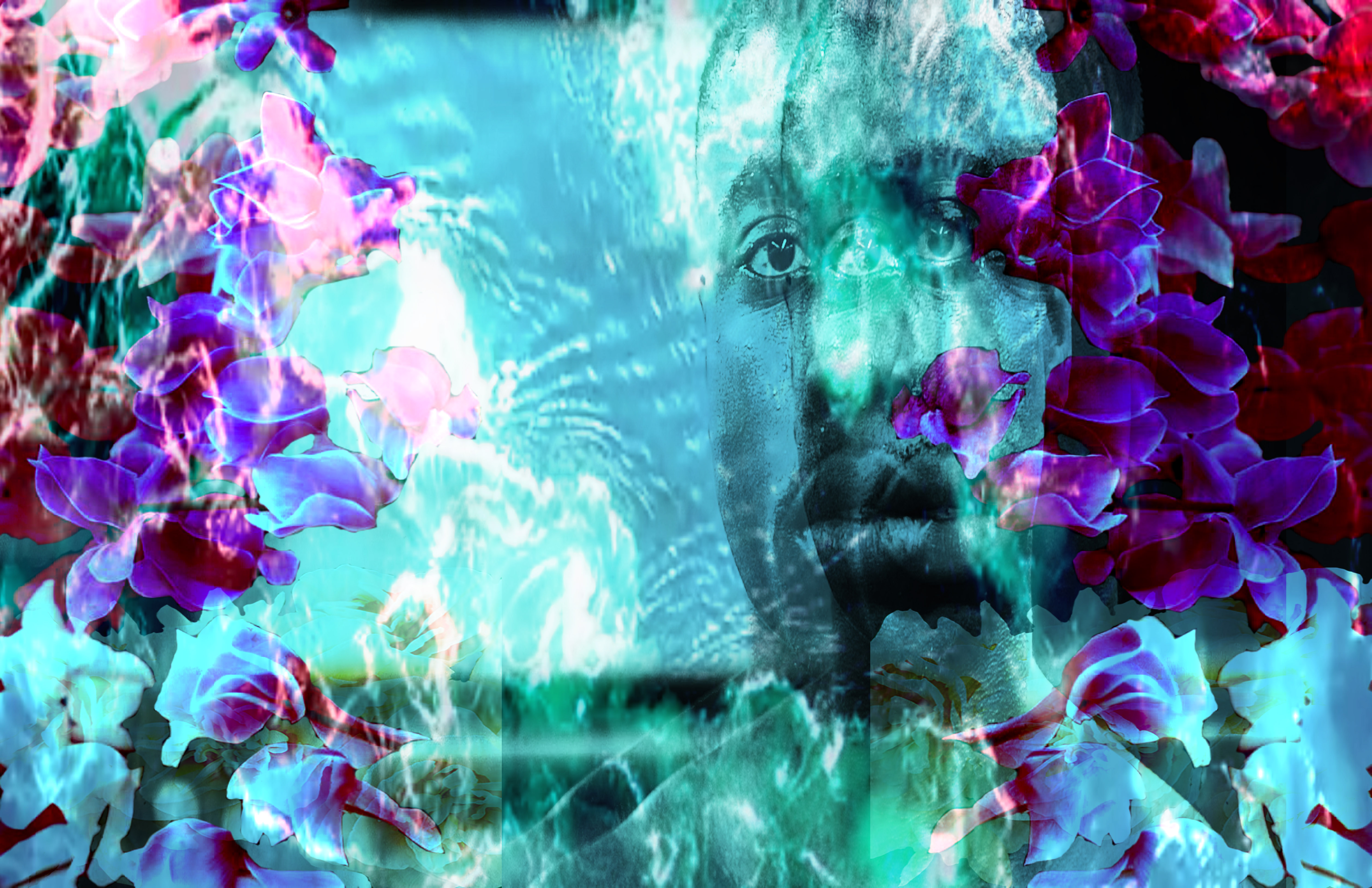
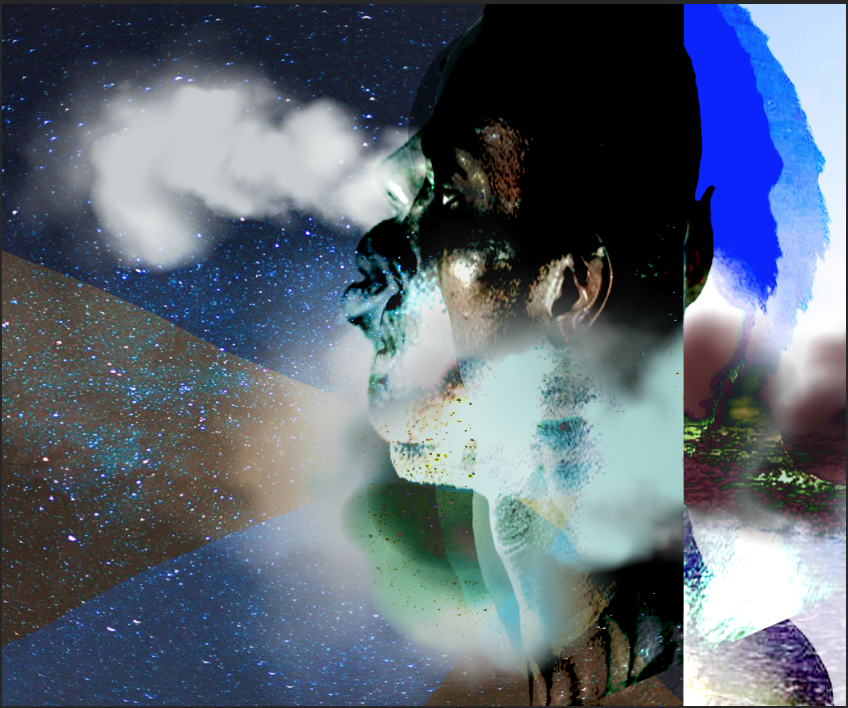
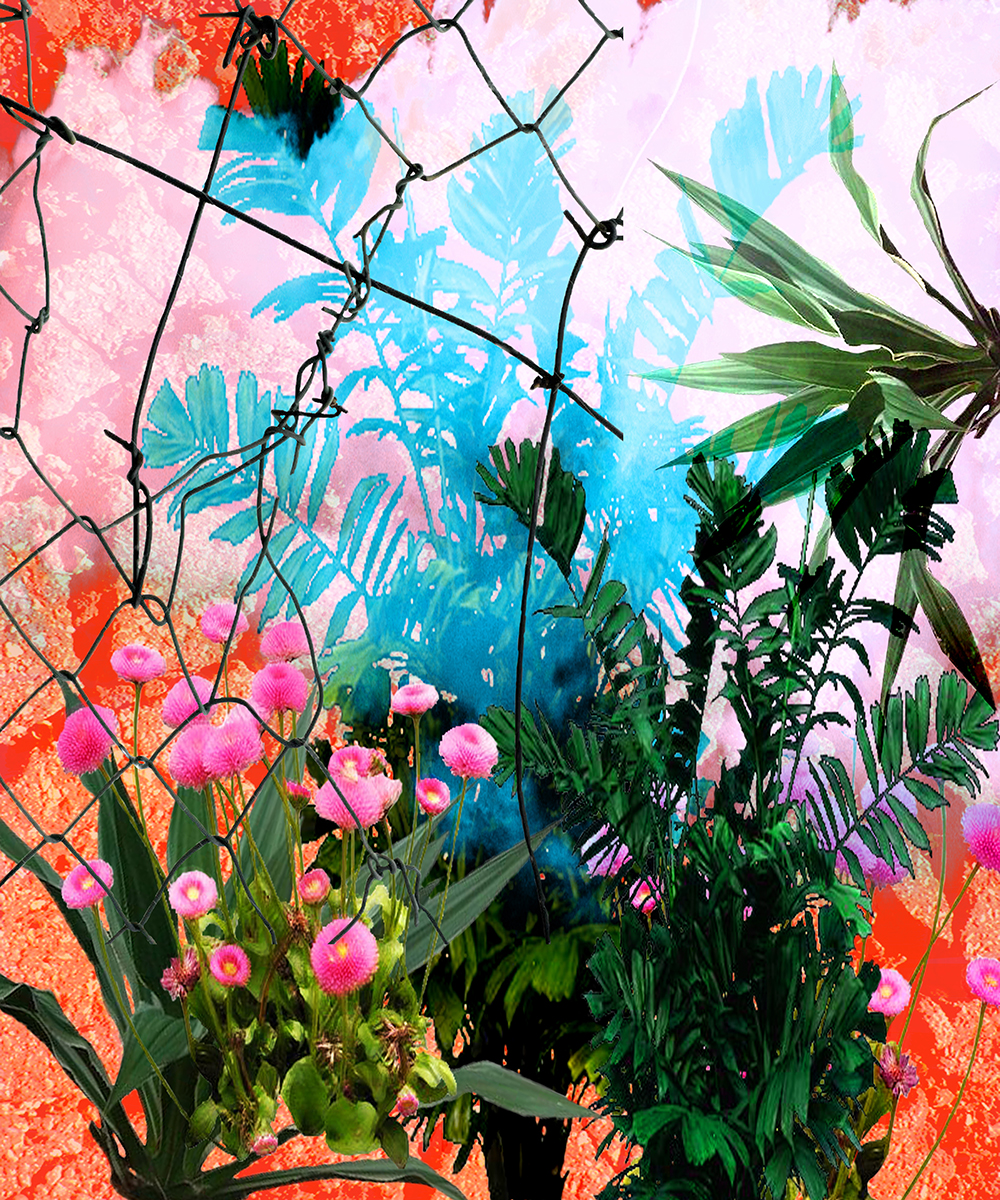
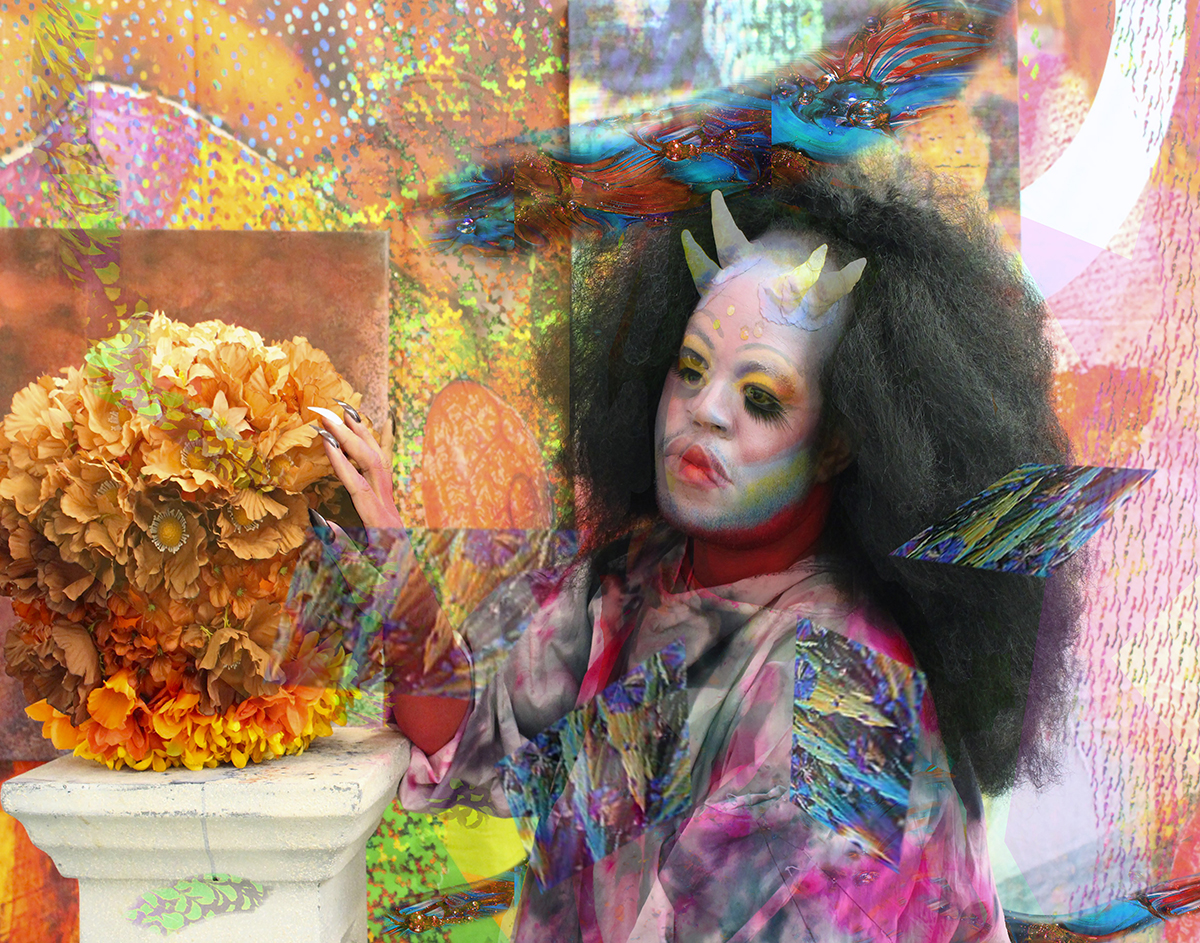
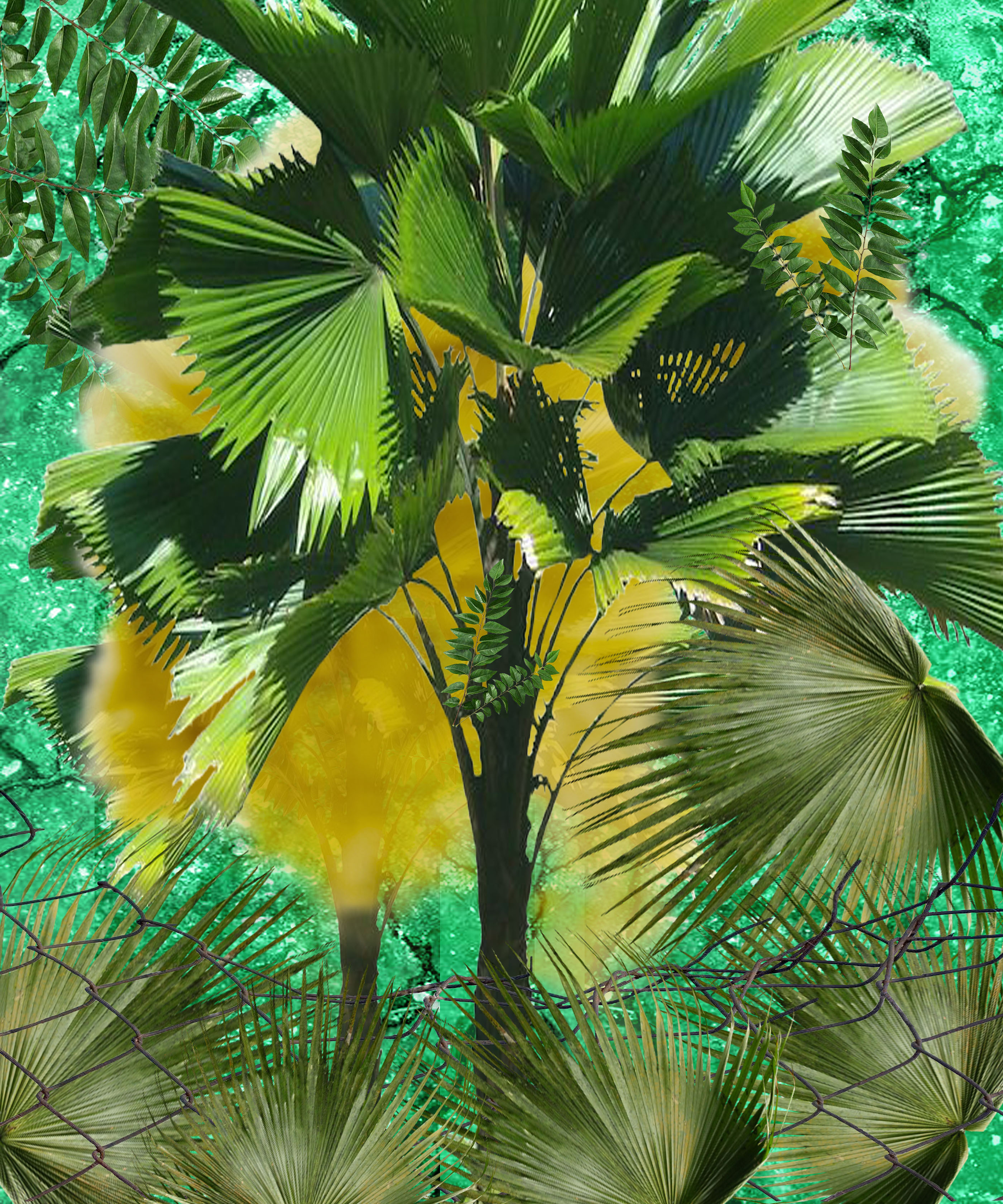
7 Mixed-Media Images

Artist’s Statement

I am a Queer African-American male of Gullah descent from Savannah, Georgia who now resides in the San Francisco Bay area. I received my B.F.A from Georgia State University in Atlanta, GA and my M.F.A from the California College of the arts. My work is a multidisciplinary mix that uses various textile traditions and dying along with new media to depict my shifting identity. I make work that questions what it means to exist within a queer ethnic body and how does the weight of colonialism obstruct the actualization of the self.

My current body of work uses the digital manipulation of imagery and production as a modern black mirror of divination a way to reveal both my internal identity and examine the obscured desire of others. Through heightening of visible color and compression of both physical and conceptual space, I examine the overlapping worlds of identity and emotional memory. As a form of self-care and exorcism, my work draws upon motifs within ascetic and shamanistic practices. By using both my own body and those of eroticized images of queer black men I draw the viewer to acknowledge the levels of abjection and otherness associated with them in homonational spaces. Through the creation of altars and shrines, I induct the viewer into a protoformed world an unattainable afro-futurist queer utopia. Space where my body and identity are not fixed or defined by static criteria of proposed identity.

I also question when does the stillness and quiet of nature aid the Black body? Nature ultimately has been used as a tool, and who controls the land determines how this tool is used. The Black body has become through years of outward cultural control, synonymous with both toil and the land but barred from communing with it. Leaving the diaspora defined as only urban, extraverted, and dynamically public in its existence. Thereby forming a toxic industrial cloud that obstructs what it means to exist within a Black body, and disregarding the quiet complex internal lives hidden from public view.

Richard-Jonathan Nelson is a multi-disciplinary artist who uses textiles, video, and digital manipulation to create alternative worlds of speculative identity. His work is multi-layered, chromatically intense and mixes images of the natural world with reference to hoodoo, queer culture, and Afro-Futurism. He uses his constructed worlds to examine the overlapping spheres of culturally perceived identity and the emotional memory of what it means to be a queer black man. Thereby creating a limbic space free from the weighted excepted western cultural reality, and able to examine the unspoken ways systems of power persist.


 BACK TO ISSUE

 BACK TO FOLIO

Kai Minosh Pyle

INSTRUCTIONS FOR GROWING A POSTAPOCALYPTIC LOVE

dancing around
that little itch, those
tiny blossoms inside
me when our skin
makes air grow thin between us,
I’m hoping you don’t notice
I’m
             whispering prayer songs at night,
teaching small children how to grow
their hearts under incubators’ light
             —organic sunshine hard to find
these days, but
yours is warm against my face
and I don’t want you to see the way
I capture it, cradle it close.
             still
I think to myself,           
                          too much in this world
has been wasted already. let
the heat generated in our gazes
not be yet one more loss.  
reaching out with
my right hand, and offering
my left              to the sky
             I’m whispering your name
with the instructions to grow your heart
next
                          to mine

“THE CREATION STORY IS A SPACESHIP”

The knowledge of how to create a new world is etched into my bones in a language
that has been mostly forgotten. The memory of how to read it comes
only when seen underwater, during a heavy storm. Once it is read, it is
impossible not to act on its instructions, compelled by the force of the ancestors
and unborn, as-yet-unimagined descendants. It will not be knowable in advance
what shape the new world will take. If she will take form framed in fire, or
arise out of the waves, like the last world. Pronouns are not a given.
We will build a wigwam out of soda bottles and mud, with an opening
in the top for the stars to enter. They will show us the way
to the ghost road. Follow those spirits to the end of the path, and that
is where we will build the next world.

(title quoted from Lou Cornum’s The Space NDN’s Star Map)

Kai Minosh Pyle is a Métis/Anishinaabe Two-Spirit writer and language revitalization advocate born and raised in Green Bay, Wisconsin, and currently living in the Dakota people’s homelands in occupied Bde Ota Otunwe (Minneapolis, Minnesota). Their work has previously been published in PRISM International, Red Rising Magazine, kimiwan zine, and Queer Indigenous Girl. They are interested in Anishinaabe Two-Spirit histories, literature written in Anishinaabemowin, and language revitalization as a form of Indigenous futurism in action.


 BACK TO ISSUE

 BACK TO FOLIO

Elizabeth La Pensée

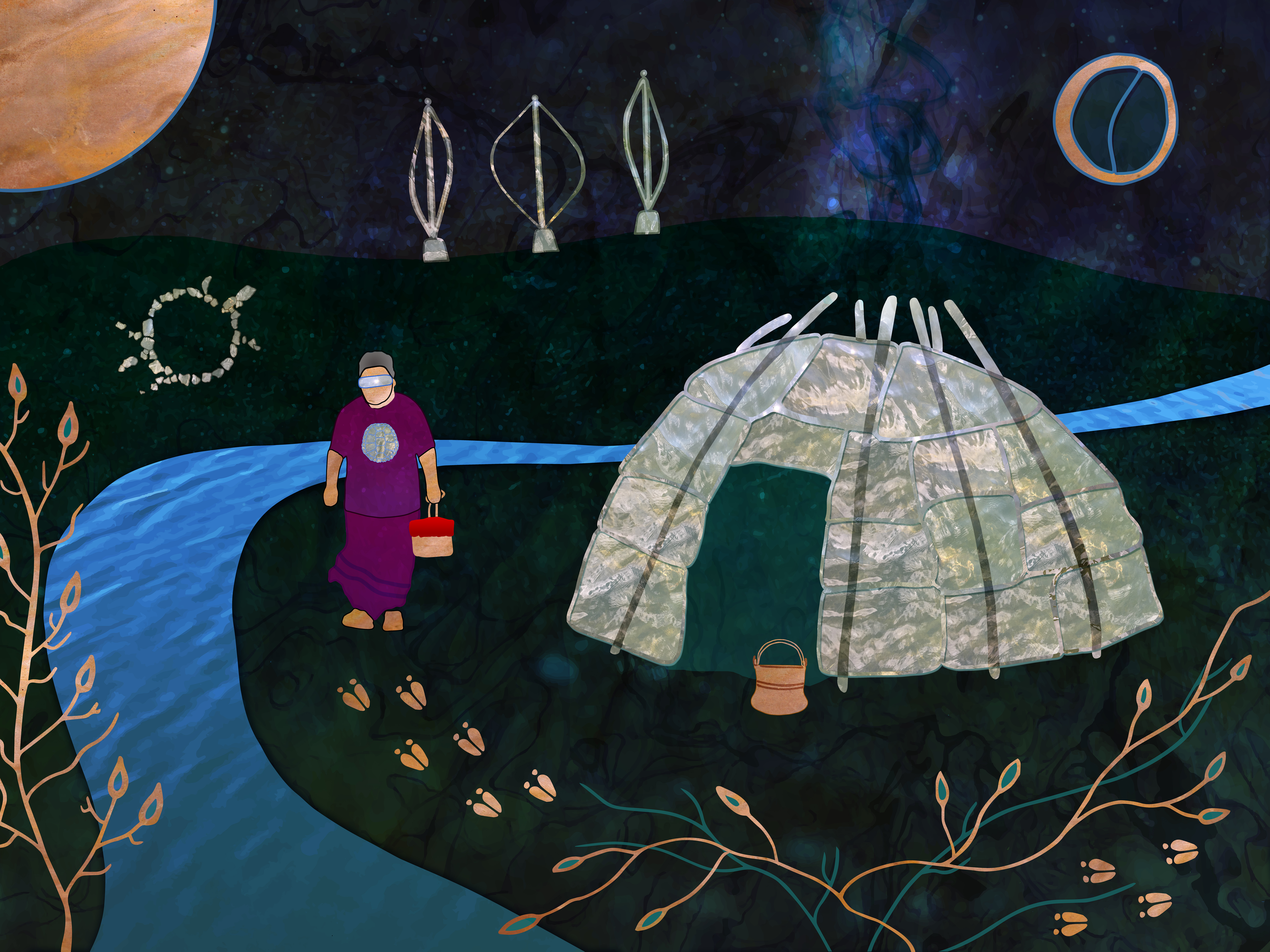
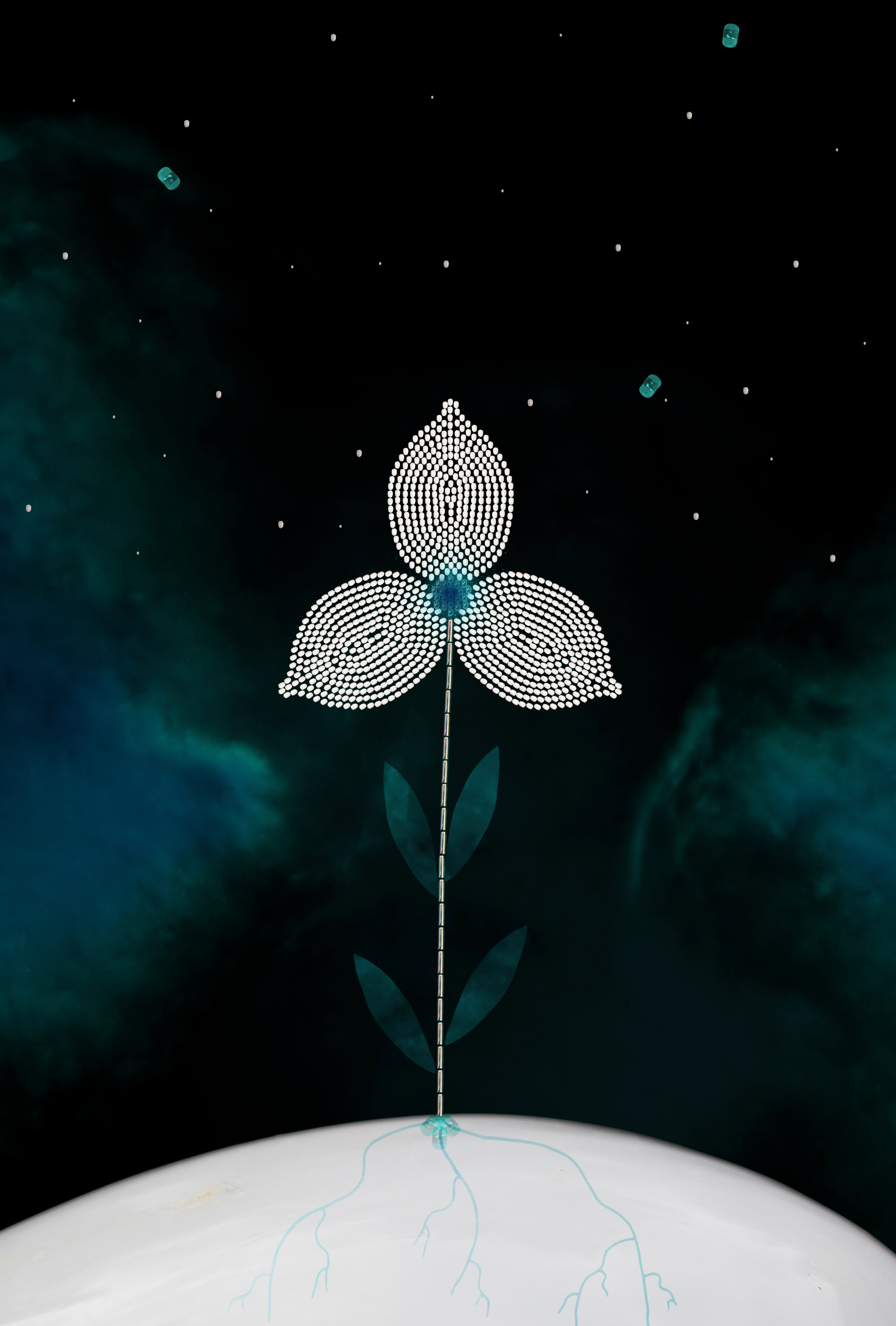
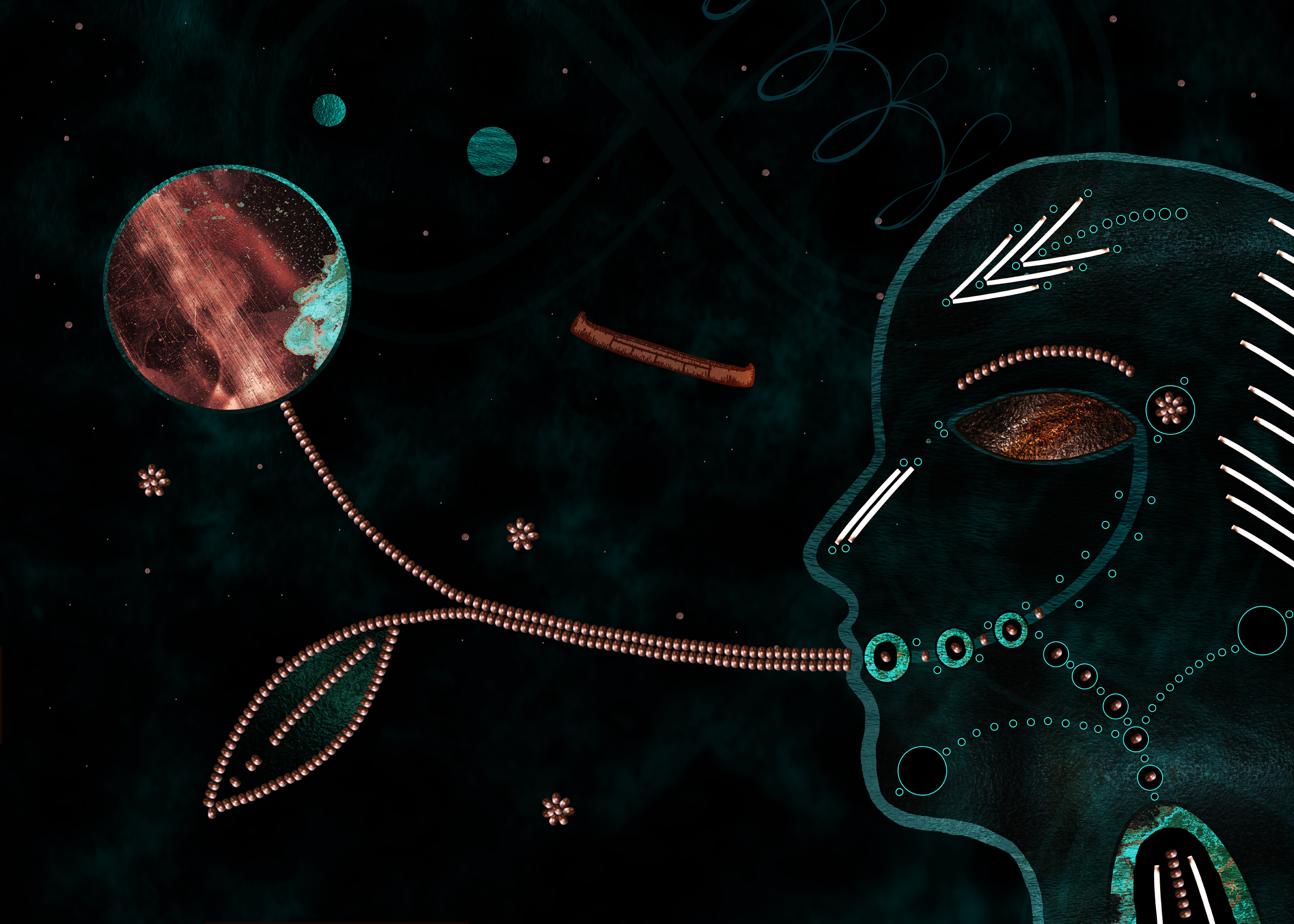
Hands To The Sky

4 Digital Pieces

Elizabeth LaPensée, Ph.D. is an award-winning designer, writer, artist, and researcher who creates and studies Indigenous-led media such as games and comics. She is Anishinaabe from Baawaating with relations at Bay Mills Indian Community, Métis named for Elizabeth Morris, and settler-Irish. She is an Assistant Professor of Media & Information and Writing, Rhetoric & American Cultures at Michigan State University. Most recently, she designed and created art for Thunderbird Strike (2017), a lightning-searing side-scroller game which won Best Digital Media at imagineNATIVE Film + Media Arts Festival.

Lawdenmarc Decamora

Shoegaze + Suburbia

Slowly there’s a scene that celebrates itself,
              holds high office of shame, shoplifts grace
from grocery stores and tomorrow’s tin can mess.

It’s a scene standing in pride, unfazed by the murmuring strong-styled
              neighbourhood
              believed
to be energized out of concentrated flowerpots.

The suburb sprawl is a basement of employment
              hopes, like Monday walks looking for dream pop
              and bizarre poetry recitals  
along the pavement.

Looking for friends who musically trepanned themselves
              with shadows of 1994? Insecure shoes often
obscuring the walls, the sonata of chemicals likens

heads to garage tires you’ve spared for cool
              household principles. I bet you look down,
look down so hard to catch the open light

unfurling, like a beef falafel surprising
              schoolchildren from Bandra, Mumbai
I earn a living by re-counting poetic lines

and make them smell of cardamom.
              Carton-shroud livelihood makes a statement.
To live comfortably is to fall in love

              with euphoria: 100%. Sweetheart of lies—
all right you pay my fines
              as I’m down on my knees to defend

my eighth-month research on the theory
              of shoegaze and how hair cascades
from a culture of unpredictable weather

              sweated for heaven and death wishes. And if
it’s going to be the last time you cut your losses,
              stomach the sound of distortion pedals,

I’d party up again
              and call friends of friends of friends
‘till no grass is spotted
             at the edge of the tarmac.  

Swamps

If dad could turn into a feather furor,
under the melting
sun stares cauterized by the yester-letters

of history, my dad would still be the long
uh-oh sound
of all untrodden wetlands

warbling for a mother roost. And now

the dumaras1 conquer this land,
what the heck,
what the quack! What aches the space?   

I wish dad were here tilling the nouns
of greater yolked fellows:
uninterpreted swamps and Mt. Arayat.

Birdwatchers bird-watching…

and then the beast of history,
my dad after some crumbs of memory.


1Wild ducks in the native lexis of the people in Candaba, Pampanga in the Philippines.

Lawdenmarc Decamora holds an MFA in creative writing and is presently completing his MA in literary and cultural studies in the Philippines. His literary work has appeared in Kitaab International, The Ilanot Review, Kartika Review, Cordite Poetry Review, Columbia Journal (honorable mention), Poésie Bleu Souterrain, Papercuts, The Opiate Magazine, Eunoia Review, Spittoon Literary Magazine, The Peacock Journal, TAYO Literary Magazine, WE ARE A WEBSITE, The Pangolin Review, LONTAR, AAWW’s “The Transpacific Literary Project,” Rambutan Literary, Shot Glass Journal, Mad Swirl, Chrome Baby, New Southerner, In Between Hangovers, Panoplyzine, The Cadaverine, and many others. He teaches literature and humanities in a prestigious university in Manila.

Kate Doyle

Grace says, Not me, I just like hitting things with my squash racquet.

Cinnamon baseball coyote

In the middle of a fight when she is 10 and Grace is 6, Helen writes I hate my sister and puts the piece of paper in her desk. Three months later Grace finds it, while Helen is taking a shower. Helen with her wet hair wrapped up in a towel says, Well I wrote it a long time ago, Grace, and why were you looking in my desk! Their father, intervening, has been frowning. He says, Are you saying you forgot you had this, Helen? Grace is crying excessively, wiping her tears and nose on the pink sleeve of one bent arm. Helen says, I knew I had it, but I don’t mean it anymore. I only kept it because I meant it once.

In their home there is a no-hitting rule, observed without exception, but their mother’s sister could not possibly know it. This is why Helen, in the back seat of Aunt Eileen’s car, on the Pennsylvania interstate, reacts with startling, thrilling physical violence to Evan’s singing. One flat palm slapped across his upper arm, she says, Stop it that is not a real song, you are making that up, be quiet.

Age one: impossible to remember. Their parents have Helen, and on her first birthday put her in a blue dress with smocking around the ribs and chest. There is a picture of it, framed, and they keep it hanging in the stairwell. One Christmas Eve, in college, Grace is dressed for dinner and, descending, pauses on the stairs. She says, unprompted, I do like this picture, Helen, but I feel like there are better baby photos of you.

Evan is born. I am a sister now, joyful Helen tells the neighbors, famously.

Grace is born. Evan, age 2, tells their father, Now I have two of these.

On the one day of winter break when it snows, Grace says with a small nose-wrinkle of distaste, These two are the artsy ones in this family, not me. Helen feels annoyed but Evan is fine. He just laughs and opens the fridge and looks around for milk, saying, We actually think Grace could be an actress, if she tried. Helen says, I disagree, she’s too purposely not caring. Grace says, How dare you, I was great that time you made me be your Peter Pan, remember how convincingly I cried? Grace’s squash team friend is there—I’ll have you know I wept, Grace tells her. The squash friend sips her glass of water. She says, I’ve never been artistic myself, but of course I have to admire it. Grace says, Not me, I just like hitting things with my squash racquet. And she thumps one palm down hard on the countertop, which makes the nearby toaster give off a tinny, wild shudder.

Their parents meet just after college, in a bar, and it’s raining. Later, their mother gives up her career to be at home with them. In middle school, Grace becomes incredible at squash. Of the three of us, says Evan over sushi one New Year’s, Helen is most doomed.

Evan’s plan is not to make the kind of mistakes Helen makes.

Pick yourself up, says her father, gently.

Helen cannot sleep all night and calls out sick from the coffee shop. This is not what people do, says her mother. What people do is, they go to work.

The three of them try to remember an alphabet book they loved as children. S is for Serious. T is maybe for Timid, but they are not certain. Evan is trying to find the Yankees game on television. T is for Tearful, he says. Grace, flung out on the sofa, wearing one of their mother’s old college sweatshirts, elaborates: T is for Tearful, like Helen is.

In high school, their dog gets old and dies. Her gums turn very pale and her small heart races, visibly beating under the skin. They and their parents take her to the vet, where they sit around her on the floor and stroke her until she falls asleep. The part of her Evan can reach is the small, warm armpit. They leave before she has the injection that will euthanize her. This is what the vet recommends they do.

The ground is too cold to dig into, and so, for now, their parents keep their dog’s ashes on a shelf, next to their mother’s lightweight spring sweaters.

Evan, in elementary school, often tries to get a look at the top of his head. He thinks if he looks up quickly enough, he’ll catch a glimpse. He stands in the family room and tips back his head, repeatedly.

When they first get their dog they are children, and argue incessantly about what to name her. Evan says, I am going to pull your hair. Grace says, I hate you both. In the end, the name is a kind of mash-up of their disparate suggestions.

College icebreaker: My name is Helen, and a fun fact about me is, my dog was named Cinnamon Baseball Coyote.

They are children, and their father is taking them with their Christmas present racquets to learn the game of squash. From the front seat, turning off the engine, he says, You all are going to really like this. Helen presses her face to the clouded glass of one window. Snow circles from the white sky, accumulates like pale moss on the asphalt. Under his breath, Evan is singing a made-up song. Grace says, Fine but if I don’t love this, Dad? I am not ever forgiving you, ever.

Kate Doyle’s writing has been featured in No Tokens, Meridian (Flash Fiction Award winner), Pigeon Pages, Bodega, the Franklin Electric Reading Series, Lamprophonic, and Sundays at Erv’s. She lives in New York and received an MFA from NYU.


 BACK TO ISSUE

 BACK TO FOLIO

Raena Shirali

we don’t belong      :

in rooms with family spirits / central on blueprints

near rivers where one could be caught / submerged

with our teeth sunk in thighs

with our thighs visible to a flash of teeth

licking milk off our mouths’ edges

near gold / paint / pearls or oysters

straight-backed & sure

close to the horizon / drop-off point

in classrooms / learning about the end of the world

contemplating heat

dipping ring fingers in turmeric & slaked lime

asking about symbols / patterns in sand

asking but do we worship the violent goddesses?

calling each other queen like it undoes the fact of their stares

next to our husbands

together in rivers

baring our teeth at the stupid sun

calling it blood lust killing us across oceans

blessing durga’s foot on her man’s neck, tongue thrust out—

                                      even our idols were made to feel shamed


daayan after a village feast

any way to the bottom of a bottle is one the men
             will pioneer. moonlit paths through the pale green
                         growth. they trade tea leaves, tobacco, ghee. they trade

what we women toiled. naturally, we sneak sips, dilute
             the remainder like kids—slinking on packed mud, careful
                         not to step too heavy. i’m the only one who takes

full flasks like this. that’s not why they want
             my pasture. they don’t know their own skin
                         glows amber—we all sweat it out the same.

our teeth slump against gums & all our bones
             whittle down. maybe they feel bright yellow
                         in their lungs, the unsung chakra, & think it’s my fault

their feet slur the dirt. they pull me in with spindly
             arms, kiss me flat on the forehead, brandy
                         breathing their half-lie : how capable they are

of love. moments before the blackout, all their limbs
             ablaze, the whole world must seem possible & warm
                         & fused. it must be intoxicating to survive.

they pass out unarmed, sloughed against fences,
             & i slip bottles from loose fists, tuck them into our
                         baskets. we become mist, shift groveward, flee.


Artist’s Statement

Since before the publication of my first book, I have been researching the ongoing practice of witch hunting in India, generating poems engaging with that landscape, and with personae and myths associated with the treatment of women in Jharkhand. The two poems featured here engage with that subject matter uniquely. “daayan after a village feast” is written in the persona of a daayan (a woman accused of being a witch). While our daayan’s particular voice is imagined, the scene this poem paints is not, recalling some of Jharkhand’s present-day systems.

If “daayan after a village feast” engages traditionally with persona writing, “we don’t belong : ” subverts it, asking more broadly: how do antiquated and existing norms surrounding female mysticism in India inform this culture’s treatment of women? This poem derives its grounding lines from anthropological research related to the politics of accusation; the poem’s first line refers to the superstition that women are more likely to become (or be called) witches if they enter the rooms in a home where family spirits are thought to reside, where there are altars, or in rooms that happen to be in the very center of the dwelling. The poem juxtaposes the way women are allowed to move through that (& this) world with imagery grounded both in Indian and American culture.

Finally, “we don’t belong :” refers to patriarchal interpretations of Hindu mythology surrounding the goddess Durga, often depicted with her tongue stuck out, presumably in shame, as she accidentally tramples her husband while killing demons. This notion—of shame from denying our “domestic duties” while manifesting and experiencing raw power—is central to discussions about women’s “safety,” and what women are at liberty to do in public spaces.

Raena Shirali is the author of GILT (YesYes Books, 2017), winner of the 2018 Milt Kessler Poetry Book Award. Shirali’s honors include a Pushcart Prize, the Philip Roth Residency at Bucknell University’s Stadler Center for Poetry, and poetry prizes from Boston Review, Gulf Coast, and Cosmonauts Avenue. She currently lives in Philadelphia, where she is a co-organizer for We (Too) Are Philly—a summer poetry festival highlighting voices of color. She also serves as Poetry Editor for Muzzle Magazine, and is on the editorial team for Vinyl. Find out more at raenashirali.com.


 BACK TO ISSUE

 BACK TO FOLIO

torrin a. greathouse

On Re-lacing My Shoes

i.

           when the officers first return my shoes, laces tangled beside them, i
           realize i never learned the pattern of their threads. struggle to cross
           the twine under itself to form an orderly set of bars.

ii.

           i am Googling common+shoe+lace+tying+patterns
           & most+efficient+shoe+tying+pattern
           & average+tensile+strength+of+shoe+laces
           & average+length+of+time+for+suffocation
           & why+did+prisons+first+start+using+safety+glass+cells
           & suicide+statistics+in+US+prison+system
           & transgender+suicide+in+US+prison+system.

iii.

         excerpt from therapy journal

        new symptom: since confinement i’ve struggled with the feeling that
        my shoes are too tight, laces pulled taut, bones so close to snapping like
        a lock’s mouth.

iv.

          list of institutional euphemisms:
          special housing, protective custody, adjustment center, safety housing,
          administrative segregation, softie tank

          read:
          solitary confinement

v.

          plexiglass cells were first integrated in prison corridors to give guards
          easy access to prisoners, the visibility of each cell preventing escape       
          attempts. there are a series of openings near the ceiling which allows     
          guards to administer capsicum spray without endangering officers.

vi.

          excerpt from therapy journal

          new symptom: extreme sensitivity to light, creating migraines & visual
          hallucinations. in solitary, the lights never go out.

vii.

          official explanation:
          this ensures officers are capable of observing prisoners at all times.

          institutional euphemism:
          this is a safety measure, meant to ensure the health & well-being of
          prisoners.

viii.

          deprived of human interaction, prisoners begin to experience anxiety,
          depression, panic, insomnia, paranoia, & increased aggression. after 72
          hours of sleep deprivation, even prisoners without a history of
          psychosis will begin to experience distinct hallucinations. these effects
          are more pronounced in those with preexisting mental conditions.

ix.

           excerpt from therapy journal

          new symptom: i have forgotten how to tie my shoes. i can visualize the
          pattern, like my mother taught me. the rabbit circling the tree, diving
          into its warren. i remember every step. but each time it comes out a
          noose.
  

Aubade w/ Autoimmune Disorder

“the parts of the plant where the sperm is received is called the stigma” -sam sax

+ the stigma is also a marking of disease
a red X across the door     of those infected w/ the plague

        [how once HIV was called the gay plague]

perhaps then the word faggot     too is a stigma
when it marks a door     or body

        + aren’t these both places where something is received

how when the older man     face sunken as damp earth
invites me over     feeds me drinks + the promise of money

        i stigma my lips into entrance to receive him

he slips off the condom     cums across his chest
[he will not let me taste it   + i wonder again if he is dying]

        his seed sprouts a bandolier of orchids     blooms his palms into funeral bouquets

years later i find him on Facebook     read about the drugs that keep him alive
pinioned in my cellphone’s blue light of dawn     i stroke myself

        to the memory of his arms   + the bills stained red w/ ink     

weep + cum in my own mouth     hold it there miracle
of my virus-free blood     dissolving like honey

-suckle     candied petals across my tongue


Apologia for Snapchat of Birdless Wing

forgive me     given half a chance
i’d shake the jar of fireflies

hoping to coax more brilliance from their fear   
sweat sieved like bath water     in Midas’ hand

watch the little glints rattled
loose of light     jar smeared with sunstains

tear the snail from its geode
-curl of a shell     its back peeled as half-ripe fruit

expecting some glittering secret inside
i’d take scissors to the rabbits ear

snip bloodless     velvet from its skull   
i’m so full of child’s arrogance

that any beauty     sufficiency dissected
could be made my own     i’d tear the dead star

-ling’s wing & pose it     for a picture
limp omen     spread like knifed fingers

i’m sorry     i’ve forgotten
which of these stories are true

& which i’ve invented to upset you
i’m marveled at the slaughter

of my hands     at the voyeur
sitting naked in the back of my eye

how they hunger     for the fracture
of such soft things     how gentle anatomy

is undone     & how any veins are so alike
in their unbraiding     bronze-blue

alchemied to common rust     forgive me
my first thought of any body     is how it empties


On Discovering my Gag Reflex, an Absence

how to tell the story? therapist says
you bury trauma in shock value; no,
that’s a lie, therapist is withholding
judgment; this makes one of you;
this story is about sex; but
it’s not; but maybe, it’d be easier
that way; his hand clenching; like
teeth; on the back of your neck; your lips
pressed to the stiff curl of fur; skin
linoleum white; how a story turns
in on itself; how fingers find the back
of a throat; attempt to reframe body
in its emptying; fail; saliva curling down
your palm like handwriting; therapist scrawls
dysphoria in her notes; saliva pools
w/ tears on white linoleum; this story
is about sex; but not how you assume
it is; words load themselves like a gun;
i say gag; you are already imagining
the scent of sweat; the sound of one body
choking on another; instead i mean
the desperate of one body to empty itself
into change; instead i mean disorder;
ketosis; acid stained teeth; how the words
do all the work for you; reframe the story;
so it tells itself; before you even
open your mouth

torrin a. greathouse is a genderqueer trans womxn & cripple-punk currently haunting the greater Boston area. She is the author of boy/girl/ghost (TAR Chapbook Series, 2018) & winner of the Peseroff Poetry Prize, Palette Poetry Prize, & the Naugatuck River Narrative Poetry Prize. Their work is published/forthcoming in POETRY, The New York Times, Poem-a-Day, Muzzle, Redivider, BOAAT, & The Rumpus. When she is not writing, her hobbies include awkwardly drinking coffee at parties & trying to find some goddamn size 13 heels.


 BACK TO ISSUE

 BACK TO FOLIO

Spencer Williams

Rumination on a Mother//Sister Tongue

                         My girlbody
        tangled in
           yolk strings
                    aside my
            sister.

                                   We
                                   pulled
                                     an embryonic
                                                           distance
                                              between us
                                                         through a
                                                          thick of reeds
                                                                 grey as
                                      assigned              biology.

                                      I think about this
                                           often:
                                             our mother’s womb
                                          like hands
                                                  digging out
                                          the fleshy core
                                         of pan de muerto.
                                                     
                                                             In her, we grew
                                                                                   towards
                                                                  the outer rim
                                                          of flimsy paper womb
                                        so           muted
                                           in pink as to
                     appear bashful
     or embarrassed
        by           borders,
           by the
           cruelty
                     to which our
                     faces
                        would eventually
                                                       turn
                              on the outside,
                     invisible even
                              when facing
                                           each
                                                other.

                                                                              •

                                                    Towards             the edge
                                                           a plate
                                                                  scatters
                                                      off white
                                                               skin
                                                        and weeds
                                                  black
                                                           with lust,
                                                                           drawing
                                                              full recon-
                                                figuration:
                                                                 body
lines
                                                   spirals
recede
                                                against
knots
                                               blood
arteries
                                                  umbilical
rivers
                                                      tubes
indistinct
                                               like siblings
                                                          with countries
                                                                                      at war
                                                                                        with
                                                                                            each other’s
                                   stained
                                           particles
                                                             ligaments
                                                   chunks of
                   internal          bleeding
                in pieces
                in                                          water
                            salt dissolves
              remains
       a border

     wet with
              
                           mother’s
                                        organ
                                 entrails
                                            leaking                               cursive
                       over both
                                          our                                                   names.

                                                                                •


In a reoccurring dream,      we are bulbous
                                                                                              shapes                                 floating
                                                                                                       stagnant
                                                                                            muddy                                   and
                                                                                         sheltering                                    flies
                                                                                in                                                  upended
                                                                                 creek beds.

                                              I believe my                                     sister
                                                 told me

                                                                                         never give
                                                                                               name to
                                                                blood
                                                                                          as if to
                                                                                                  share it.

                                                                                                            I still
                                                                                                            have siblings
                                                                                                   I’ve never met
                                                                                              rooting
                                                                                                      deep into
                                                                                                                 my girth.
                                                                 If                       they are dead,
                                                                    then I am buried                 too and
                                                                    the lot of us are
                                                                                        pale spots
                                                                           of land                       floating
                                                                   like an
                                                                            archipelago
                                                                                                   beneath                  the ground.

                                                                           •

                                              It is no use.
                                                                          If my blood sister’s
                                                                        fingertips
                                               betray reflections
                                                 of my own,
                                    they are cursed
                                                         to stain
                               every surface
                 with oil.
                                                                          For though I outlived
                                                                                the salt
                                                                                         burn of my birth,
                                                                            I remain
                                                                                     uncertain
                                                                                         of the month
                                                                    my sister came,                       only
                                                                                    that it happened,

                                                                                                           that it is as factual
as the name I
                                         give myself.

                                                                                                      And if my blood
                                                                            sister’s mouth
                                                   resembles
                         in          shape
                 my own, her
                           tongue remains
                           a stranger
                   unghosted by
                                            familial                    misinterpretation,
                  meaning she
          must know
this feeling too,
                  can spell it out
                                             in ways I
                                                             cannot translate.

                                                                               •

When
                        Carol,
my adoptive mother,                travelled
                                                     to Beijing
                                                                  with Carl
                                            to bring home
                                        his adopted                    daughter,
                                                         Carol too brought
                                        back a dish                                  of red
                                               paste for me
                                                                    to stamp
                                                                     my name
                                                            in Hanzi with.
                                                                                My name thus
                                                     became
                                     an imprint
                                       on every
                                                 bedroom wall,
                                                             a wound
                                            unbandaged
                                     and                                                              breathing.
                                                                                                   My fingers
                                                                                               dragging
                                                                                     softly              my name
                                                                                           into the chalk
                                                                                   white,
                                                         the blood of it
                                         fading like
                                         a mother
                                                 tongue buried
                                                            by generation.

                                                                            •

            The papers say the two of us
are not                twins
                                                              even as I do
                                              not reject
                                                           the idea
                                                                        that we are,
                                                                        in some
                                                                              psychic way,
bridged                                                                                   by thread
          at the
hipbone.
            Us two        (then three,       then four siblings)
                           uncut from
                the same
tired cloth,
              torn
                       like a handful
       of loose hair,
a scab
           browning at
the knee.

       Sister,             where
              do                        you                                                                           reside?
  
When                              I                                                                                              pull
           hairs             from                                                                                         my
      face…                are                                                                                                 you
there in the wound?                            Is this you
        you          threatening                     to
                                        bleed                                           me?

                                                                              •

In sleep,
            I see birth mother
floating
                    above                   me,                                                                                bright
  pink                      and
            naked
   as                              a                                                                                 prophecy.        She
                          chokes down
                     my body until her
                                      mouth
                                      floods with
                                 cells and       opposition.

                                                                    On the night I was conceived,

                         Mexico
tangled
                                                                   birth mother’s hair                            into canals
                                                                             of blood.
                             Seven months later,
and I entered grave
                           and
                      unpronounced.
                                                         How                                         to name
                                                                                                 a dying breath
                                                                            something other than quick,
facile.
                                          How to trace
                                    the blood
                                        back to a mother
                   I have one
                   photo of, who
                                           does not know
                                      I am not what
                                         they first called
                                     me.
          
           How many ways
                                     to call me “sir,”
                                             “him,”
                                     “tranny faggot”.

                                                                  How many
                                                  ways to deduce
                                    whether or not
                     mother’s addiction
                                             inflicted upon me
                                    my penchant for
                     the dangerous, as in

how                                       many men
do we now                                              share between
  us.
                                                              How to
                                           to carve birth mother
                                               out like
                                  a stone wedged
                                                  into my naval.
             
                                     How to find
                                     her teeth
                                  nose         eyes
                                             in a week’s worth
                                  of Facebook searches.

                                      How to tell her
                                          I am not
                                       her son, that I am
                                                                     barely
                                                           her daughter.

                                                 How many ways to
                                say “daughter”
                                                            “hija”
                                                   “girl”
                                                             “perra”
                                                        “mija”
                        
                                                            “tranny faggot”.

                                                                             •

                                      In a dream, I address my
birth mother,
                ask her
                           to guess
                                           how many
                                                              faces
                                                                         I see
                                              in the mirror
                                                                     each day.

                                                                        Ask her to
                                                              tell me
                                                          the number of
                                                                       siblings that
                                                                        know
                                                                     I
                                     am                  here.
                                            Ask her to
                                                  point
                                                          me to
                                                                  the spot
                                                               where my birth father
                                                                  touched her      ferocious
                                                             and summoned               me.

                                                                             •

The description provided by the Tate and National Galleries website regarding Louis Bourgeois’
“A’L’Infini” series deduces
that the title,          “into infinity”      is
suggestive
of both
an unmapped
expanse
and a life
cycle.


                                                                              So then.

                                                                                           At the end
                                                                                           of life, there
                                                                                           are still

                                                                                                       borders to
                                                                                                       be crossed,

                                                                                                       bodies
                                                                                                       averse to
                                                                                                       location and
                                                                                                            thus preserved
                                                                                                                              by their
                                                                                                                              unknowability.

                       Perhaps, this
                                                                                                                        is most accurately

                                                       how I think
                                                                 of you,
dear siblings:
                                                                                                 In portrait.               As borders
                             struck down

by
                                                                                   recognition.

                                                                  By this, I mean
                                                                                          I know you
                                                                                   best
                                                                                by the homes
                                                                         that won’t lay
                                                                                         claim to me
                                                                                         in full.

                                                                         When I
                                                                                 close my eyes
                                                         there is not one

                                                         thing that
                                                         owns me.

                                         
                                        Thus, my branch
                                   among the
                  oyamel does
             not know
of its
             address, is
             blind to
                         the other branches
             waving beside it.

                                                                              •

                       Roots, we are
                                  so many
                            bodies between
                                    us
                                        both here
                                           and not here.
   
                                                In Chula Vista,
                       
                        I                 climb the hill towards         my house          each morning.
                                                        When            I reach          the top,

                                               the border plays                     catch with

                                                                            my                    body
                                       and feeds me
                     to the sky.


I Explain Dysphoria to my Older Sister

Perhaps my biggest error is located in the assumption that I was built to live as
long as you, our mother, our father. I look up for a door to swim through in the
sky and find it—the door—shaped like the weightless center of a guitar. Behind
the door, I play soft mouth music. In the grey space, my tongue gyrates softly
against the ass of my teeth. I spit into the hollow and there is blood, a seed, a
sprouting limb. I have an error of a mouth, a friend remarks. On any given day, I
enter a room and count all the men I can identify—I mean—I count confidence in
waves, through heat, beyond doubt. Lipstick is an occupation—I do mean chore.
If there is a gun in the room, then I am already sucking down the barrel. If there is
no gun in the room, then I have brought one into it. Relief is a door in the sky
with chemtrails. I suck the lines, birth conspiracy—as in, am I woman, am I not?
Perhaps my biggest error is located. Perhaps my biggest error—woman, not. On
any given day, I look up and see nothing. I look up and hear no music. In my
mouth, the barrel gyrates against the ass of my tongue. If there is a gun in the
room, it is you. It is our mother, our father remarks. If there is no gun in the room,
then spit. Then limb confidence. Then sprouting doubt. Then seed heat— music
shaped like a lipstick sky. Already, I birth my weightless relief. The door beyond
is chemtrails. I can identify all soft meaning. I count and play guitar teeth.
Occupation is woman sucking down grey space. I enter men and swim through
the blood chore.

Spencer Williams is a trans poet from Chula Vista, California. She is the author of the chapbook Alien Pink (The Atlas Review Chapbook Series, 2017) and has work forthcoming from or featured in Hobart, Cosmonauts Avenue, Alien Mouth, Potluck, and others.


 BACK TO ISSUE

 BACK TO FOLIO