1. If we don’t know our clan, does that mean we can eat all of the animals— or none of them?
2. If my partner and I are both from matriarchal communities, whose family do we move in with? (and who provides the deer for the wedding?)
3. If being de-colonial means I should give up fry bread, do I also have to give up my glasses? They’re the only way I can see the beads to make my traditional regalia.
4. If I am deer clan on my Mom’s side but the sorting hat put me in Ravenclaw, Which animal do I put on my beaded medallion? Can I put both?
JUST WHAT KIND OF TRICKSTER ARE YOU?
“Well, which are you—a finger or a thumb?”
I—
I am a hand an arm reaching a body a community across generations I am the cosmos translucent.
“Ok…I’ll put you down for thumb, then”
SILENT PRAYER OF AN INDIAN ANTHROPOLOGIST BEFORE HEADING TO WORK
If I die tomorrow,
don’t let them put me in the department storage room, (lord knows I came out of the closet decades ago)
wrap me in plastic, (I, like my ancestors, prefer natural fabrics, silk is best, but cashmere will also do)
or break off pieces of my teeth (Instagram can tell them what my diet consisted of).
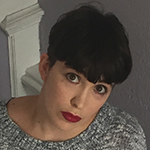
Jenny L. Davis (Chickasaw) is a Two-Spirit/queer Indigenous writer from Oklahoma who currently lives in Illinois where she is an assistant professor of American Indian Studies and Anthropology at the University of Illinois, Urbana-Champaign. Her creative work has been featured in journals and anthologies including Transmotion, Santa Ana River Review, Broadsided, Yellow Medicine Review, As/Us, Raven Chronicles, and Resist Much/Obey Little: Inaugural Poems to the Resistance.
A good way to die would be to infect an unknown, rare disease Letting your body leave its mark on medical records and gruesome graphical Facebook articles But it’s more important to contract one that is special enough
Have you ever taken the time to take off your friend’s glasses and ask if they’re struggling to see through you? No. We even sell glasses as fashionable items, as drugs to patients of Myopia. Because a disease is prominent enough we are expected to carry it without the love of others. Because a disease is prominent enough it is safe to assume that it will not consume you. Because a disease is prominent enough people could tell you that you will be able to go through this shit alone, intelligently pushing the loaded baggage away. Because a disease is prominent enough nobody sees anything wrong with having tons of luggage rotating cluelessly on the endless belt hoping that someone would pick them up hoping that they could satisfy others with what’s inside hoping that they’ll belong.
I saw them desperately trying to exhale the black holes out of their bodies So they could join the circle again A circle still floating, trying to find some common ground discussing about universities, horoscopes, failed relationships. They knew they could blend into any circle they wanted, as usual But tonight they were drawn to sharp edges and angles and slopes and puffs of vanishing smoke Octagon. Nonagon. Decagon. Dodecagon. Add more edges do some exercise think positive you need something new in your life now pour in more the more edges you have the better you’re doing but before you know it the circle comes to an end again you are back where you’ve started so could you please just leave them alone?
You know that’s a lie right? Don’t even ask if they’re okay just stare straight into their eyes Let them swear at you. Let them shove you. Let them scream at you. Surrender. They wouldn’t do this to you if they could see another way out. Continuously reassure them tell them you’re staying, you’re staying no matter what and a broken vase doesn’t have to glued together again to restore its beauty because their shattered pieces are just as good Push their head against your chest because moist and slime on your shirt is temporary and if you do this right this state shall pass too
Spend a minute staring at just one word, and its meaning will be lost completely. They texted me the next day apologizing, promising that they’ve recovered now Recover. Re-cover. I couldn’t help but question, if they felt compelled to put on a cloak in front of me Or if they wanted to earn enough quota of normality so they could run away from their feelings again in case of emergency
I want you to know that a tablecloth is the most useless garment of human history. Of course you have edges, of course assholes would scratch on your perfectly refined surface, of course sometimes ants crawl over you And of course the rice stuck on you could be washed away. You are a table. You are my springboard of ideas, you support all the authors of narratives, all the occasional naps, storing essentials for me never doubting that I’d not come back. A table could function, even if it’s not in a fine state, even if it’s naked.
TAKE ME TO NEVER-LAND
If only I knew how to say “FUCK THIS” when I was younger I wouldn’t have to sit in front of the TV for hours wishing that Barney the dinosaur would just—DIE Wishing that professor panda would tear off his fake mustache and perhaps ask how my day was going, say anything other than Chinese idioms Wishing that the kangaroo with glasses would stop giving me awkward stares during those short pauses where it expects me to magically multiply my intelligence Wishing that I could find the other episodes of Pokemon my brother was hiding Wishing that Thomas the train and the Teletubbies would be released from the locked shelf, make their weird noises, turn off the switch in my brain just for a little while Wishing that the number “1” button on the TV remote wasn’t so out of reach—wishing for permission to have dinner at my neighbor’s place every night so I could at least enjoy one full TVB drama series Wishing for the Monkey King to take me with him to the West because I’d rather fight with monsters on the field and not in my head
If only I knew how to say “FUCK THIS” when I was younger I wouldn’t have to sit in the corner of my kindergarten classroom wishing that everyone could just SHUT UP for a second so I could demand some answers Dear teacher, you showed us what lions and dogs and cats and zebras and giraffes looked like and led us to ROAR WOOF MEOW together in unison but what do zebras and giraffes say? Are they not granted voices because of how odd they look? And you told us that we were Chinese but where IS China you say we are IN China right now but isn’t this place called Hong Kong then why were all the other kids laughing at me when I said I was Hongkongese? And you taught us to sing songs about our moms and dads being the best parents in the world which made them very happy but how would I know if they’re really the best when everybody else is singing the exact same thing? Dear first boy I loved that hated red, what do you mean you don’t know what love means? You’re not supposed to say another girl’s name when I ask you which girl you like most. I hated red because I loved you. I removed every bits of red in my life and I guess now I have to remove love too. And dear mom, could you please stop begging these kids to let me join their games? I’m not weird, I just prefer sitting here by myself I don’t want anything to do with these incapable savages that count with their greasy fingers and can’t properly pronounce the word “blue” Screaming devils pooping in their pants that somehow think they’re righteous enough to laugh at other people who do the same
If only I knew how to say “FUCK THIS” when I was younger Perhaps I wouldn’t have listened to the doctor who said I was obese Perhaps I wouldn’t have to be “it” every time when we play tag Perhaps I wouldn’t have to be “it” back in year7 when other girls avoided these hands grasped by my first partner because I was—disgusting Perhaps I would have been daring enough to slam my report cards and writings and recordings in their faces, the ones who think I’m not that bright, that I am more conventionally capable than they ever will be Perhaps I would have spent less nights suffocating myself to sleep, leaving stains of tears on my pillow convinced that I could never be loved the way I wanted to Perhaps I would be an exact copy of Eric Cartman by now, fat, but content with everything I have, with everything that I am, brave enough to say “SCREW YOU GUYS, I’M GOING HOME” whenever I feel like it
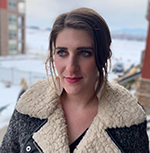
言午正宜 is all about trying to capture the light rays of a sunny afternoon, within words, but making sure it’s not overly bright and blinding. They care about accessibility and healing from trauma, because they are trying to become better, even without knowing for sure if there’s absolute good. They’re based in Hong Kong, deep-diving into the fields of Buddhist Counseling, tarot therapy, the Taoist framework, (un)doing gender. (Trying to start a healing account on Instagram called @cornerofhealing but procrastinating at the moment. Follow/DM them anyway to ask for their paid services if you feel any resonance!).
Oracles are just bratty bottoms for the gods,
I tell a seer friend after reading signs
I’ve locked my heart away too hard.
The tarot reading roasts my ego.
It says I’m seeking the kind of stability
that only looks like stability; relying
on my work to save me will lead me
once again to ruin. How dare you come
for me like this. On the queer cruising group,
every top gets swarmed. Here, as everywhere,
the handsome white tops get swarmed most
and by the whitest congregants. We’ve run
so far from the banks and churches
and entrenchments of fascism just to seek
another fuck me daddy jesus,
one who this time will be kind
after we’re broken. Yes, I want kindness,
a spark hot enough to pin me blinded
to the wall. In the solitude I choose,
my gods are blunt. They love how I run
from them as though the heart were not round
as the earth that owns it. It’s true, I see my work
everywhere. I’ve got a lot riding
on this grouchy witch schtick,
trying to find the right words to shatter
through to a better world.
My friend is right that nothing is less
like salvation. Still, I am angry
with all these quartz-clutchers hexing
the patriarchy from a safe distance,
having made no sacrifices, as though
the earth were here for our bullshit,
as though that weren’t how our rulers
came to rule us in the first place. I’m ashamed,
too. I’m not a particularly good oracle;
everything I have to say is obvious.
The kind of spell it takes to overthrow
a dictator is the kind you cast
with your fists, and here I am banking
on books, hoping we’ll need both
because I’m not a top. My fist
is mediocre. Come to me, crush me, force me
into my body. They say the Sybil’s prophecies
were so weird because they built
her temple over a sulfur crack
and she was always breathing poison.
I wonder if we’re so different, this banal empire
that leaves fissures with every step,
the lives we spend cursing and blessing
each other in its footprints. The veil
between the worlds is thin,
but not thin enough to fuck through.
The gods can boss us, but they can’t
make us free each other. They can’t bind us
as we hunger to be bound.
Insomnia
We spend a third of our lives in bed, says every mattress ad, so why not etc. Were I a man I might better belie the claim, slip on my shoes as I have longed to do and walk and walk through a softened night, the water-sweet of summer or perfect silence and swirling scrim of snow. Twice in my life I have gone and caught in my open-eyed net the hour when all the light is the dim blue of a vein: the first, getting up for school to find it canceled by an ice storm, and instead of returning to bed venturing into the stillness of a street turned treacherous crystal, reveling in its secret glitter under starlight. The other time, sleeping in the yard with a friend so we could wake and walk together, protected by pairing, scaling a steep hill in the park to watch the sun rise over the soccer field. I know now we bet on our skins and zip codes to save us from our shapes. I can’t calculate the sum of all I’ve given up to fear, or what others have lost in fear of me. Were I a man I would still need this face like milk should I wish truly never to be hunted. As it is, I twist in near-dreams as a fish flips desperate in the inch of sour water at the bottom of a rowboat. When I snap awake, line cut, hook still buried in my jaw, I watch women doing their makeup, for art, for pleasure, to be recognized as lovely or as women at all. I watch cakes being decorated, wood sanded down, an endless, numbing stream of camouflage, and between the compilations ads extolling or decrying latex, sheathed microcoils, memory foam. Just the right firmness, just the right give. Cradles your pressure points. You deserve a better night’s sleep. I wonder who else is lying awake, watching. Our restless legion, all our traps. Even in the dark we are imprisoned and imprison inside someone else’s clockwork. Give us the moon, you cowards. Give it back.
Fiona Chamness is writer and musician from Ann Arbor, Michigan. Her work is published or forthcoming in PANK, Blood Lotus Journal, the Bear River Review, Radius Lit, Muzzle Magazine, Midwestern Gothic, HEArt, Nailed, VINYL, the Beloit Poetry Journal, Prairie Schooner, and the Indiana Review, as well as in several anthologies and in the poetry collection Feral Citizens, co-authored with Aimée Lê. She received the Beloit Poetry Journal’s Chad Walsh Prize in 2014. She also performs as a solo musician and with queer feminist punk band Cutting Room Floor. She is currently an MFA candidate in Creative Writing at Rutgers University, Newark.
There exist certain strains of joy seeming only to arise when art is created or consumed. This thought is prompted at a red light by a song from the early 2000s that sounds as though recorded in a violent wind. Its circumstance is impartial—my meal first and later my waste. A friend creates custom clothing for fruit, places the outfitted fruits inside dollhouses in familial configurations (sitting together at a table, sharing a bed), and surveils them ‘til they rot, livestreaming through liquefication. She tacks the stained, tiny frocks to peg boards as homage.
That we could speak through ourselves to the sources of our pain, sound converting to touch. As a child, I rifled through drawers in pursuit of community: clips mingling with yarn, stamps, matches, and capsules. I haven’t seen my friends in years; I read their books so our love won’t atrophy. On someone’s porch at 4 a.m. we watch a man swap out letters on the church marquee:
YOU ARE THE CAUSE OF YOUR SELF
I felt underqualified. Never knew what to do when I was free, so I wrote poems that were laws to protect myself. I was unaware they had magnetized me to my death.
Wisdom’s ballistic, repulsive: standing in a crowd I vomit, bodies scatter
He draws my body as the earth and installs his drawing on the outer half of my right eye. I find the image grandiose and try ignoring it, but when I stop rubbing my eye I see I’ve torn the paper—a young couple I passed on the street crawls out of my lower abdomen, lays side-by-side on my pubic bone.
What future could I possibly give them?
Heat. The chin tucked down to preserve it in the neck. Oils the imagination, or the mechanics of the image—a broad blue sky encrypting, folding into itself again and again
Passing one another on the street: “no problem” I feel drunk. The binding element vaporizes Obviously I am drunk, wading through traffic All the dogs want me, they veer toward me on leashes Ownership’s excrement on the sole of every flexed foot
Eventually they move along. Can’t bear not to. Time blows through the trees, rustling money. Their wrists aching holding nothing—piece of shit wrists, bundle of wet sticks rotting from the center. The car cold and lonely, a small red light blinking inside.
And wasn’t it him who told me my name? Your name is Decidua, mother of the fallen, he said, exhaling a fat bong rip. I was called otherwise; door to my left burning bright (first song I ever heard)
First I was made out of clay Then fired into brick Depended upon To shatter glass
Heat is precision. Movement. A hand rubbing the back in circles until something dispenses.
What is the most effective medium for your life?
Written into the world: you have dreamt of injury; you will search for the face that injures you cleanly and without compromise.
The forensic artist who draws her brother in every composite sketch is a practitioner of algorithm, indivisible from her hand’s stammer.
A sensation of being touched as the voice speaks to you.
In a project called NO RELATION, another friend takes family portraits of unrelated adults and children. Participants travel to his home; they’re introduced and invited to join each other for a communal meal. After dessert, he asks the group a series of questions: tell me about your family; what does the word “family” mean to you; how do you feel when you spend time with your family; what are your relational titles as a family member (parent, sibling, grandparent, cousin); tell me about a person who isn’t related to you, but who feels like family. Participants answer each question one by one. They’re driven to the shoot location, where he reads them a prompt he wrote in his head on the drive. To avoid listening, the children sing incessantly. To begin speaking, the adults form their mouths then hold their breath. The process of posing participants is—if I’m wondering— collaborative.
“Now that the project is ruined,” he says, snatching his keys midair.
The high-rise balcony offers a generous stage for rotting desire, accelerating one’s experience of the past, present, and future in such painstaking synchronicity that time itself becomes septic. What is the half-life of such a condition? One looks to the street for answers and gets sick, sending down a representative in place of their body, a space taken and to veer from, to walk around.
Sometimes I have to drop
one thing off. A coin, clip
or dish. A tack driven
through a stack of paper, representing a wish for order
undermined automatically
by having hands.
Still, I’m called into daylight
to represent myself with my chosen object.
Pill wearing off, show my stomach
in public. I cry on the train
and a woman holds my hand, rubbing
her thumb over the meaty spot
between my thumb and forefinger.
She gently wakes me
before getting off at her stop. All
in silence. That jar filled, lid
spun tightly. Thinking that I might
feel less worthless if I converted
my thoughts to music. Someone spits seeds
through their railing above me
and I kick a little dirt down
from a broken planter.
Attention paid
where attention was due, that far-
feeling countenance. And nothing
after.
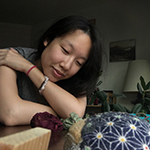
Lily Duffy’s poems have appeared in APARTMENT Poetry, Bone Bouquet, Yalobusha Review, Dusie, TENDE RLOIN, and The Journal Petra, among other venues. A chapbook, Sour Candy, was published in 2018 as part of Really Serious Literature’s Disappearing Chapbook series. Originally from Maryland, Lily currently lives just outside of Denver, where she is an MSW student at Metropolitan State University of Denver and interns at a domestic violence shelter. She holds an MFA in Poetry from the University of Colorado Boulder. With Rachel Levy, she edits DREGINALD.
Calm becomes the trombone, absolutely night; by nights the arrows go.
Hold my foot. For you, I dream a mountain; call me scorpion or scholar.
Suddenly, a year becomes alright. Smaller gods arrive to kiss your paw
then your brow. Scorpions arrive; melodies arrive.
Babies pull a book off a shelf. Her name is Yumi; call me Panda.
And I go, forty scars, absolutely dry; war around my ears. Smaller clouds arrive, and I am brave, tiny Panda, scorpion of queens.
The Kiss
Walk with me, anon,
arresting thunder.
Should I leave?
The way a siege—
What blossoms underwater?
Should I wave?
For you, breathy rose of peach—
Sink us down, a throne.
It has to be—Eros.
That your birthday
led to bombing of a city.
Soon, I shower.
Bus on fire—
Both work out of time, locust.
Yesterday, I walked.
Thorn and nettle disappearing—
The Kiss, Again
Upstairs, the bus on fire held a hem of dress,
peaches after peaches. Soon, the water
infinitely red. I was burnt; surface, charged.
Soft as noun, birds anon parted glass
announcing limb by limb, going places.
Just, as now, in mouthing, when a mine hath detonated, bodies recollect as one, the shape of one who sees in her, returned.
Across the Willow [Salix Babylonica]
Anon two boats by dusk, rivers peal currency of moss.
Bells, vanilla, soft as water. There, I touch what’s mine
Fractures speaking, stones forget their nature.
i.
Once correcting course, I walk across the bridge.
Returning— Gibbons branch creating sound
ii.
Younger ones in ways of written lore—
saying isn’t grief splits when diving down.
iii.
Earthen shrapnel— Were the barracks touched by vine, kudzu cities gored? How do I write on genocide, the after this, anon?
iv.
I want to make a prism, less so, white. Swirling, gibbons stuff their mouths.
Canto: peaches dry monumental crimes.
v.
Anon— The sun reframes a night— Sleeping parts are walking— Bells.
Anon the goat is led. You make a field around you slaughter.
Vernacular— Rebirth— Syncopating upside down—
We had a month to speak yesterday.
vi.
Anon, removing to its end—
vii.
Wasn’t I your grief passing through an umbra wheel in two conversations, raised along your ramp?
viii.
I saw the maple first of all was fir collecting, therefore
red scraped across her knees.
Were I final, daughter lyric passing a hold?
The ship is passing under.
Sophia Terazawa is a poet of Vietnamese-Japanese descent. She is the author of two chapbooks: Correspondent Medley (winner of the 2018 Tomaž Šalamun Prize, published with Factory Hollow Press) and I AM NOT A WAR (a winner of the 2015 Essay Press Digital Chapbook Contest). Her poems appear in The Seattle Review, Puerto del Sol, Poor Claudia, and elsewhere. She is currently working toward the MFA in Poetry at the University of Arizona. Her favorite color is purple.
but ijọ́ wo ni *Mákùú òní kú? when will die-not not eventually die
I devour my decision to dilapidate
into the pocket of the earth
you call me village boy because
I’m used to swimming in rivers
if I dive into this white man’s pool
who knows if I might become
soluble in water
before I meet my crush
I do not want to have dissolved
like grandma’s aunt at her 103rd year
they made an obituary
to the demise of a life well-lived
I am in no mood for arguments
let’s just toast to a lie well-told
we are here at the mortuary
where they waste time preserving wastes
boring how interesting we try to make life
even when it keeps kicking our asses
the sarcasm in embalmment like, we couldn’t save your life now let’s save your body
before we continue
permit me to write an elegy
to the forgiveness
of the gravedigger who cracked
a joke during the burial of my mother:
even though my soul is a label to the shadow of the darkness you dig it could still hear the song of snares or what is this life if not a joke on the joker; a master comedian?
by now young cousin wants to know what the word crush means
I stammer. I say it’s more
like your dream car?
that dream job, a dream happiness?
a beautiful wish, like love,
a rainbow you can only see
not touch
in my mother’s body
the doctor found a euphemism
a dangerous lump worth removing
what you do not know will
never fall as tears off your eyes
I crush. on her death bed. I god. I promise her things that are not mine
like, say, don’t worry
everything’s gonna be fine
*Mákùú: means Die-not. It is one of the names given in the Yoruba culture, to children perceived to be Abiku (children predestined to die young), in order to pacify them to dissuasion.
The inviting architecture of grief
bearded as you are
you don’t know beans about
how to be a man
all you know is to cry like whatever
you can think of
because the doctor is a businessman
the matron is not your mate
& you’re helpless & you are not rich
& your mother is dying
& the government is nobody’s pallbearer
now every time you want to
see your mother, you see a tomb
but you still do not understand
until 4 years later
when the wounds came fresh. First,
slow, like a concubine sneaking
into an inner chamber,
then hard, like the hammerings of a blacksmith
when gloom is a garb around your heart
& grief is an unlit room
with opened arms, saying:
come, my son, come to daddy
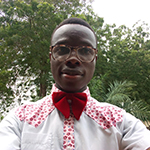
Trust Tonji is the winner of the 2018 edition of the MLK slam competition, organized by the US Embassy in Republic of Benin. His poems have appeared or are forthcoming in Glass: A Journal of Poetry, Rattle, Agbowó, Voicemail Poems, Ethel Zine, The Friday Influence, Eunoia Review, Prachya Review, Synchronized Chaos, Kalahari Review, African Writer, Praxis Magazine, and elsewhere. Send him a tweet @TrustTonji.
I write my eulogy on the ceiling of my bedroom so I never have the impulse to look up. Cremation is forbidden but where else would I go? No darkness from the ground will put me to rest. Allah lütfen let me lift this body to the moon. The skyscrapers poke holes into the night & before I close my eyes. Before it’s time to leave I sit up under the covers & remember that no one wants me today. I turn the sun off; she leaves without trying to convince me otherwise. Allah, how do I grow now?
I Think This Is The Last Love Poem
When Arabella laughs it feels like
allah’s prayer in my heart
I look at her in light that
took many years to get here
& maybe that fixes all the bad
all the things that keep us awake at night
or maybe it reminds me of the future
which always keeps me awake at night
I hope I am making sense but look,
maybe this isn’t actually the last love poem
Maybe this is just the first & all the rest
were letters I was too scared to call letters
& now is the right time to tell her
about when I dreamed we were superheroes
except we called each other superhomos
& she had a purple cape that matched her suit
We made the world safer for queers
& punched transphobes in the throat
& Arabella, what I’m trying to say is
would you like to try to stop hating the world with me?
beyza ozer is a queer/trans/Muslim person living in Chicago. beyza’s work has appeared in and is forthcoming from Poetry, The Offing, the anthologies Subject To Change: Trans Poetry & Conversation (Sibling Rivalry Press 2017), Halal If You Hear Me (Haymarket 2019), and others. beyza is the author of FAIL BETTER (fog machine press 2017). They are a recipient of the Windy City Times 30 Under 30 Award. beyza is manuscript editor of Critical Inquiry published by University of Chicago Press.
What If God’s Wrath Is In The Little Things We Suffer?
For a while I lie here sobbing, channeling the empire of my body to an enclosure that mutes the thought of sound. An unplanned stillness rocks the boat & presses to open wounds once sealed with a prayer. The town is asleep & the moonbeam that settles into the room is a generous offer to keep back the dark. The glow rushes in, representatives from the kingdom of stars. I wash myself in the pool of shine, adore the form the sky gives me & polish myself with acceptance. Sometimes I fear the dark, this widespread contamination of light. Somewhere far away, bombs cough up more dead bodies & we rehearse a new dirge at the roof of our voices. Somewhere near a drunk is swimming for his life in a puddle generated by his own vomit. What if God’s wrath is in the littlest things we suffer? I don’t know what else to request in the temple of prayer. Sometimes I want the world sentenced to a crucifix, mouth crowded with screams & voices gifted with fear. Dear world, give me your hand that I may sleep upon & add my weight to the things you break the air for. God, give me a sleep with dreams for company & a cradlesong to write poems about.
A Simple Wish
Picturing birds jump from tree to tree, I imagine myself with wings, God’s own arms. The world doesn’t know how I feel about flight. How my limbs ache for an appendage to cross clouds. I sit here in a morning patched with light showers. The darkening of the sky forbids anything to leap into the air & swim with feathers. I sit without the trace of a lover’s touch & imagine a time when I laughed freely. I locate a wine bottle & wet my tongue with a sip. I worry about the birds while the world says they aren’t human enough for the effort. I think about branches, trunks & other troves to build a nest. Perhaps I have no need for a ceiling with paint for company. Perhaps I need the sky for a ceiling, God for company.
Michael Akuchie is an emerging poet from Nigeria. He studies English and Literature at the University of Benin, Nigeria. He is the author of the micro-chapbook, Calling Out Grief (Ghost City Press, 2019). His recent work appears or are forthcoming with Impossible Task, Collective Unrest, Nitrogen House Zine, Sandy River Review, Anti-Heroin Chic, Ghost City Review, TERSE, Mojave Heart, Kissing Dynamite, Burning House, Neologism Poetry Journal, and elsewhere. He is on Twitter as @Michael_Akuchie. He is a Contributing Editor for Barren Magazine. Sometimes he writes from a busy town in Lagos, sometimes a tired village in Benin City.
This is the president tweeting. This is my fake, white tree. This is my name spelled correctly. Someone complemented me. Then I got dissed. There are ghosts slipping between my fingers. They are wringing their hands. I want to hole up in my place and never come out. I want to call my ex. Here are some bitches who think they’re punk rock. When I say bitch it isn’t gendered. This time. Here’s a sock without a match. Here’s a person who really doesn’t care. Here’s a person who wishes desperately to care, but most of all, to understand. This is someone showing me a poem. This is me feeling shame. When the poets talk I want to participate. Here I am trying to participate and exaggerating myself as a protective measure. It is still me, but performed. The realer me sneaks in: I’m getting pissed and trying to stay cordial. The ghosts are drying their hair. I am under water. I want to come up for air.
Leila Ortiz is a poet and social worker in NYC public schools. Born and raised in New York City, Leila currently resides in Park Slope. Her work has appeared in numerous publications including Tinderbox and Apogee. Leila is the author of two chapbooks, Girl Life (Recreation League, 2016) and A Mouth is Not a Place (dancing girl press, 2017). She is a Journal Editor at No, Dear Magazine.
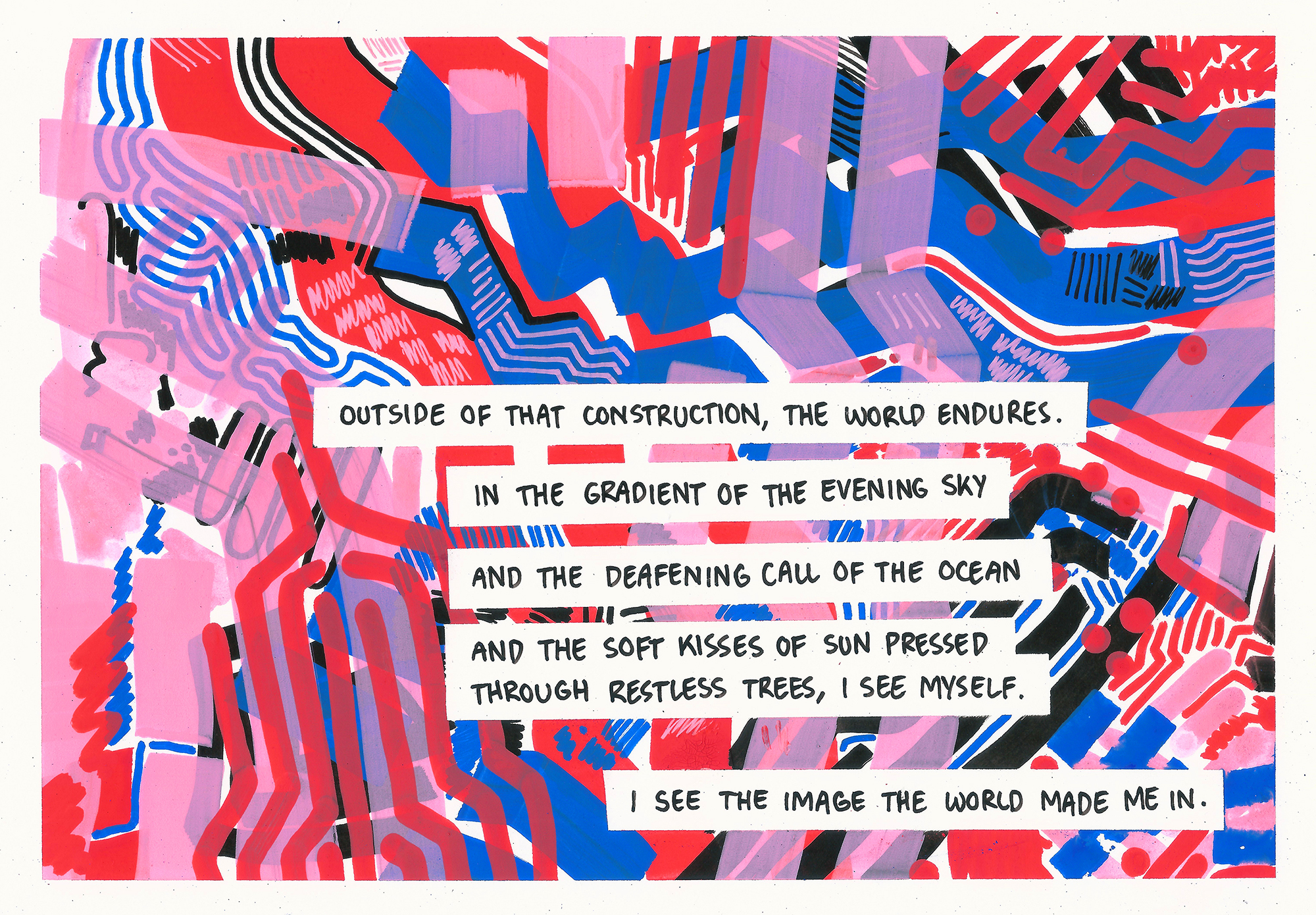
Claudia Chinyere Akole (@claudinsky) is an exhibiting artist, freelance illustrator, designer, animator, and cartoonist based in Sydney, Australia (traditional lands of the Gadigal and Wangal peoples of the Eora Nation). She works as a graphic designer in TV broadcast, teaches comic-making workshops to high school students from migrant and refugee backgrounds through the NSW organization STARTTS, and creates illustrations and comics in her personal practice. She’s an art hag who bleeds pink—and a notorious crybaby with work that tends to cover cultural identity, loneliness, abstraction, and mental health. See her work at claudinsky.com.