Cigarette lady spits out fornicated weeds How we wished to be umbras, settling for the icelipped things of wonder my mouth a sex cavern My body an engine of trapped space
I will not smoke Americans until my teeth yellow black lantern sky Yes the vinyl hour yes the ripped cellophane lines I skim profane sometimes against my will yet spill out empty tires I could sleep in set motions In this inert climate, nothing ever engenders smooth futures unless opioidic Eden is all we have Dead grass leathered into street pilots with their little flags guiding the machines to the workabyss
I sing away the bleak in labored blisses do you know of The gridded empires that spirit us into fractured notes in buckling silence Stained global meridians of a tobacco sunset we surf like radio waves
Telemetry, telomeres, an endless interior waltz prone to imperial occupation Will you claim dirtmind if that is what you are given
One day I will no longer rain weak And the Earth will be spectral enough to burrow into new ways of waiting Rejecting deferrals my cockpoisoned self somewhat less mismatched in this iteration With tunneled eyes to see metal disintegrate into the vision of a loosened inmate contemplating data Like minutemiracles to cherish until they explode, I then Will know what those wed to the moon speak when they are right
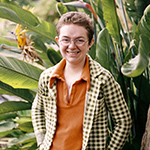
Bryana Dawkins is a writer based in NYC. Her work has been published or is forthcoming in Brink Literary Journal, Apocalypse Confidential, the engine(idling, and elsewhere. She can be found at bryana-dawkins.carrd.co.
back in my day, there was no such thing as autism there was the asylum.
can you believe it? what a slander. this bothers me deeply.
why do people insist on naming every little strange thing?
just because human history is a history of taxonomy?
everyone is a little autistic. oh come on, it’s just your little silly thing.
my uncle was like that too a wild creature.
and he wasn’t autistic, not at all. I liked him.
my nephew, he’s three, he’s autistic, and you don’t look like him.
my nephew’s a good kid. I like him too.
nowadays, everyone wants to be autistic!
it’s an epidemic, a trend they must be buying diagnoses, that’s the only explanation!
must be the pesticides in the tomatoes. or half of them are fake.
can you imagine a woman being autistic?
you must be hysterical, or have that light kind of autism don’t you?
you’re nothing like my blue angel.
It ‘s just… you don’t look autistic.
you just want to enjoy all the endless perks of being autistic
like, for example
Maria Emanuelle Cardoso was born on November 15, 2000, in Montes Claros, Minas Gerais, Brazil. Her first book, titled Amarelo Mostarda, is being published by Editora Nauta (2024). Prior to the book, her work has appeared in anthologies and literary magazines (Há quarenta e seis pés, Totem&Pagu, Cassandra, Aboio, Ruído Manifesto, Casa Inventada, Oficina Literária da Revista Cult, Cupim). She won second place in the Poesia Agora Summer 2021 Prize (Trevo) and took part in Clipe Poesia 2023 at Casa das Rosas. Instagram: el___maria.
On a headline beginning “RFK Jr. bombarded Bill Nye with autism texts”
One, I’ve also tried and failed to express something deeply internal. Two, I’ve heard what Bill said about you, but about myself: “And he started again, so I cut him off.” And three, I am also overtaken by flights of fantasy when I hear the word mercury. Planetary alignments, strange coincidences. I do love a multi-meaning word, a mercurial word. In conspiracy, for example, it represents death, impurity, the little silver theodicy of evil in the vaccine. And in astrology, it is an immutable personality. I don’t care for that, but perhaps you appreciate it more than I do.
But in alchemy, the study of everything being the same and the futile quest to show it to the world? I am transfixed by the word mercury just like you. How the tender slivers slink up my nervous system like bugs: This substance contains mercury. It has life-altering transformative power.
and that is three similarities between us, as kindly as I can put them. I am not looking for feedback regarding empathy at this time.
Hy Libre is a poetess, game designer, and trans gal born in Tucson. She’s currently working on a thesis on the poetics of distortion, and she’s interested in rhetoric, logic, sound, play, time, and the failure of empathy. Find her at lightsforcats.com.
i. pre-diagnosis, or, before and ii. post-diagnosis, or, (after)
i. pre-diagnosis, or, before
the panic attacks and overflowing just-in-case bag the driving home on the way to dinner dates because i’m curling up inside every meal you made that i couldn’t eat they all told me: you’re a burden you’re too much you leave exhaustion in your wake even your tears fall in selfish punches. so i did the things. i went to the sessions. billed our insurance. kept a journal. i told myself it was a matter of rewiring and replacing, tinkering bits of machinery into the correct gear, and you know what? i did it, mostly. i poured my cloudbursts into charts and endured a seat at the dinner party and bought flowers from the grocery store like i could invent my own omens. i put sunflower stems in a vase and thought: i can turn towards the sun again. i can make use of its warmth. but then (and didn’t i always tell myself there would be a but, a however, a contradiction) here is the proof i didn’t fix myself fast enough. here is the exhaustion, the sunken spots, the brokenness that bears my signature. here is how hard i tried and here is how it wasn’t enough. a waste. all this time. every therapy session and breathing exercise and slow release capsule only got me closer to the real lie, set free from beneath the paperweight: i am a burden and you are not free of me. an unrequited impasse. i tried building a home and ended up with tombs of empty cocoons. i cannot tell you how many times i’ve hatched.
ii. post-diagnosis, or, (after)
so: it turns out sunflowers don’t move to follow the sun. not all caterpillars turn into butterflies. classic case of correlation and causation– if x and y increase simultaneously, sometimes it’s just because your brain has more red wires to defuse and apparently that’s okay. there’s a name for it, even, six entire letters and a real, honest-to-god dsm-5 entry printed in permanent ink. i never thought i’d be able to study myself in a manual. point to a diagram and say look, this part was never really broken. there’s no cure, and the news saves me because it means i wasn’t greedy with blood or sweat or tears. i was trying to buy out my burden with a false currency, thought i could trade trying for a smaller footprint. here, finally (after a childhood of waiting rooms, a thirty year trail of bitten thumbs and clipboards and prescription slips) is a truth that fits. i say no to loud restaurants and don’t swallow xanax to fall asleep. i ask if we can leave the party early and it’s a reasonable request. i eat the same meal five days a week and i’m a fucking nutrition champion, picking at plain pancakes and one spoonful of peanut butter because i’m allowed to name my own nectar. now, bending the rules isn’t cheating. joy doesn’t depend on change. did you know you can have an exoskeleton and wings at the same time? did you know there are even more things you are allowed to be?
Alexis Deese-Smith (she/her) is an emerging writer interested in navigating neurodivergence by building and bending spaces in which her autistic self might feel at home. Originally from sunny South Carolina, she now lives in Canterbury, England, where she enjoys a gluttonous amount of cream teas. She was a runner-up for The Classical Association’s inaugural poetry competition and has been listed as an Honorable Mention by Plentitude’s Prizes in Nonfiction, shortlisted for The Poetry Society Free Verse competition, and named a finalist in Frontier’s Misfits Poetry Prize. Find her on Instagram at @alexisdspoetry.
This is What I Know of Filth is a response to Oklahoma Senator Tom Woods’ response to a constituent asking what would be done about the bullying that led to Nex Benedict’s death: “I represent a constituency that doesn’t want that filth in Oklahoma.” The poem is to be printed double-sided and flipped vertically, or held up to a mirror, to read the endnote.
Merrick Sloane is a neuro-Queer 90’s kid and nonbinary poet, editor, and researcher from Oklahoma who’s a fan of expletives and second languages. They hold an MFA in poetry from University of Tennessee, Knoxville. Merrick’s work has appeared in The Central Dissent: A Journal of Gender and Sexuality, BLEACH!, citizen trans* {project}, and is forthcoming in Puerto del Sol and Arcana Poetry Press’s Roots & Ruin anthology. In 2025, Merrick’s poetry was selected as a winner of the Garden Party Collective’s Neurodivergent / Intersectional contest and the AWP Intro Journal Awards. Merrick writes so that others may feel radically loved.
there’s little ease in a life of library lunches, wall-sitting, everything full volume ear-lancing cacophony, but there is infinite literary possibility in experiencing this vividly, dedicating ourselves so thoroughly, silently people-watching, microscopic magnified, personified everything. I don’t know how to pen Hallmark poems, I don’t gaze into eyes enough to describe them, but I notice the places skin pulls taut, slacks wrinkle; I see someone playing with a tag hanging at their waist or a smile on their face, trying to place the emotion behind it; I commit bitten stout nails and clavicle constellations to memory. we are not just writing poetry, but living it embodied for any who care to hear echolalia humming like a fridge, echolalia collaborations flickering lens echolalia the truest communication echolalia of motion, of routine, of ideas, of being seen. even overload, the fire blanket, the airbag, is like my poems: saying what I cannot, what I may not even understand, pure adrenaline tearing then settling into rare silence, pleasant emptiness. do not let their limited creativity paint ours as anything, but inextricable, boundless.
Maxwell O’Toole compulsively creates. An emerging disabled and trans writer, he is particularly inspired by his activist work, using art to connect with himself, others, and our world. He has pieces published/forthcoming with UNESCO Chair, Chartium, The Muse Zine, Freefall Magazine, Vellichor Literary, and Poets.ca. Maxwell lives with his partner and their cats in St. Catharines, Ontario, traditional territory of the Haudenosaunee and Anishinaabe peoples. For more information, visit @maxwellwriteswell on Instagram or sites.google.com/view/maxwellwriteswell.
on my 50th birthday, I have my 50th birthday with my autistic demi-polycule where no one is normal, my two autistic DJs spinning and all my autistic friends I blow out my autistic double coconut birthday cake with my autistic masked face, I write this autistic poem the next day after I lose my autistic verbal speech after six hours of autistic on autistic birthday And point at things as my autistic friends load up our cars with the flowers and clean up the Autistic trans party space. I get autistic adorations like a giant dunkin donut thermos and two sorry for have great tits and correct opinions T shirts that are just slightly different, so I can work them into my autistic uniform lineup of 10 black miniskirts and a bunch of t shirts that say shit like this I go home to sleep, a childless cat non lady, diagonal in my autistic bigbed with my cat purring, after getting a midnight kiss from a lover who said they could always claim adhd but not autism til last year bc they were like, well, I can sort of survive capitalism? None of us are surviving capitalism that well and I almost didn’t have this party because the asshole in chief was going to launch the insurrection act but corny as it sounds, yes we are an insurrection- this shout of unregistered autistic trans joy, screaming the stevie wonder happy birthday song through our masked autistic faces, loving on my masked autistic 50 year old surviving ass as I blow out all the autistic candles.
Leah Lakshmi Piepzna-Samarasinha (they/them) is a nonbinary femme disabled writer/poet disability and transformative justice movement worker and renowned hot freak bitch forever 38 looking baby illder of Burgher and Tamil Sri Lankan, Irish and Ukrainian/Galician/Roma ascent. They are the author or co-editor of ten books, including The Future Is DIsabled: Prophecies, Love Notes and Mourning Songs, Beyond Survival: Stories and Strategies from the Transformative Justice Movement (co-edited with Ejeris Dixon), Tonguebreaker, and Care Work: Dreaming Disability Justice. A Lambda and Jeanne Córdova Award winner, five-time Publishing Triangle shortlister and longtime disabled QTBIPOC space maker, they are currently building The Stacey Park MIlbern Liberation Arts Residency, as far as they know the only writers residency by and for disabled QTBIPOC writers. Follow them at brownstargirl.org and llps.substack.com. Raised in Worcester, MA, they currently live in Lenapehoking/Philly.
I am learning how to be weakness leaving the body. I am licking citric atlas critic acid off my fingers.
Every day is keep doing my tasks keep reminding and head down. Nobody minds the back kept slant until straight again.
My name are looking for rooms among all the names the all the other names.
My Sarah looking for its girl among its mother. A name is looking for more cells to burn.
I am learning to learn appropriating the hurts of others Is the wrong kind of sorrow.
Doesn’t suit this age of me. Doesn’t suit this plane of me, too flat, too full, Too echoes.
I have viewed suffering as a sign of power. Why Am I suffering at the edge of submission?
I just encountered a sharp ugly comfort But it was not the product of my mind.
It is hard to want to die when everything is wanting to die and hard to live.
Hot Yellow Room: A GhostPoem
I want to say: when you are a child, there is no escape. The hell is a silence. There is a hot yellow room. So you might as well as be hot yellow with it. This is the room of the dentist’s chair, the room that the doctor enters with his big needle. Where the kind woman in her glasses and her sweater will watch me play and make her studious demands. All this while, there is a temperate buzzing.
The room could be anywhere. Buzz could be anything. The point’s hot yellow. Shouts expand to fill our faces, sweat us like pigs. The nearby windows behold curtains and the sun flies in to lick my tired face. Assurances are made that the door is wide open. Transparency walks in and seduces before I know it is anything at all. And indeed there are doors here
there are windows even hidey-holes, but there is no escape from that great, piercing light, bright as a streetlight exposed in the raw hours before dawn. The light that detected my movements and warmed my scalp formed a hood around my head. A hood, but I was a child; the rest saw a halo. I wanted to scream.
*
(I wanted to scream. Beneath my halo, maggots, the maggots that led me to the playwoman her clipboard and gap tooth. It began when I plunged my hand into a bag of white rice and felt it squirm between my fingers. The rice was enchanted with maggots, cuddling their larvae. My father cooked the rice and served it to me with peas and carrots.
There are dead things in here, I tried to explain. Across the rice and vegetables laid a vague brown gloss, oil above the water. It bubbled and spat. It collected in small bubbles in the pan’s round corners.
Everything we eat is either fake or dead, he said. He laughed and I began to buzz and sweat. I was a fly. No place to lie
down.
It was moving, I said at the table, affronted by the oil dish before me. I said: The rice. The things in the rice. The same rice as here.
Just eat your food.
When I attempted to refuse he began mocking me and then when the mocking did not work he got angry. Finish Your Dinner he said. Italicized and with capital letters. And then again, this time said booming. When I didn’t Finish My Dinner he pried my jaw apart and scooped spoonfuls into my mouth. Too quick for me to spit. I had no choice but to swallow the dead maggots.
I did not look at the rice after that incident. It didn’t happen again. But the room grew hotter and closer and yellower. Bad things came up in me like whispers: cavities, moods. My appendix. And I was still too many pieces for me to manage. And to carry my whole self inside me and with me and on me and had me crouching, crouching because I was not only holding my own body up, but also the maggot-light.)
[sarah] Cavar is the author of Failure to Comply (featherproof books, 2024) and Differential Diagnosis (Northwestern University Press, 2026), with genre-nonconforming writing in Kairos, The Rumpus, Transgender Studies Quarterly, Electric Lit, and elsewhere. They hold a PhD in Cultural Studies with a concentration in Science & Technology Studies from the University of California: Davis, and are interested in the politics of queercrip & transMad knowledge production. More at cavar.club, @cavar on bluesky, and at librarycard.beehiiv.com.
We hide in plain sight they say, as if something sinister à la RFK Jr. to Trump, Asperger to Hitler. So many girls & women unnamed. Boys & men four times more likely to get a diagnosis. But this is not a disease, not something only boys who love trains & walk on their toes can have, though I, a girl/woman, did walk on my toes. When I read of that symptom in a book, I gasped; I was just figuring it out & over the age of 40, remembering my parents took me to the doctor for toe-walking beyond when a toddler would stop & though none of my children toe-walked, each have their uniqueness & one of my sons as he struggled young, ADHD, I was questioning, reading like so many mothers, a light started to glow, go off in my brain & when one magnificent female student of mine, student who wore a lanyard brightly stating I am autistic & was her whole self in my classroom when she folded paper into intricate shapes & fidgeted all through class, when she wore sunglasses in the awful florescent light, when she brought me a houseplant she propagated when we found we shared a special interest, when she shared her other interest was keeping roly-polies as pets in a box in her window well, I was reminded of myself as a child & the toads in my window well I kept as pets & she wrote the best poems out of everyone in the class & when she sat underneath her desk during lecture without fanfare or apparent shame & which I didn’t think odd, instead, I felt . . . envy, seeing my secret behavior on display. Not only as a child, but as an adult, in my apartment I would sit underneath my desk after coming home from some social thing, when feeling overwhelmed, I felt the little cave the desk made could hold the world, keep it from crushing me, the glass shell around me, & in that remembering, the message on her lanyard glowed bright & with sunflowers surrounding the words, I am autistic. That word autistic familiar, thrown around about my eccentric, engineer father throughout my childhood when my mother heard about Aspergers, but I thought because I didn’t like math, didn’t build computers, it couldn’t be me. Never mind how I didn’t, couldn’t talk in school until fourth grade, I was labeled gifted & shy. Never mind my anxiety & depression & obsessions, how even now, after I participate in some poetry event, I can’t sleep, dissect it all night & friends say I’d never know. Here I am, writing poems. Eugenicists take note, my autistic student was the most talented student in the room & though the label is not magic, it’s a way of living in this brain, fuck a cure for who we are, after forty years of What Is Wrong With Me?, this was my answer, bright sunflower.
Girl On The Spectrum Manifesto, no. 2
We are diagnosed General Anxiety
We are diagnosed Panic Disorder
& at least three Phobias (wind, flying, food in restaurants)
We are not a monolith (the ‘we’ is me & maybe you)
We are diagnosed Depression, Suicidal Ideation.
You don’t think we are autistic & feel very free to tell us so.
Wearing tights & dresses sent us into fits as children.
(you could sustain a crying fit longer than anyone I had ever seen, Mother says.)
Yes, our mothers caused trauma, were angry at what we were, weren’t.
But they had no idea & no help. Especially for those of us invisible, labeled just shy, gifted.
(No one else’s children ran away and hid during their birthday parties, didn’t want to be looked at, Mother says,
You fell down crying in the kitchen every day after school for all of first grade, but couldn’t say why)
We didn’t know why, could not articulate out loud.
Very early on, we wondered why we had to be born.
We started writing down what we couldn’t speak.
We rehearsed before we spoke.
We know you cannot imagine this now
unless you knew us when in the time before masks we mastered.
Girl On The Spectrum Manifesto, no. 3
A misguided man who swims in muck states, your cure is coming—no vaccines, food coloring. Not knowing
my genes (Or does he know? Which is more frightening?) Paternal side—cousin, brother, father,
Maybe the grandfather who struggled, drank, unalived. Ironically he was born in Vienna, birthplace of the diagnosis,
and Asperger’s base. What good intentions A. may have started with ended with the evil whims of
a regime. America, where are we going? My grandfather was still lucky to leave Austria
before the war. Never mind his other failures—through him, I am here. “Too much like a Solmer,”
my mother used to despair for me when I wanted to unalive. Psychic mediums were more helpful
than therapists. I had a kick-ass one for twenty years; we’d talk annually. She kept me alive, my “spiritual counselor,”
and the poems and the people who would let me talk, “info dump” (I didn’t know there was a word for that)
without judgment, a couple best friends we labeled ourselves “weird” and “crazy,” lovingly, not once knowing the word
“neurodivergent.” You will not eradicate us with a lack of vaccine, food coloring. In the spectrum-y world, we will continue To keep saving ourselves.
Girl On The Spectrum Manifesto, no. 4
We will wear blanket hoodies unironically.
We will wear what you’ve called “weird outfits,” colorful, unmatched, our favorite childhood cartoons.
When we feel comfortable with you, we will look off in the distance when talking and try not to notice how you turn your head to see what we’re looking at.
We might bring out our fidgets around you and at work, especially the squishy ones.
We will even explain the issue with the fluorescent lights and sit in the dark room with headphones while grading.
We will look back on our lives—a mess—and understand it.
We used to feel shame after graduating cum laude and working 13 years in the grocery store.
And then checking the Master’s Degree box on the welfare papers for so many years.
We were paying our taxes, don’t worry, and working full time but for those who cannot, please use my tax money for them.
Stop dropping bombs, kidnapping, deporting. It literally hurts to watch the news.
The anxiety gets worse unless we’re too low to feel.
We fight it every day, leave the house, deal with the disassociation when we meet friends at the museum.
Let the panic pass and wash over us when we feel we’re not real.
Don’t get me started on romance. We will self-diagnose, join autistic women
groups online, and understand all of our relationships finally.
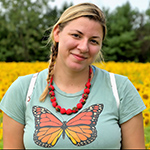
Natalie Solmer was born and raised in South Bend, Indiana, and is the founder and editor-in-chief of The Indianapolis Review. Before becoming an Associate Professor of English at Ivy Tech Community College, she was a horticulturalist and grocery store florist for 13 years. Her poetry has been featured in Verse Daily and published in places such as North American Review, Pleiades, Notre Dame Review, Mom Egg Review, and The Glacier. Find her at nataliesolmer.com.
When a person creates life, they are called a mother but when a building is the foundation for that child’s development, it’s hard not to consider them my babies just the same. I have been with them since the first formed memories. Their first friend. Their first crush. The first lesson in surviving social jungles. The first leap of faith when they play hooky during 3rd period.
I was the first safe haven they had until I was their last… Their last cry in the bathroom as they screamed for their mother. Their last breath in a pool of blood on the concrete of a breezeway. I broke brick and bone to make room for my babies only for my body to be made into a death trap and I tried to protect them as a mother should, tried to hide them in the folds of my safe spaces, made my walls thick enough to shield them from ricochets and locked doors that kept them from the range of a shotgun– I thought I could protect them but I can still hear their screams echoing through my chest.
Is it not the burden of a mother to give her children the world only to watch in fear when someone crushes it? Is being a mother as a permanent as they say it is or is it pending the withdrawal of a child’s life?
When a newborn dies before 20 weeks, it is known as a spontaneous abortion. When an intruder interrupts a nine month school year, we call it Columbine. We call it Virginia Tech. We call it Robb Elementary. We call it everything except sterilization. People say the children are our future but do nothing to stop them from becoming hashtagged into history. It’s hard to feel like anything more than a mortuary with all these unclaimed miscarriages in my womb.
I don’t know which hurts worse: being riddled with bullets or riddled with guilt. My babies needed a savior but I am no Jesus. I have no resurrection to offer them. I tried my best to hold them holy but the bodies keep slipping through the bullet holes in my hands.
You wonder why your thoughts and prayers don’t mean a thing… They don’t protect my babies from your negligence. They don’t clean up this crime scene you made of me. This is your fault! Every one of you that would rather ban books to shield children from hidden truths but not the guns that turn my libraries into graveyards. Now, instead of autographing yearbooks, I have death certificates to sign on lockers in .32 caliber cursive.
When a child is taken from this life before having a chance to live it, we call it unfair. When a mother is distraught after losing the life they’ve birthed, it is called grief, but when I am a school house that made itself a home for the life that was taken unfairly… a building that birthed experiences and personalities now filled with still framed smiles and blood stained dreams… Do I get to call this unfair? Do I get to call this grief when mourning children I didn’t bring into this world? Am I allowed to feel anything at all? Because if not, I do not know what to call this then.
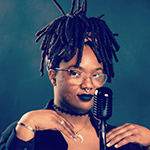
Quin Killin’ is a poet, advocate, and performer who brings Liberty City, Miami with them everywhere they go. They have had their works featured on platforms such as African Writer, Button Poetry, The Bitchin’ Kitsch, and WUSF Arts Axis and is the current editor-in-chief of The Blunt Space’s digital literary magazine, Defiance and Dialogue. With an MFA in Creative Writing from Stetson University, they live life as a part-time blerd, a full-time AuDHD, introverted Negro, and moonlights as a comedic, smart mouth. Quin can be found on Substack @queenybihh, Spill & Instagram @queeny_bihh, and YouTube @Quin Killin The Poet.

 BACK TO ISSUE