
Night Trip
Mountains rise and fall, as if between languages
magnificent translations
Traveling in such gorges
we talk about the world’s deep turmoils
—how traditional and simplified were once the same character
Master Hongyi and Li Shutong, the same person
yesterday and the day after, the same day
While we talk, the world appears vast, totally silent
only the galaxy whistles by
like deathbed care
夜行记
群峰起伏,仿佛语种之间
伟大的翻译
就这样穿行于峡谷中
我们谈起了世事经乱
——谈起简体和繁体曾是一个字
弘一法师和李叔同,是一个人
昨天和明天,使用的是同一天
当谈到这些,天地朗廓,万籁寂静
惟有星河呼啸而来
像临终关怀
GRACE
Maggots have their own heaven
In their view, there is no such word
as “dirty”.
While drawing Protection for Living Beings
Feng Zikai saw likewise.
All those shit piles are just this world’s
tiniest pagodas.
A dog runs through a similar scene: On arrival
it sniffs and pisses around
a sign of intimacy with the world.
A poem also needs such sensitivity.
When it passes through maggots, having tuned the world
to the lowest decibel,
every wriggle seems to chant
—no birth, no death, no filth, no purity, no increase, no decrease…
恩典
蛆虫拥有自己的天堂
在它们的眼里,并没有肮脏
这个词。
画《护生集》的丰子恺,也有过
如此的凝视。
那一坨一坨的屎,就是世上
最小的佛塔。
一只狗跑进类似的场景:它在来过的地方
嗅来嗅去,沿途撒下一点一点的尿液
作为对世界亲密的标记。
一首诗也需要这样的灵敏。
当它通过蛆虫,将世界调到最小的分贝
仿佛每一次的蠕动,都是在念诵
——不生不灭,不垢不净,不增不减……
THE SKY
The sky offers some evidence of eternity
It also offers evidence of nothingness
The sky cannot offer anything more
A widower, it lives in loneliness
and needs day and night to take turns keeping company
But sometimes the sky also offers reasons to love
Like last year, at an academy in Lai Chi Kok, Hong Kong
Japanese poet Yasuhiro Yotsumoto and I
discussed the desire to write and eternal sorrow
He smiled knowingly, pointed at the sky
and with a fountain pen wrote in neat Chinese: 子宫 (womb)
I responded with another word: 圆 (roundness)
天空
天空提供了某种永恒的证据
它也提供了虚无的证据
天空再也无法提供什么了
它也是鳏夫。活在自己的孤寡中
需要白天和夜晚轮流陪护
但天空,有时也提供我们爱的理由
就像去年,在香港荔枝角的一个书院
我和日本诗人四元康佑
谈到了写作的初心和万古愁
他会心一笑,指着天空
用钢笔写下工整的汉字:子宫
而我报以另一个字:圆
Translators’ Note:
Born in Yidu, a small city in Hubei, China, Mao Zi struggled in school and worked in factories, shops, and briefly at a police station before turning to writing in late 1980. Self-taught and widely read outside institutions, Mao Zi writes on his own terms, with clarity, compassion, and courage. In his poems, he moves with a calm, lucid force, practicing tenderness toward animals and the dead, and curiosity toward time, science, and spirituality. His poems trace a path toward deeper, more meaningful engagement with the seen and the unseen.
A great admirer of Chekhov, Simone Weil, Paul Celan, Czesław Miłosz, Joseph Brodsky, Whitman, and Dickinson, and an active poet in the Hubei poets’ circle, which includes Zhang Zhaohao, Yu Xiuhua, and Li Xiuwen, Mao Zi writes in a unique voice, and his poems resound across varied groups of readers. You hear in them the object-led metaphysics of Szymborska, the metaphysical clarity of Tranströmer, and the creature empathy of Mary Oliver. Poet, critic, and professor of Chinese literature Liu Bo thus writes in Mao Zi as a Poetic Counterforce: “He approaches the world from the opposite angle, making counterforce itself a poetic strategy. He consistently enters experience through unexpected perspectives that challenge established concepts and habits of perception.”
These three poems come from Mao Zi’s most recent poetry book, Lessons in Living (December 2025). Written in clear language with bright imagery, these translations will help shape the reception of living Chinese poetry in English, opening new poetic senses and sensibilities. Yuemin and Jeffrey co-translate line by line: Yuemin provides close semantic anchoring and cultural nuance; Jeffrey drafts idiomatic, image-true lines. Their multiple versions converge through iterative reading aloud. The process requires patience and trust, given the inevitable ambiguities and available interpretations. Translation is a negotiation with the text and co-translation inevitably adds a second layer to that negotiation. The quality of Mao Zi’s poems ensured that the process always felt more like a treasure hunt than hard labor.
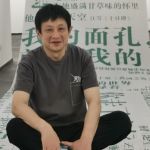
Mao Zi [毛子] was born in Yidu, Hubei province in 1960. He is the author of several poetry collections, including My Nostalgia Differs from Yours (2017), Those That Rise from Mediocrity (2019), and Selected Poems by Mao Zi (2020). He has won many poetry awards, such as the October Prize, the Poetry Prize of Wen Yiduo, and the Yangtze River Poetry Award, among others.

Yuemin He is a writer, scholar, and translator. Her essays appear in The Emergence of Buddhist American Literature, Religion and the Arts, Teaching Asian North American Texts, Inquiry, etc. Her poetry translations include I Have Seen the Yellow Crane (2024) and poems in forty magazines, journals, and anthologies, such as The Cincinnati Review, Rattle, Poetry Daily, and The Southern Review. She is a recipient of The Jules Chametzky Translation Prize and the Bread Loaf Translators’ Conference scholarship. Currently, she teaches English at Northern Virginia Community College.

Jeffrey S. Oliver is a writer and lawyer in Washington, D.C. He studied Mandarin extensively and translates poetry from Mandarin and Spanish to English. Prior translations have appeared in Blue Unicorn, Ballast, Azonal, and elsewhere. His journalism has appeared in, and/or received awards from, The Atlantic, The Christian Science Monitor, Quarterly West, Foreign Policy Magazine, The New Atlantis, Reuters, 5280 Magazine, and other publications. Jeffrey is also the founder of Planted, a non-profit dedicated to helping immigrant youth obtain stability, status, and opportunity.
 BACK TO ISSUE