
That Tuesday
A week has one Tuesday.
A year, fifty-two.
A war has a lot of Tuesdays.
That Tuesday
at school, they were practising their capital letters. The teacher was wearing thick glasses with no rim. They were so thick they softened her gaze.
Forty-two girls copied from the board:
FRITZ THE GREAT HAD A TIN-CAN MUG. BIG BERTHA’S SHELLS SHOOK PARIS. IN WARTIME, ALL FATHERS ARE SOLDIERS.
Ulla stretched her tongue all the way up to her nose. The teacher prodded her. There’s no ‘J’ in ‘soldier’, Ulla. It’s spelt ‘D’, ‘I’, ‘E’. How often must I tell you? In her book, she made a cross next to Ulla’s name. You’ll write that out for me ten times by tomorrow, and no mistakes, understood? Yes Miss, said Ulla and thought: silly old four-eyes.
In the yard, crows gobbled down chunks of stale bread.
That Tuesday
Lieutenant Ehlers was called to the unit commander. You’ll need to get rid of that red scarf, Ehlers.
Herr Major?
Well, Ehlers, they don’t like that sort of thing in the Second.
I’m being sent to Second Company?
Yes, and they don’t like that sort of thing. It just won’t do. The Second are very proper, you know. You wear that red scarf and you’ll get nothing but cold shoulders. Captain Hesse didn’t wear that sort of thing.
Hesse’s wounded?
No, he’s reported himself unfit for duty. Wasn’t feeling too peachy, he said. Since he’s become Captain, he’s been a bit slack, old Hesse. Beats me. Used to be so proper. Nothing doing – Ehlers, see to it you keep the Second in check. Hesse trained them well. And you’ll take that scarf off, understood?
‘Course, Herr Major.
And mind they’re careful with the ciggies. Any half-decent sniper must get an itchy trigger finger, seeing those glowworms flitting about. We had five shot in the head last week. So you just be careful.
Yes, sir.
On the way to Second Company Lieutenant Ehlers took off his red scarf. He lit a cigarette. Company Commander Ehlers, he said out loud.
There was a shot.
That Tuesday
Herr Hansen said to Fräulein Severin:
It’s time to send Hesse another parcel, Sevvie dear. Something to smoke, a few snacks. Something to read. A pair of gloves or some such. Our boys are having a damn hard winter out there. And I know what that’s like, yes sir, I do.
Hölderlin poems, Herr Hansen?
Oh, Sevvie, don’t be silly. No, it needs to be light. Wilhelm Busch, that sort of thing. Hesse was always one for a good time. Laughs a lot, you know that. My God, Sevvie, how that boy Hesse can laugh!
He certainly can, said Fräulein Severin.
That Tuesday
they stretchered Captain Hesse into the Delousing Station. There was a sign on the door:
GENERAL OR GRENADIER,
THE RULE’S THE SAME –
YOUR HAIR STAYS HERE.
He was shaved. The medic had long, thin fingers like spiders’ legs, a little raw at the knuckles. They rubbed something that smelt like pharmacy into his skin. Then the spiders’ legs felt for his pulse and wrote in a thick book: Temperature: 41.6. Pulse: 116. Unconscious. Suspected typhus. The medic closed the book. Smolensk Isolation Hospital was printed on the front. And underneath: Fourteen-hundred beds.
The stretcher-bearers picked up the stretcher. On the staircase, Hesse’s head rolled out from under the blanket, swung back and forth with every step. His shaved head. When he’d always laughed at those baldy Russians. One of the stretcher-bearers sniffed.
That Tuesday
Frau Hesse called on her neighbour. As the door opened, she waved a letter. He’s a Captain now. Captain and Company Commander, he says. And it’s minus 40 out. Nine days, the letter took. To Frau Captain Hesse, look, he’s written it there, at the top.
She held the letter up. But her neighbour didn’t look. Minus 40, she said. Those poor boys. Minus 40.
That Tuesday
a Lieutenant Colonel in the Medical Corps asked the Chief Medical Officer at Smolensk Isolation Hospital: How many a day?
Half a dozen.
Horrendous, said the Lieutenant Colonel.
Yes. Horrendous, said the Chief Medical Officer.
They looked away from one another as they spoke.
That Tuesday
they played The Magic Flute. Frau Hesse wore her red lipstick.
That Tuesday
Sister Elizabeth wrote to her parents: Without God, this would be unbearable. But she stood up when the doctor came. He stooped as though he were carrying the whole of Russia through the ward.
Shall I give him another dose? asked the Sister.
No, said the doctor. He spoke very quietly, as people do when they’re ashamed.
They carried Captain Hesse away. There was a thud outside. All this crashing about. Why can’t they put the dead down gently? They dash them to the ground, every time. Said someone. And his neighbour sang quietly:
Hippety hip, hooray, yippee
For our dashing boys, the infantree!
The doctor went from bed to bed. Every day. Day and night. All day. And through the night. Stooping. He carried the whole of Russia through the ward. Outside, two stretcher-bearers tripped away with an empty stretcher. Number four, said one. He had a sniffle.
That Tuesday
in the evening, Ulla sat down with her schoolbook and printed carefully:
IN WARTIME, ALL FATHERS ARE SOLDIERS.
IN WARTIME, ALL FATHERS ARE SOLDIERS.
Ten times, she wrote it. In capital letters. And spelt ‘D’, ‘I’, ‘E’.
An diesem Dienstag
Die Woche hat einen Dienstag.
Das Jahr ein halbes Hundert.
Der Krieg hat viele Dienstage.
An diesem Dienstag
übten sie in der Schule die großen Buchstaben. Die Lehrerin hatte eine Brille mit dicken Gläsern. Die hatten keinen Rand. Sie waren so dick, daß die Augen ganz leise aussahen.
Zweiundvierzig Mädchen saßen vor der schwarzen Tafel und schrieben mit großen Buchstaben:
DER ALTE FRITZ HATTE EINEN TRINKBECHER AUS BLECH. DIE DICKE BERTA SCHOSS BIS PARIS. IM KRIEGE SIND ALLE VÄTER SOLDAT.
Ulla kam mit der Zungenspitze bis an die Nase. Da stieß die Lehrerin sie an. Du hast Krieg mit ch geschrieben, Ulla. Krieg wird mit g geschrieben. G wie Grube. Wie oft habe ich das schon gesagt. Die Lehrerin nahm ein Buch und machte einen Haken hinter Ullas Namen. Zu morgen schreibst du den Satz zehnmal ab, schön sauber, verstehst du? Ja, sagte Ulla und dachte: Die mit ihrer Brille.
Auf dem Schulhof fraßen die Nebelkrähen das weggeworfene Brot.
An diesem Dienstag
wurde Leutnant Ehlers zum Bataillonskommandeur befohlen. Sie müssen den roten Schal abnehmen, Herr Ehlers.
Herr Major?
Doch, Ehlers. In der Zweiten ist sowas nicht beliebt.
Ich komme in die zweite Kompanie?
Ja, und die lieben sowas nicht. Da kommen Sie nicht mit durch. Die Zweite ist an das Korrekte gewöhnt. Mit dem roten Schal läßt die Kompanie Sie glatt stehen. Hauptmann Hesse trug sowas nicht.
Ist Hesse verwundet?
Nee, er hat sich krank gemeldet. Fühlte sich nicht gut, sagte er. Seit er Hauptmann ist, ist er ein bisschen flau geworden, der Hesse. Versteh ich nicht. War sonst immer so korrekt. Na ja, Ehlers, sehen Sie zu, daß Sie mit der Kompanie fertig werden. Hesse hat die Leute gut erzogen. Und den Schal nehmen Sie ab, klar?
’türlich, Herr Major.
Und passen Sie auf, daß die Leute mit den Zigaretten vorsichtig sind. Da muß ja jedem anständigen Scharfschützen der Zeigefinger jucken, wenn er diese Glühwürmchen herumschwirren sieht. Vorige Woche hatten wir fünf Kopfschüsse. Also passen Sie ein bisschen auf, ja?
Jawohl, Herr Major.
Auf dem Wege zur zweiten Kompanie nahm Leutnant Ehlers den roten Schal ab. Er steckte eine Zigarette an. Kompanieführer Ehlers, sagte er laut.
Da schoss es.
An diesem Dienstag
sagte Herr Hansen zu Fräulein Severin:
Wir müssen dem Hesse auch mal wieder was schicken, Severinchen. Was zu rauchen, was zu knabbern. Ein bisschen Literatur. Ein Paar Handschuhe oder sowas. Die Jungens haben einen verdammt schlechten Winter draußen. Ich kenne das. Vielen Dank.
Hölderlin vielleicht, Herr Hansen?
Unsinn, Severinchen, Unsinn. Nein, ruhig ein bisschen freundlicher. Wilhelm Busch oder so. Hesse war doch mehr für das Leichte. Lacht doch gern, das wissen Sie doch. Mein Gott, Severinchen, was kann dieser Hesse lachen!
Ja, das kann er, sagte Fräulein Severin.
An diesem Dienstag
trugen sie Hauptmann Hesse auf einer Bahre in die Entlausungsanstalt. An der Tür war ein Schild:
OB GENERAL, OB GRENADIER:
DIE HAARE BLEIBEN HIER.
Er wurde geschoren. Der Sanitäter hatte lange dünne Finger. Wie Spinnenbeine. An den Knöcheln waren sie etwas gerötet. Sie rieben ihn mit etwas ab, das roch nach Apotheke. Dann fühlten die Spinnenbeine nach seinem Puls und schrieben in ein dickes Buch: Temperatur 41,6. Puls 116. Ohne Besinnung. Fleckfieberverdacht. Der Sanitäter machte das dicke Buch zu. Seuchenlazarett Smolensk stand da drauf. Und darunter: Vierzehnhundert Betten.
Die Träger nahmen die Bahre hoch. Auf der Treppe pendelte sein Kopf aus den Decken heraus und immer hin und her bei jeder Stufe. Und kurzgeschoren. Und dabei hatte er immer über die Russen gelacht. Der eine Träger hatte Schnupfen.
An diesem Dienstag
klingelte Frau Hesse bei ihrer Nachbarin. Als die Tür aufging, wedelte sie mit dem Brief. Er ist Hauptmann geworden. Hauptmann und Kompaniechef, schreibt er. Und sie haben über 40 Grad Kälte. Neun Tage hat der Brief gedauert. An Frau Hauptmann Hesse hat er oben drauf geschrieben.
Sie hielt den Brief hoch. Aber die Nachbarin sah nicht hin. 40 Grad Kälte, sagte sie, die armen Jungs. 40 Grad Kälte.
An diesem Dienstag
fragte der Oberfeldarzt den Chefarzt des Seuchenlazarettes Smolensk: Wieviel sind es jeden Tag?
Ein halbes Dutzend.
Scheußlich, sagte der Oberfeldarzt.
Ja, scheußlich, sagte der Chefarzt.
Dabei sahen sie sich nicht an.
An diesem Dienstag
spielten sie die Zauberflöte. Frau Hesse hatte sich die Lippen rot gemacht.
An diesem Dienstag
schrieb Schwester Elisabeth an ihre Eltern: Ohne Gott hält man das gar nicht durch. Aber als der Unterarzt kam, stand sie auf. Er ging so krumm, als trüge er ganz Russland durch den Saal.
Soll ich ihm noch was geben? fragte die Schwester.
Nein, sagte der Unterarzt. Er sagte das so leise, als ob er sich schämte.
Dann trugen sie Hauptmann Hesse hinaus. Draußen polterte es. Die bumsen immer so. Warum können sie die Toten nicht langsam hinlegen. Jedesmal lassen sie sie so auf die Erde bumsen. Das sagte einer. Und sein Nachbar sang leise:
Zicke zacke juppheidi
Schneidig ist die Infanterie.
Der Unterarzt ging von Bett zu Bett. Jeden Tag. Tag und Nacht. Tagelang. Nächte durch. Krumm ging er. Er trug ganz Russland durch den Saal. Draußen stolperten zwei Krankenträger mit einer leeren Bahre davon. Nummer 4, sagte der eine. Er hatte Schnupfen.
An diesem Dienstag
saß Ulla abends und malte in ihr Schreibheft mit großen Buchstaben:
IM KRIEG SIND ALLE VÄTER SOLDAT.
IM KRIEG SIND ALLE VÄTER SOLDAT.
Zehnmal schrieb sie das. Mit großen Buchstaben. Und Krieg mit G. Wie Grube.
Translator’s Note:
Wolfgang Borchert’s short stories catapult us into the catastrophic mess of the Second World War and its aftermath from a perspective lesser known to Anglophone readers—that of the unwilling German soldier. They draw heavily on Borchert’s own experiences. His biography is both fascinating and tragic: growing up in a liberal family during the rise of Nazism, his teenage years were marked by minor—but still dangerous—resistances, such as skipping Hitler Youth meetings and not wearing uniform on Nazi festive days. He eventually dropped out of secondary school and discovered a passion for acting; his few months in the profession were the happiest of his short life.
In 1940, Borchert was arrested by the Gestapo, beaten and released. Later, as a Wehrmacht conscript, he was court-martialled multiple times: for attempting to evade military duty, for making statements against the regime, and—after he’d narrowly escaped the death sentence—for parodying the Nazi’s chief propagandist Joseph Goebbels. Amazingly, he survived the war, but a combination of harsh conditions and severe illnesses had ruined his health. He died of chronic liver failure in 1947, at the age of only twenty-six.
Borchert was an important spokesperson for his “betrayed generation,” writing some forty short stories and a seminal radio play in the two years before his early death. He was one of the first German authors to use the short story form for his experiments with structure and tone. Though he would posthumously be recognised as a literary giant, in life he was also a boy caught up in something bigger than himself, rebelling where he could. His radical rejection of tradition and authority is keenly present in his work. He disdained those he called “polished grammarians,” favouring a sparse, accessible style that plunges us into his narrative world.
Borchert’s work is raw, angry, poignant, occasionally tender, always honest and often infused with a wry humour and thread of hope. His themes of authoritarianism, disillusionment, survival, guilt, and the difficulty of returning to civilian life after conflict are as topical and emotionally resonant as ever. “That Tuesday” was experimental, pushing the then-boundaries of the form in the way it depicts both the casual cruelty of war on the front lines and the aftershocks in civilian life through loosely linked vignettes. The piece is very much of its time while remaining—at least to this Western European reader—curiously accessible and relevant as it demonstrates the absurdity of conflict.
I first read Borchert in a café in Munich, with just enough German to coax the puzzle pieces into a coherent picture and experience the haunting depths of the language for myself. I was hooked. Years later, translating him has been a joy. The trickiest challenges lay in replicating what German historian and author Dieter Wellershoff called the “electric impulse” of Borchert’s words, created through his unpretentious lexical choices and searing precision, and in rendering an authentic English that evokes the 1940s. To address this, I attempted to write sparingly, without falling to staccato phrasing, and leaned on the chummy language of British war films to capture the soldiers’ direct speech. My hope for this translation is that it enables others to experience the gripping poignancy of a small portion of Borchert’s beautiful, simple and evocative writing for themselves.
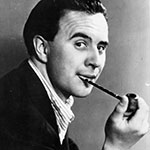
Wolfgang Borchert (1921–1947) was a German author renowned for his critical examination of the Second World War. He grew up in a liberal family in Hamburg, Germany, against a backdrop of rising Nazism and, as a rebellious young conscript to the Wehrmacht, was court-martialed multiple times and narrowly avoided being sentenced to death. The war broke his health, but that did not stop him writing prolifically until he died from liver failure in 1947 at the age of only twenty-six. He is credited with being a major influence on German literature and is still studied in schools and universities.

Jennifer Busch is a translator and editor who particularly enjoys short and flash fiction. She holds BAs in English Literature and Modern Foreign Languages as well as MAs in French and Translation. Her work has been published in Consequence, Asymptote, Ellery Queen Mystery Magazine, Little Fruits Magazine, and elsewhere, and she was co-shortlisted for the John Dryden Translation Competition in 2025. She lives near Munich with her young family, and when she’s not busy with words or toys you can probably find her baking cakes or drinking a well-earned glass of red.
 BACK TO ISSUE