
[objects in a museum]
objects in a museum
but the voice from before
before
the museum of thought
that’s us
we are the ones who are
at the museum
not what we see
but display cases
of crossed arms
an alphabet of faces
on old letters
we have just written
for tomorrow’s post
[des objets dans un musée]
des objets dans un musée
mais la voix d’il y a
d’il y a
le musée de la pensée
c’est nous
c’est nous qui sommes
au musée
pas ce qu’on voit
mais des vitrines
de bras serrés
un alphabet de visages
sur de vieilles lettres
celles que nous venons d’écrire
pour la poste de demain
Henri Meschonnic, Infiniment à venir, Editions Dumerchez, 2004
[it’s all lives]
it’s all lives
that cast me
and make my memory
a forest of forgetfulness
where I walk
to hear myself better
a rumor
where far and near
I recognize
that it’s your voice
[c’est toutes les vies]
c’est toutes les vies
qui me fondent
et me font de ma mémoire
un bois d’oublis
où je marche
pour mieux m’entendre
une rumeur
où loin et proche
je reconnais
c’est ta voix
Henri Meschonnic, Et la terre coule, Éditions Arfuyen, 2006
Translators’ Note:
Henri Meschonnic’s poetry resists the idea that fidelity in translation can be reduced to lexical equivalence. His poems are less about fixed meanings than about the ongoing motion between speaker and addressee, between past and present, between speech and silence. To translate him faithfully is to attend to this motion — to carry across not just the words, but the rhythms, tonal shifts, and relational energy that make them alive. Fidelity here becomes a matter of preserving the poem’s living pulse. Paradoxically, this often requires deliberate “infidelity” to the surface in order to remain true to the poem’s inner movement.
These translations explore the shifting terrain between fidelity and infidelity in intimate, historical, and linguistic relationships. The poem “objects in a museum” bears witness to what cannot be recorded and questions the possibility of a single, faithful history, evoking the way “faces” are recorded “on old letters / we have just written / for tomorrow’s post.” In “it’s all lives,” the speaker captures the doubled identity of self and other, or of original and translation. These two poems inhabit the gray spaces where trust, desire, and transformation meet.
Translating Meschonnic means working in these gray spaces. He was deeply critical of what he called “the tyranny of the sign”, the reduction of language to a system of transferable units. For him, meaning was inseparable from the prosody of a text: its pacing, its silences, its sensory and emotional charge. This view shifts the translator’s task away from mechanical equivalence toward re-creating a relational field in another language. That field is made of voice — not just what is said, but how it is said, and how it addresses the reader.
Fidelity, here, is not a static contract but an evolving practice of attention, in which the translator listens for the poem’s ongoing transformations and answers them in kind. What remains constant is not a fixed equivalence, but an openness to the poem’s capacity to surprise, unsettle, and remake the reader. Each translation is thus a new birth — an event that, like any relationship, holds within it both fidelity and its transgressions, bound together in the act of continuing to speak.
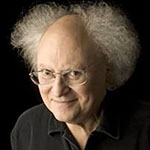
Henri Meschonnic (1932–2009) was a French poet, translator, linguist, and theorist whose work reshaped modern poetics and translation studies. Best known for his translations of the Hebrew Bible and his monumental Critique du rythme, he championed the primacy of rhythm, prosody, and relational energy over literal equivalence. Author of nineteen poetry volumes, Meschonnic received major honors, including the Max Jacob International Poetry Prize, the Mallarmé Prize, the Jean Arp Francophone Literature Prize, and the Guillevic–Ville de Saint-Malo Grand Prize for Poetry. His poetry has been translated widely around the world.
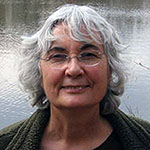
Gabriella Bedetti holds a Ph.D. in Comparative Literature from the University of Iowa and has studied Henri Meschonnic’s work since the 1970s. Following her introduction of Meschonnic at the 1988 MLA Convention, her translations, essays, and interviews appeared in New Literary History, Critical Inquiry, and Diacritics. Meschonnic’s widow, Régine Blaig, granted permission to include a personal remembrance of his poetic process in The Butterfly Tree: Selected Poems of Henri Meschonnic, translated with Don Boes and currently seeking a publisher. An introductory essay on his poetry is featured in The Collidescope.
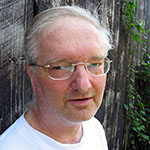
Don Boes holds an MFA in Creative Writing from Indiana University in 1985, and a B.A. with Distinction from Centre College, in 1980, where he was inducted into Phi Beta Kappa. A three-time recipient of the Kentucky Arts Council Al Smith Fellowship, he has held residencies at Ragdale and MacDowell. Boes authored Good Luck With That, Railroad Crossing, and The Eighth Continent, which A. R. Ammons selected for the Samuel French Morse Poetry Prize. His poems and translations appear in Prairie Schooner, The Cincinnati Review, The Southern Review, and elsewhere.
 BACK TO ISSUE