
SQ16L10, I
CANTO PRIMO DELLA PRIMA CANTICA O VERO COMEDIA DEL DIVINO POETA FIORENTINO DANTHE ALIGHIERI : CAPITOLO PRIMO :
Midpoint in the age of grief, in the year of grief, I learn to keep detailed records. I mark the days; they begin always on an island, at its port, and on the thrown lines of the ormeggiatori.
Depending on the weather, I board an aliscafo (which I translate in my mind’s ear poetically as “wingéd craft”) or I board a traghetto (simply, “nave”) headed for Napoli’s terra firma from Ischia porto. I live here, on this island, and I do my doctoral research on translation in Napoli at a library, the Biblioteca Nazionale di Napoli, or BNN. I am here to choose a “source” text from which to make a translation of Dante Alighieri’s Commedia.1I am here to focus on my work.
Today is October 12.
I recorded my new landscape passage by passage. I drew the horizon from every vantage point. I went high to see what was written upon it; I imagined what sits beneath it to structure its contours and then I crossed the sea.
On the aliscafo, my journey is faster and the craft is enclosed and filled with Ischitan neighbors in tailored suits and more than once, a lover through whom I would renew my appreciation for Helmut Newton. The traghetto is full of families and those for whom the slightly less expensive fare makes a difference. It is full of truck drivers, especially in the morning. When the sea is rough (mare agitato) and the aliscafo is docked for safety, the traghetto is full of everyone.
On both aliscafo and traghetto, I habitually bring my copy of Sophie Calle’s Suite Venitienne, a book-artifact of the 1980 photo-text project which chronicles the French conceptual artist’s performative pursuit of the arbitrarily selected antagonist, Henri B., through the narrow passages of Venice; a task she undertakes after meeting him at a vernissage in Paris the week prior.
On the traghetto, I sit on the highest deck so that I can see the coastal trajectory from Bacoli, Pozzuoli, Posillipo, Napoli itself, Vesuvio, Sorrento, Capri, and the cliffs of Procida, still bearing the violent marks of their 20,000 year prior origin that once and now gives the island its name. On the aliscafo, I make it a habit to sit on the starboard side so that I can see Capri and Sorrento appear in view but never come together. I personify the two islands as perfect lovers and one day, I will finally travel to the former where, by a trick of perspective, the two converge.
On both aliscafo and traghetto, I learn landscape as that which signifies beyond language: its formation is the remnant of catastrophe and in this sense it is a monument. The famous volcanologist, Alfred Rittmann, writes of this region: “Lo studio di queste eruzioni storiche e dei loro prodotti ci ha insegnato che ogni fase eruttiva lascia una traccia caratteristica per il tipo di attività. I prodotti di una eruzione sono perciò un prezioso documentario che permette, a chi lo sappia decifrare, una fedele ricostruzione dell’eruzione stessa.”2
Reader, what’s true is that years later, on my 40th birthday, at a bar in Mar Mikhael in Beirut, I will compare the skyline presence of Vesuvius, Bacoli’s Monte di Procida, and the visible edge of Ischia’s Cretaio to the contour of a half-destroyed silo I attempted to visit that morning and write, The study of the lasting remains are a precious document that permits, to one who knows how to decipher it, a faithful reconstruction of the same eruption.3
The landscape says: here is a translation of an event. The landscape says: here is a document, housed in an archive. The landscape says: it remains, and it is readable.
Today is October 14.
Walked along the western coast, saw a rock formation called innamorati. I am told that when the season is right, it is not uncommon to see pods of dolphins near Forio. There’s something I always remember: “Cetaceans cannot bury their dead.”4 Yesterday I took the ship to Napoli.
On both aliscafo and traghetto, on the journey between Ischia and Napoli, I habitually bring my copy of Sophie Calle’s Suite Venitienne in which it is written: “I refuse to think about my being in this place. I must not think about it. I must stop pondering possible outcomes, wondering where this story is leading me. I will follow it to the end.”
Depending on the day and depending on the weather, I arrive within an hour to Molo Beverello or I arrive within ninety minutes to Porto di Massa. When I receive visitors from outside of Italy, I differentiate these spaces based on proximity to the BNN, toilet access, and the presence of the state. Once, just after disembarking the 10:15 aliscafo from Ischia Porto, while I made my way to the proximate library, I saw members of the esercito italiano restrain and subdue with the butts of their guns an unarmed civilian in distress.
The Biblioteca Nazionale di Napoli is adjacent to the Palazzo Reale and the Teatro San Carlo; the Palazzo Reale faces the Piazza del Plebiscito and manifestazioni are common here. The entrance to the Palazzo Reale is flanked by private security and polizia di stato. I leave their presence and enter the courtyard of the Palazzo Reale. I have the impression that they wait in corridors (they do); that by entering this courtyard, I make consent to be watched like so, even when this gaze is sourced to the inanimate presence of stone, pavement, and broken x-ray machines (I do, it is, it is so).
On my first day of research, I sit in the royal garden outside of the entrance to the library and I write the following notes in my research notebook:
Today is October 17.
The affective power of the state is its vision. It necrotizes the civic body and holds it, even in death, in its “visible” yet “unverifiable” gaze.5 The technology of looking is nothing new. I read somewhere that the first patron of Galileo’s telescope was the Venetian state, who offered to increase the astronomer’s salary nearly twofold after a demonstration of the use of the telescope for maritime surveillance.6 In Juan Valverde de Amusco’s Anatomia del Corpo Humano, a flayed corpse holds its flesh up for all to see. Twenty years ago, I learned the anatomical atlas as a space where the dead are vivified in service of the living; where the accepted rules of representation are twisted for the purpose of usefulness.
The metal detector at the BNN is almost always broken. Visitors are instead waved through based on viscerally assigned threat assessments. Guns, food, water, backpacks, and opaque containers of any kind are prohibited. I do not have a library card and the staff does not recognize me.
Come così, I perform compliance. I move through rooms of researchers, the circulation desks, and collections. I walk the perimeter and arrive to the rare book room.
On my first day of research, I arrive having requested every early modern incunabula of the Commedia the library possesses and possibility overwhelms me. In my research notes, I preface the transcriptions and translations I intend to create (but never do) with a single question:
What am I supposed to do here?
On my first day of research, the archivist presents me with the three incunabula:
S.Q. 12. K4, 1487, Bonino de Bonini, Brescia
S.Q. 12. K 9, 1491, Piero de Piasi, Venezia
S.Q. 16.* L 10, 1481, Niccolò Lorenzo della Magna, Firenze
On my first day of research, I make a series of notes about these incunabula, marking again the day.
Today is October 17.
The Commedia is built in threes and I always remember the first:
A kind of panther, lithe and quick and covered in spots; a lion who trembled the air around him; a wolf whose starved body heaved with want
I do not greet these objects directly, rather, I look out the open window onto the port and fantasize: beneath every wave is a dolphin who, by the accident of its existence, can make water into crest like so. Ports are hostile places for marine macrofauna, but still, I take time to imagine the impossible and an unrhymed, unmetered sonnet I wrote, once, from my stoop in New Orleans, during in the early days of the pandemic, about longing for hoax.
The dirty port water recites graffiti I will one day see on the wooded edge of Cretaio, a park in the center of Ischia named for its ridges originally formed by a volcanic eruption some 30,000 years prior.. The water says: al cacciatore: pensa per un attimo prima di sparare. Li c’è una vita.
I listen and I write:
It’s true that cetaceans make no graves; they also make no writing, which by extension means that they have no archives, and perhaps, blessedly, no history.7
The trio of incunabula sit before me, looking up in provocation. I page through them, take photographs with my iPhone, and write a few notes for each, making poetic associations where I lack knowledge of book history and Italian Renaissance print cultures.
[SQ12K4]: Brescia, ink stain across Inf. VIII that looks like a spectre; looks like a hat; looks like a ghost. The text below is struck out, obliterated as a result. In an essay on erasure as poetical-political tactic, the poet Solmaz Sharif wrotes, “Erasure means obliteration.” I remember that she continues with a direct quote from Hilary Clinton in a 2008 interview regarding U.S. American relations with Iran: “we would be able to totally obliterate them.”8
[SQ12K9]: Venezia. Clean, good condition, small illustrations throughout, fewer misprints. Venice, I read somewhere, once, a major center of printing in the Italian Renaissance for cause of the nearby university in Padua.
[SQ16L10]: Firenze. water damage, mold, frass, etc throughout. The images are absent, save the second which is well placed between the final tercet and commentary of the first canto and the opening lines of the second; and the first, which is cut off by the bottom margin. Every other canto is preceded by a large space where an image ought to appear but doesn’t. Some are at the end of the canto; others at the beginning; sometimes the empty space falls between the end of one canto and the beginning of another. These spaces are my favorites for how the lacuna is accentuated by the surrounding, double presence of author (Dante) and commentator (Landino).
These spaces are fields of meaning in which I hunt for discovery. Looks like a window, looks like a portal. Marks of censorship consistent with what I recall of the index of the Inquisition.9 The mark itself bleeds onto other pages, other texts. Collateral damage, acceptable losses.
Through the window, from the port, the water says, Think a minute before shooting.
On a desk in the rare book room on the third floor of the BNN, SQ16L10 responds, Here, there is life.
Come così, I make my choice. I page through SQ16L10, keep it with me and begin to read. Punctuated by comparative breath, I am rushed by one memory of the future, by three more, and later, finally, a last.
I empty my lungs.
Rome, Italy: I will return to the eternal city to finally see Michelangelo’s self-portrait holding the flayed skin of Saint Bartholomew. I will walk from the Vatican to the Forum; I will collect materials to make ink from fallen olives foraged on the ancient paths of the Palatine Hill; I will stand inside the Colosseum and remark how much the inner ruin looks like both an anatomy theatre itself and the tender space of my insides. What’s true is that I will not remember the frescoes of the Sistine Chapel as much as I will remember the behaviors of spectators who did not know how to interact with an artwork in the absence of their iPhones.
Breathe in: An imperative that enables not only comparison, but conquest and the catastrophe of likeness.10
Breathe out: From Sylvia Wynter I learn that such an imperative has its basis in the sea and in the stars.11
Portbou, Spain: I will make my way home to France from El Bruc where I will have retrieved fifty-some ceramic totems I fashioned from foraged clay the previous summer at an artist residency where I once fell in love. These objects are something like artless cylinder seals, inspired by my first visit to the Louvre earlier that spring. They are a talisman, I wear them as such; in them, I imagine a writing practice made only of inscription and relief.12 I will interrupt my trip and take a regional train to Portbou; I will walk to the sea; I will walk to the local cemetery; I will arrive to the memorial to Walter Benjamin, stare into its abyss, and see my uncanny reflection in the waves below. I will recite the text now written across my image: Es una tarea más ardua honrar la memoria de los seres anónimos que la de las personas célebres. La construcción histórica se consagra a la memoria de los que no tienen nombre.
Breathe in: To transcend source and target and settle restlessly in a place beyond language.13
Breathe out: The rapturous end of translation in which every translation is possible and no translation is necessary.14 The call-and-response staged in Benjamin’s language forest set to maximal excitation by the time-delayed light of hot-burning stars above.15 The vulnerability and relation of paratactic gaps.16 The frayage of Spivak’s vulnerable translator; the absolute unraveling of the vulnerably translated.17 The productions of afterlife.18 The productions of coffin and of tomb.19
Luxor, Egypt: Just before dawn, my future spouse will bring me to the Valley of Kings. He will take my hand and lead me to KV9, the tomb of Ramses V and Ramses VI.20 We will descend, chamber to chamber; each narrowing path giving way to greater splendor, each passing deeper and deeper into the earth. It will happen a simultaneity of observation; think The tomb is a book, the tomb is instructions for poiesis; here story translates enfleshed livingness into abstraction and breathes substance into spirit. We will enter the final burial chamber, he will point to the deity painted on the ceiling; say, Look at how Nut devours the sun to make the night; look how she births it again to make the day.
Breathe in: Equivalency as a flexible relationship between the abstract and the material.
Breathe out: In the early seventeenth century, Galileo made drawings of the moon to prove its mountainous terrain and what Wynter would later refer to as the homogeneity of substance.21 Systems of representation create possibilities for being and like so Aimé Cesaire writes: “Just as the new Cartesian algebra permitted the construction of theoretical physics, so too an original handling of the word can make possible at any moment a new (theoretical and heedless) science that poetry could already give an approximate notion of.”22
Dahshur, Egypt: I will not realize that I will have spent the morning inside a word written upon the horizon until I am far from it. I will be told to maintain skepticism, yet still I will want to believe that the two pyramids (Red and Bent, respectively) of this site speak like so. The Red one says, “I am the southern crown” and the Bent one responds, says, “I am the northern crown” and when seen from Saqqara, the two together say in unison “valley;” the two together say, “Sneferu’s pathway through death.”23
I forget to breathe.
By the accident of proximity, the lacunae of SQ16L10 and the open window of the archive are thrown into generative, comparative relation. The open window frames a castle, a cruise ship, and the edges of a royal garden. The text around SQ16L10’s gaps frames the absolute possibility of silence.
Turn the page. The first sign of censorship misses its target, calls out to me; gasps through Landino’s commentary, says:
ne porta el
fascio.
and on the next page continues:
Questi vitii
Et per stare
vincono le fiere nel
and finally, at the center-target:
per la cupi
dita depontifici
I call back, speaking first instincts in the breath before revision or verification; I go quickly in order to surrender24 myself to the text, write:
nor carries the
burden.
These vices
And to stay
the beasts win the
For the greed
Of the popes
I selectively read; make inverse the first wounding gesture of erasure; excavate some text from under a surface, write: O the burden vice wins for greed and leave behind the remains:25
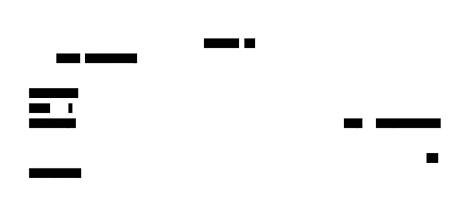
Like so, in the rare book room of the Biblioteca Nazionale di Napoli, at a desk reserved for me in front of a window that frames a castle, a cruise ship, and the edges of a royal garden, I assemble my things, and prepare to leave for the day. I write the day’s final entry in my research notebook:
Today is October 17
The difference between redaction and erasure is the difference between addition and subtraction; presence and absence; gift and wound.
What I need is craft to torque comparison near a poetics of bloom.26
Before turning the SQ16L10 back to the archivist, I make a request.I address myself to the incunabulum, say, Lead me, that I may one day look back at all that I have seen and unfix my eyes to those perilous waters.
To which SQ16L10 responds, Follow me..
Reader, “and finally, a last”:
Montpellier: I spend my days at a research library staring at digital records of texts, places, marks, and signs. I am asked to consider my reader and I admit that many will want to understand this as a Dantean travelogue with poets and teachers and lost loves and living and dead family members and trusted friends all chiming in like a chorus, each relegated to their narrative place.
If it must be, then it is like so. If there is to be a Virgil, it is Dante; it is Césaire and Wynter and all those from whom I learn the practice to finally make me good; it is any number of guides, some, even to whom I have the care of relation; it is SQ16L10 itself. If there is to be a Hell in this story, it is the Italy I lived. If there is to be a mountain of purgation, it is every basket I wove in the spring of 2020 on my stoop in New Orleans, while the poet Rodrigo Toscano, a guide, talked me through the finer points of the fit factor of N95 masks and a poetics of catastrophe. If there is to be a Heaven, it is, without doubt, KV9 at dawn and Sneferu’s crowns in full sun.
If there is to be a Beatrice it is my beautiful future spouse who stands next to me in an ancient necropolis, fixes his eyes upon me, and listens while I make Wynter’s utterance: “human beings are magical.”27
Finally, reader, it is like this: the geography of afterlife is not rivers but seas; not shores but coasts; not wooded but littoral. It is some request comme ça: show me sand; teach me about Dahshur; take me to another world far from this one.
CANTO PRIMO DELLA PRIMA CANTICA O VERO COMEDIA DEL DIVINO POETA FIORENTINO DANTHE ALIGHIERI : CAPITOLO PRIMO :
MIDPOINT in our life
I found myself. I was lost.
I was in the dark.
I was in the forest.
To story those sour woods—
it’s a difficult thing—
to think of them renews
my fear. It is so bitter,
that only death is more.
And yet, to give treatment
of good, I must speak too
of all else I have seen.
I can’t tell it well—
how I entered or when
I abandoned the way.
I was full of sleep.
I came to the joint
of a mountain. I came
to where the valley that cut
my heart with fear would end.
I looked up. I saw
shoulders already dressed
in rays of sun, that star
who leads us right by each road.
And so my fear—endured
by my blood’s reservoir;
endured through the night
I spent with pity—
was quieted by light.
It was like this:
as the breathless one
who arrives to shore
and turns to their shipwreck
and gazes in awe,
so too does my fleeing
substance turn to look
again at that passage
from which the living
never and do not leave.
I reposed; I rested
my wearied body.
I resumed the road.
And look, at the beginning
of the ascent, a kind
of panther, lithe and quick
and covered in spots.
She would not leave my view.
She blocked my path; once,
again, I doublebacked.
It was still early.
It was the morning.
The sun was rising
with the stars just as when
some God first flicked this world
in spin. Hour and time,
and season might give
reason for hope beyond
yet the fear never left.
A lion appeared
to come straight against me
with raised head; with rabid
hunger; around him
the air seemed to tremble.
I saw another beast,
a wolf, whose longing made
her starved body heavy
with want. The sight of her
weighted me; I lost my charge
to climb the heights ahead.
When faced by the beast
who’s made so many
live their lives in grief—
restless and coming—
I was like the miser.
I was returned to where
the sun is soundless.
I made my way back
to a low place; I saw
a man come before my eyes.
For his long silence,
he seemed dim. I saw him
in the barren vastness.
I screamed:
Grant my soul
pity; whichever
you are, shade or true man!
Him to me: Not a man;
a man I was before—
of Mantua. I saw
Rome under Augustus.
I saw the time of
the false gods and liars.
I was a poet.
I sang of just Aeneas.
But you, why return here?
Why not ascend the mountain,
to the reason of all
that is joyous and just?
I bowed my head and asked:
Are you Virgil, poet
who sends wide the river
of language? You are!
Light of all poets.
My Respected teacher.
My highest author.
May my studies—the love
that inspires me to scan
your volumes—guide me.
You are the one from whom
I learn the practice
to make me good.
Now look—
the beast from which I turned—
look—help me, Teacher,
look how my blood-filled veins
tremble at her account.
He saw how I wept:
Let’s find a new way—
He said: —if you want
to quit this wilderness.
The wolf will neither leave
nor let you go her way.
With all her preventions
she’ll finally kill you.
Her nature is wicked;
desire never sated.
After she has eaten,
she’s left more hungry still.
She mates with many;
infinitely more they’ll be
until some hound arrives
who feeds on neither earth
nor coin. This hound will
bring to her a painful death.
This hound will restore
our humble country,
for which, so many died
from mortal wounds at war.
This hound will hunt
the wolf in every city
until she is returned
on a wave of envy
to the hell from which
she first departed.
And so, follow me.
I’ll be your wise guide.
We’ll travel from here
to the eternal.
You’ll hear desperate screams.
You’ll see ancient shades,
pained, each one wailing
through a second death.
You’ll know, in the south,
those happy in fire
for its later promise.
If, from there, you want
to keep the ascent,
I’ll depart; I’ll leave you
with a soul more deigned.
Because I rebelled
the sovereign city
has no want for me.
O, such happiness
to the chosen ones…
Poet. I plead to the God
you never came to know—
Lead me, that I may flee
damnation eternal;
that I may arrive
to the door of Saint Peter.
Like so he set out
and I followed behind.
1 My presence is state-sponsored. In the fellowship orientation, I am instructed to spread US American values abroad and to support the mission statement of the Bureau of Educational and Cultural Affairs (the office responsible for administering the Fulbright fellowship): “The Bureau of Educational and Cultural Affairs (ECA) designs and implements educational, professional, and cultural exchange and other programs that create and sustain the mutual understanding with other countries necessary to advancing United States foreign policy goals. ECA programs cultivate people-to-people ties among current and future global leaders that build enduring networks and personal relationships and promote U.S. national security and values.” In my application, I wrote eloquently about my support for this mission, convincingly enough that I nearly took it for truth. I was advised to self-censure my belief that the United States should not exist. It was a good note; I am here, now; I was there, then. See United States Department of State. “Bureau of Educational and Cultural Affairs – United States Department of State,” June 4, 2026.https://www.state.gov/bureaus-offices/under-secretary-for-public-diplomacy/bureau-of-educational-and-cultural-affairs
2 Büchner, Georg, and Alfred Rittmann. 1948. Origine E Passato dell’Isola d’Ischia. Napoli: G. Macchiaroli. (10)
3 This silo is a remnant of the explosion that decimated the port of Beirut on August 4, 2020. One author, Manuella Habib, has it as such: “On August 4, 2020, Beirut experienced one of the largest non-nuclear explosions in history when 2,750 tons of ammonium nitrate stored at the port detonated, leaving the city devastated and triggering an unprecedented humanitarian and political crisis.” (115) Habib, Manuella. “Reevaluating ‘Resilience’: The Case of Beirut Port Explosion.” Erdkunde (BONN) 79, no. 2 (2025): 115–30. https://doi.org/10.3112/erdkunde.2025.02.02.
4 John Durham Peters: “Cetaceans cannot—and this is a key point—bury their dead or make lasting gravesites, though they do seem to mourn those that have died. One of the most decisive markers of “behavioral modernity,” the package of symbol-using traits associated with the appearance of modern humans many tens of millennia ago, is the burial of the dead; symbolization is tied historically to the marking and overcoming of death, and any system of symbolic storage such as writing or photography will have had a crypt-like reputation. Dolphin culture would have to manage without the grave, one of humanity’s great semiotic resources, perhaps the first fixed human address, and the prototype of all recording media since the pharaohs. Modern Europe is haunted by the thought that all our gear amounts to one big tomb, civilization being nothing more than the project of fending off death by devices.” The Marvelous Clouds : Toward a Philosophy of Elemental Media. the University of Chicago Press, 2016. (83)
5 Michel Foucault, in Discipline & Punish, on Jeremy Bentham’s prison design: “Bentham laid down the principle that power should be visible and unverifiable. Visible: the inmate will constantly have before his eyes the tall outline of the central tower from which he is spied upon. Unverifiable: the inmate must never know whether he is being looked at at any one moment; but he must be sure that he may always be so.” Discipline and Punish: The Birth of the Prison. Alan Sheridan, trans. Vintage Books, 1995. (201)
6 Machamer, Peter K. The Cambridge Companion to Galileo. Cambridge University Press, 1998. (213-214)
7 John Durham Peters: “Cetaceans would lack both fixity of objects and what philosopher Paul Ricoeur called ‘the fixation of meaning,’ the preservation of symbolic (legal, religious, poetic, musical, philosophical) achievements. […] dolphins could have parliaments but no pyramids; memory but no history; poetry but no literature; religion but no scripture; education but no textbooks; law but no constitution; counting but no chalk, paper, or equations and thus no mathematics; music but no scores; weather reports but no almanacs; navigation but no ephemerides; culture but no civilization.” The Marvelous Clouds : Toward a Philosophy of Elemental Media. the University of Chicago Press, 2016. (82)
8 I have taught Solmaz Sharif’s essay, “The Near Transitive Properties of the Political and Poetical: Erasure” dozens of times. The essay and the book that it references, Look, are imprinted on my memory as if the latter is a page hungry for marks. I am revising this footnote on June 12, 2026 and I find that the essay has gone missing from the internet, despite vestiges of it appearing in searches. I wonder what has become of it and I am grateful that I have copied the following passage on an associative etymology of the term erasure:
“Erasure means obliteration.
The Latin root of obliteration (ob- against and lit(t)era letter) means the striking out of text.
Poetic erasure means the striking out of text.
Poetic erasure has yet to advance historically.
Historically, the striking out of text is the root of obliterating peoples.
e.g. Hilary Clinton said in her 2008 Presidential campaign: we would be able to totally obliterate them.
The Iranians, she said.
She said, That’s a terrible thing to say but”
“The Near Transitive Properties of the Political and Poetical: Erasure.” in The Volta
9 See Natale Vacalebre on sixteenth and seventeenth century censorship of the Commedia in “Hell of a Poem! Censoring Dante’s Commedia in Early Modern Spain” in Reformation, Religious Culture and Print in Early Modern Europe. First edition. Brill, 2022.
10 See Zoe Todd and Heather Davis on the Anthropocene as a violent, colonial project of same-making premised on the transformation of landscape, culture, and people: “the Anthropocene as the extension and enactment of colonial logic systematically erases difference, by way of genocide and forced integration and through projects of climate change that imply the radical transformation of the biosphere. Universalist ideas and ideals are embedded in the colonial project as it was enacted through a brutal system of imposing ‘the right’ way of living. In actively shaping the territories where colonizers invaded, they refused to see what was in front of them; instead of forcing a landscape, climate, flora, and fauna into an idealized version of the world modelled on sameness and replication of the homeland.” “On the Importance of a Date, or, Decolonizing the Anthropocene.” ACME an International E-Journal for Critical Geographies (Kelowna) 16, no. 4 (2017): 769.
11 Wynter, Sylvia. “Columbus, the Ocean Blue, and Fables That Stir the Mind: To Reinvent the Study of Letters.” in Poetics of the Americas : Race, Founding, and Textuality. Baton Rouge: Louisiana State University Press, 1997. (141-142)
12 See: Musée Du Louvre. “Sceau Cylindre,” n.d. https://collections.louvre.fr/en/ark:/53355/cl010143719.
13 24. I begin to call this place, oltre-babel after a graffiti I saw, once, in Napoli on the walk from Posilipo to Beverello in which it is written, oltre il mare c’è il nostro amore. I once described this space in a research seminar with the translation scholar Lily Robert-Foley who noted that my oltre-babel was not unlike Benjamin’s reine Sprache or likewise Spivak’s “spacey emptiness.” It’s true that in an article from 2016, “Writing with Translational Constraints: On the ‘Spacey Emptiness’ Between Languages,” Lily asks about the space between languages; my oltre-babel asks about the space beyond language. The oltre-babel is not about the traversal from one signifying linguistic system to another, but rather about asking what remains after these systems break down, are co-opted, or are no longer useful? I begin to imagine the oltre-babel as the translational space of ruination. See also: Robert-Foley, Lily. “Writing with Translational Constraints: On the ‘Spacy Emptiness’ Between Languages.” MLN (Baltimore) 131, no. 4 (2016): 905–18.
14 See: Vicente Rafael in Motherless Tongues : The Insurgency of Language amid Wars of Translation. Duke University Press, 2017. (11)
15 See Walter Benjamin in “The Task of the Translator”: “Unlike a work of literature, translation does not find itself in the center of the language forest but on the outside facing the wooded ridge; it calls into it without entering, aiming at that single spot where the echo is able to give, in its own language, the reverberation of the work in the alien one. ” “The Task of the Translator” in Theories of Translation : An Anthology of Essays from Dryden to Derride. University of Chicago Press, 1992. 77.
16 See Edwards, Brent Hayes. “Selvedge Salvage.” Cultural Studies (London, England), vol. 17, no. 1, 2003, pp. 27–41, and Perelman, Bob. “Parataxis and Narrative: The New Sentence in Theory and Practice.” American Literature, vol. 65, no. 2, 1993, pp. 313–24.
17 In “The Politics of Translation,” Gayatri Chakravorty Spivak describes the “safe” and “vulnerable” ways in which a translator might engage a text and the possible outcomes therein. For example, a translator who emphasizes the logical over the rhetorical is one who stays “safe” and avoids what she later terms the “disruptive rhetoricity” of the language (which is to say the “figuration,” which is to say the poetic function of language). By contrast, a translator who “surrenders” themselves to the rhetoricity of a language is one who allows themselves to be frayed by the language to initiate a process one cannot control but initiates and surrenders to nonetheless. “The Politics of Translation” in Outside in the Teaching Machine. Routledge, 2009.
18 Walter Benjamin: “Just as the manifestations of life are intimately connected with the phenomenon of life without being of importance to it, a translation issues from the original—not so much from its life as from its afterlife.” in “The Task of the Translator” in Theories of Translation : An Anthology of Essays from Dryden to Derride. University of Chicago Press, 1992. 73
19 See Achille Mbembe: “Archiving is a kind of internment, laying something in a coffin, if not to rest, then at least to consign elements of that life which could not be destroyed purely and simply.” in “The Power of the Archive and its Limits” in Refiguring the Archive. 1st ed. Kluwer Academic, 2002. 22.
20 The American Research Center in Egypt. “Ramses V and Ramses VI,” The Theban Mapping Project. N.d., https://thebanmappingproject.com/tombs/kv-09-rameses-v-and-rameses-vi
21 As part of the arguments presented in “Unsettling the Coloniality of Being/Power/Truth/Freedom: Towards the Human, After Man, Its Overrepresentation—An Argument,” Wynter describes the contrast between the European medieval and Western humanist concepts of the ontological facts of the universe. In the former, what is on and of the earth is ontologically, theologically, different from that which is up above: the earth and its fallen Adams; the perfect spheres above. Wynter notes that understanding a homogeneity of substance—which is to say, what is up there is not substantively different than what is down here—is that which was “to make possible the rise of a nonadaptive, and therefore natural-scientific, mode of cognition with respect to the ‘objective set of facts’ of the physical level of reality.” (275) In later works, Wynter identifies this “mode of cognition” as a self-limiting response to the question of who-we-are-as-humans. “Unsettling the Coloniality of Being/Power/Truth/Freedom: Towards the Human, After Man, Its Overrepresentation—An Argument.” CR (East Lansing, Mich.) 3, no. 3 (2003): 257–337.
22 See Aimé Césaire in “Poetry in Knowledge”: “poetic knowledge is born in the great silence of scientific knowledge” (17) and later, “In short, scientific knowledge enumerates, measures, classifies and kills. But it is not sufficient to state that scientific knowledge is succinct. It is necessary to add that it is poor and half-starved.” Finally, he attests that in the milieu of this inadequacy, “dissatisfied mankind sought salvation elsewhere, in the fullness of here and now. And mankind has gradually become aware that side by side with this half-starved scientific knowledge there is another kind of knowledge. A fulfilling knowledge.” (18) Indeed this “fulfilling knowledge” is poetry itself, a knowledge that engenders full possibility. In Césaire’s words, “It was both desirable and inevitable that humanity should accede to greater precision. It was both desirable and inevitable that humanity should experience nostalgia for greater feeling.” (19) This “greater precision” is crucial to the liberatory praxis described by Sylvia Wynter. In her 2017 response (“The Ceremony Found: Towards the Autopoetic Turn/Overturn, Its Autonomy of Human Agency and Extraterritoriality of (Self-)Cognition.”), to her 1984 call to action “The Ceremony Must Be Found: After Humanism”), Sylvia Wynter proposes that the response to the question, how can humans remake both themselves and the truths they take to be (but are decidedly, not) immutable (constructions of racial differences, colonial conquest, capitalist life-ways, etc), lies within Césaire’s “science of the Word.” Here, I understand Wynter to return to the idea of thinkability which figures so heavily in her reading of the relationship between humanist thought and the scientific revolution and particularly the thinkability of Copernican thought following the propter nos poetics of humanism. Just as Cartesian algebra made theoretical physics thinkable, per Césaire, there is a science we know not what that poetry can make thinkable and that it already approximates. In this sense, poetry is an expressive tool to other representations of reality which already exist but are yearning for articulation. Wynter notes that the “telos” of the new science is not so different from that of the natural sciences, in that it is “open ended” and “self-correcting (however eventually),” and importantly, is on the “order of extra-territorial cognition” which is to say, an absolute engagement with alterity. (210)
23 See Juan Antonio Belmonte and Giulio Magli on the possibly signifying power of the so-called “Red” and “Bent” pyramids at Dahshur: “When viewed from Saqqara, the Sneferu pyramids form an artificial, symbolic horizon of two paired mountains: a dw sign.” They continue: “We might assert, then, that it is with the dual unique project of Sneferu at Dahshur that we begin to perceive an increasing symbolic value of the pyramids: it is with this king that the pyramids became actual ‘gigantic hieroglyphs,’ as Mark Lehner has written. The very idea of creation was tied up with writing in the Egyptians’ mind; thus, in a sense the couple of pyramids becomes a ‘sign’ within a ‘written’ landscape.” (183) “Astronomy, Architecture, and Symbolism: The Global Project of Sneferu at Dahshur.” Journal for the History of Astronomy (London, England) 46, no. 2 (2015): 173–205.
24 “Surrender” comes directly from Spivak’s account, in “The Politics of Translation,” of her process of translating Mahasweta Devi: “At first I translate at speed. If I stop to think about what is happening to the English, if I assume an audience, if I take the intending subject as more than a springboard, I cannot jump in, I cannot surrender.” Spivak goes on, further describing the act of intimacy and friendship that is required in such a relationship: “My relationship with Devi is easygoing. I am able to say to her: I surrender to you in your writing, to you as intending subject. There in friendship, is another kind of surrender. Surrendering to the text in this way means, most of the time, being literal.” (212) “The Politics of Translation” in Outside in the Teaching Machine. Routledge, 2009.
25 These marks represent where I have redacted text from the original to produce the line, “o the burden vice wins for greed.” The image seen here is at roughly 50% the size of the original, which reflects the placement of the censorship (and my redaction) on the incunabulum page.
26 I arrive to a poetics of bloom through Jason Allen-Paisant’s readings of Aimé Césaire’s poetics. Allen-Paisant describes the ways in which Césaire expresses a blooomed state of consciousness: “In the poems [of Aimé Césaire], the human subject is not dominant, masterful and fixed, but fluid and moving, like the world which it forms part of. The poems imagine all the things that the self becomes. Nothing stands on its own; everything can turn into something else. The vegetal, the animal, and the mineral are internal to each other. Every piece of nature is layered and inexhaustible; every element is more than itself.” (196) Years after reading Allen-Paisant, I will return to a foundational text—Theory of the Novel—in which Lukács writes, “[The world of the epic] is a homogeneous world, and even the separation between man and world, between ‘I’ and ‘you’, cannot disturb its homogeneity. Like every other component of this rhythm, the soul stands in the midst of the world; the frontier that makes up its contours is not different in essence from the contours of things: it draws sharp, sure lines, but it separates only relatively, only in relation to and for the purpose of a homogeneous system of adequate balances.” (33) What the poetics of bloom propose is an epic relation of subject and substance and world alongside the directive to “do or be” outside of the existing archetypes (what Wynter calls “descriptive statements”) of Man, which have already failed and lie before us in ruin. Allen-Paisant, Jason. “Unthinking Philosophy: Aimé Césaire, Poetry, and the Politics of Western Knowledge.” Atlantic Studies (Abingdon, England) (Abingdon) 18, no. 2 (2021): 193–216. And Lukács, Georg. The Theory of the Novel: A historico-philosophical essay on the forms of great epic literature, Anna Bostock, trans. Merlin Press. 1971
27 Wynter, Sylvia. “The Pope Must Have Been Drunk, the King of Castile a Madman: Culture as Actuality and the Caribbean Rethinking Modernity.” in The Reordering of Culture: Latin America, the Caribbean and Canada In the Hood. Carleton University Press. 1995.
Note: SQ16L10, I, is a commentary on and translation of the first canto of the first canticle of the Commedia of Dante as translated from a Renaissance original (Cristoforo Landino’s Comento Sopra la Comedia di Dante, Firenze 1481).
Clare Louise Harmon is a poet based in Marseille, France. Clare holds an MFA from the University of New Orleans and is completing a PhD in comparative literature at the University of Minnesota. In 2023, Clare was awarded a Fulbright fellowship to support doctoral research in translation and Italian Studies.
 BACK TO ISSUE