
Postcolonial Classroom Exercise, or When the Craft Talk is Insufficient
Turn your chair to face the person with the most power in the room.
In this exercise, power is to be understood as the echo of colonial legacy clanking around beneath complicitly comfortable skin; as stake in maintaining the status quo for personal benefit.
Face the person who does not sharpen contradictions, but instead, vindicates them, effectively deadening revolution.
Ask them how much the dread in their chest weighs, should they have any. Consider their chosen method of measurement.
Do not answer when they ask you, “Dread of what?” This is your first indication: you are facing the right direction.
Ask them their favorite part of the land acknowledgment. What they imagined during it. Where their mind went. Did it travel over lands from a bird’s eye view, borderless? Did their shoulders relax after it was read?
Note: Whether their shoulders are tense and raised only now, as you ask these questions. Can you form a constellation out of the places around the room their eyes have darted?
Press on. Not as form of absolving privilege, you all being there in that room far-removed. But as collective necessity.
As practice in getting free.
That, or as way of unsettling the elite.
Ask where the creation myth of this nation resides, both within and around them.
Have them introduce themself with the last time they defended the institution. It need not be so explicit, you might remind them. You might not, because their power already rests on mountains of unseen labor.
You might still, because lives are lost the longer they delay their social consciousness.
Have the notetaker—I trust you assigned a notetaker, every uprising, no matter the scale of it, needs its archivist—collect answers from the rest: suppressions of every kind, both the violence and that which was silenced; it’s more difficult to overwrite a history that tells all sides of it.
Though not entirely immune to revisionism, to being grinded to dust and scattered across inaccessible archive labyrinths.
So, have the record be read at the institution’s funeral. Have it serve as epigraph to every curriculum until then.
Have the person in question get in touch with the person they report to, have them ask their own set of questions.
Repeat this exercise until the pillars are shattered.
IGUALA
where each 43rd letter has been replaced with the name of a forcibly disappeared student from the 2014 Iguala mass kidnapping.
quiere decir “donde serena la noche,” so serene the 43 of ABEL GARCÍA HERNÁNDEZou have yet to ever be seen again. I, too, have worried mABELARDO VÁZQUEZ PENITEN family that all that would be left of me is righteouADÁN ABRAJAN DE LA CRUZ rage unfulfilled, though comparison is worth littALEXANDER MORA VENANCIOe when my bones are still within me, not burned to uniANTONIO SANTANA MAESTROentifiable ash. Marking the anniversary of a massaBENJAMÍN ASCENCIO BAUTISTAre, you were made into another massacre. This poem wiBERNARDO FLORES ALCARÁZl never be able to hold corrupt officials accountaCARLOS IVÁN RAMÍREZ VILLAREALle, but if all I can do is interrupt language with relCARLOS LORENZO HERNÁNDEZ MUÑOZntless reminder, I will do so until my tongue is seveCESAR MANUEL GONZÁLEZ HERNÁNDEZed. Students sin pelos en la lengua will always be “raCHRISTIAN ALFONSO RODRÍGUEZ TELUMBREicalized,” deemed revoltosos, barely tolerated by sCHRISTIAN TOMAS COLÓN GARNICAatus quo enforcers, pejoratively labeled Ayotzis, CUTBERTO ORTIZ RAMOSero yo aquí pensando “qué lindo nombre.” Revoltosos se lDORIAM GONZÁLEZ PARRALs llevaron, revoltosos los queremos. Ay, how tragedy EMILIANO ALEN GASPAR DE LA CRUZlways indelibizes, drapes even a number with immutEVERARDO RODRÍGUEZ BELLOble sorrow. You may know by now, but your families will FELIPE ARNULFO ROSAever permit our forgetting. As I write this, it will hGIOVANNI GALINDES GUERREROve been a decade. Each of us missing, holding your forISRAEL CABALLERO SÁNCHEZed disappearances. Peña Nieto’s government establiISRAEL JACINTO LUGARDOhed “historical truth” in the investigation. A goverJESÚS JOVANY RODRÍGUEZ TLATEMPAment is only as good as its most horrid falsified doJHOSIVANI GUERRERO DE LA CRUZumentation. Power abuse, however, inevitably grows JONÁS TRUJILLO GONZÁLESranslucent. What’s harder to see through is the schoJORGE ÁLVAREZ NAVAl murals, which have not buried you, which continue tJORGE ANÍBAL CRUZ MENDOZA declare: Protestar es un derecho. Reprimir es un delJORGE ANTONIO TIZAPA LEGIDEÑOto. In a country with more than one hundred eleven thJORGE LUIS GONZÁLEZ PARRALusand people gone missing, you all have become greaJOSÉ ÁNGEL CAMPOS CANTORer emblem than snake-eating eagle. ¿Qué cosecha un país JOSÉ ÁNGEL NAVARRETE GONZÁLEZue siembra mentiras? “There is no indication that thJOSÉ EDUARDO BARTOLO TLATEMPA students are alive,” says truth commission chairmaJOSÉ LUIS LUNA TORRES, Alejandro Encinas. What, then, are the protesters whJULIO CÉSAR LÓPEZ PATOLZÍN continue to break down doors to the National PalacLEONEL CASTRO ABARCA, to be met with tear gas when calling for justice, to uLUIS ÁNGEL ABARCA CARRILLOify pueblos against state repression. Todos somos LUIS ÁNGEL FRANCISCO ARZOLAyotzinapa. El lugar de las tortugas. Carrying anti-hMAGDALENO RUBÉN LAURO VILLEGASstory on our backs, plodding steadily through mud bMARCIAL PABLO BARANDArn of the long rain on the night of your attack. Sus faMARCO ANTONIO GÓMEZ MOLINAilias los esperan. En esta vida y la próxima. Because rMARTÍN GETSEMANY SÁNCHEZ GARCÍAvolutionary lexicons know to leave room for hope, oMAURICIO ORTEGA VALERIOher translations of the town’s name take it to mean “yMIGUEL ÁNGEL HERNÁNDEZ MARTÍNEZ volvió,” o “ya viene,” from yohualcéhuatl instead of yoalMIGUEL ÁNGEL MENDOZA ZACARÍASa. Hasta encontrarlos, you reside in the mother tongSAÚL BRUNO GARCÍAe.
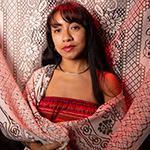
Ayling Zulema Dominguez is a poet, educator, and community artist who dreams and writes toward a borderless world with rematriated lands. Their writing asks us to defy colonialism and nurture collective care in its place; it asks us who we are at our most free, and explores the subversions needed in order to arrive there. What can language do for our resistance efforts? How can we use it to cultivate new worlds and weave our ancestors into the fabric of them? Their storytelling is rooted ancestrally in the lands of Puebla, México (Nahua) and the island of Kiskeya-Ayiti.
 BACK TO ISSUE