
Excerpts from Negative Body
Someone shoves you from behind, orders you inside, plays on your every emotion, even tries to persuade you this is where you belong, but the words coming out of their mouths send a pain shooting through your ribs, and you begin to look for the thread which, for a moment, you think might result in an existential link between you and something; but you’re at a loss, and you can scarcely recognize the streets or faces which, to make matters worse, seem absolutely foreign to you; for that matter, you can scarcely recognize yourself. It’s long, exhausting, terrifying. As if you’d been locked away in a gallery under the world, the world in which you’d lived and loved but which, were you abandoned there, would cease to exist. Without a trace. The street—no run-of-the-mill street—with its kiosks, clothing shops, or grocery stores, its hurried pedestrians who, however serious they may appear, swallow their feelings, let the undertow of their expressions sweep them away, these blenders of living objects whose lifespans they alone can grasp. The street—I mean the one where I’d lived—bore no resemblance to the other streets in the city. It seemed empty, unimportant, and I never gave a second thought to what became of its inhabitants. Nevertheless, I lived there: with one parent, a handful of friends, and someone whose contours, whose penchants, and whose physiognomy I can’t quite put my finger on, but whose slightest detail to this day could set my heart on fire, like a wasp sting.
It must’ve been a woman. I’d slept straight through the night. This was either the prelude to escape, or escape itself. But the men who’d been escorting me along the way were getting on my nerves. I was no longer theirs.
The street. The air. The billowy blackness of the clouds. The earth you love and which forces you to suffer.
I had, it seems, something in my thorax—a rat, maybe—which distracted me for quite some time. I was no longer entirely conscious of what, exactly, I was, nor what I’d been in the first place. Somewhere, elsewhere, here or there, all around, nothing was anywhere. However, there is a group of men here who are determined to get to the bottom of things, who open inquiries into themselves, and who keep referring to one another as tree, fly, dog, lizard—but never clay or schist, never stone. This same group of men followed me, all the world followed me, bristling, groaning, yellow, blue, green, gray, who knows! The entire world was after me, one enormous wave upon which the sky and all its tornadoing winds hoist you upward, bringing you face to face with a sunbeam to which, at last, you cling.
Naturally, it was a rainy day.
The rain had dissipated, ensuring that the knot of death entangling itself in the muddy root system—beneath the sedges and other nameless, sapless plants—had swollen to a sufficient size. And that’s when it really started pouring, pounding spasmodically through my blood, like whorls of a dust storm against a glass pane—this life I could barely stand, and could withstand only out of fear. A true spell of rain, through which the eye regained its open seas. Someone had just set the table. Someone was late.
—Let me have a look at that, he said.
An old photo album depicting various monsters with long trunks, amphibians on the lookout for who-knows-what dream-chewing insects, nestled into the banks of melancholic swamps, long swathes of dry grasses surrounding tumultuous, thorn-bristled trees. Here, I feigned existence. Flourished. I wouldn’t have to worry about anything anymore. To hell with the rest of the world! Being here, now, I could live out my life as two strange somethings, simultaneously.
—You’ll see nothing, I responded.
So what was I hoping for? What was I looking for in these pages that would actually be of any use to me? I had just played my last card. It was over. A drowned man is fished out only to be given a decent burial. No. Everything was just getting started. The drowned man rises, comes at you; there’s nothing you can do about it. Woe to you should he get his hands around your throat, your windpipe. Woe to you should he nestle into your memory. There was nothing left in my hands but these childish pages: a gold star which I had awarded myself… I could see myself gasping, overcome by a monstrous pleasure. She was dead, but resurfaced with the turning of stones deprived of the past and in the pages; under the ink, there was no longer paper—only her; her features exposed in that glebe I’ve no clue what crime. She was breathing. That was it for my resolve! I could’ve sworn I caught her breathing. Ordinary wailing? Absolutely unbearable! Picture this: a street like the one where I’d lived, people who laugh at you, who pay no attention to your eyes; imagine the rain beginning to fall and, suddenly, in the back of your mind, you see winter and the cold that comes with it—the luscious mud and all its putrid waste sweeping past—driving you back, without mercy, deeper into your own recesses, into the blackness against which you’ve grown accustomed to banging your head…
So we leave, unrestrained. Immediately we find ourselves scrounging for the same plots of trash-strewn land. I had the feeling I was sinking into the ground but laughed it off as a passing sensation. She clung to my jacket. The same jacket I sent out to be cleaned every week. My only jacket: it’s hardly permissible to own just one jacket. Scandalous, in fact, when you work in a freshly-painted office that smells of brand-new paper; when you have a window that overlooks a schoolyard; when you mistake so many things and begin, at the end of the boulevard, at the foot of the wall where you usually go to piss, to get your head straight. Unshaven, unsightly. The words slide along my skin without grazing my ears. Only later do the guts knot up on their own. Is that clear? Then—“your shirt isn’t ironed.” You’re sent back to a past you fought your way out of and had almost forgotten; in short, a past you could no longer endure. But you will have to provide a word or two of clarification. That’s all wrong, all of it, it doesn’t exist. The little brides make fun of you; they abandoned long ago the gardens and their early crushes—those same gardens that are still here, but changed; and the white terrors, too, the fatal nights, because they’ve learned to say they are no longer virgins. Witticisms and winks ensue, one after the other. You’re already elsewhere, all-powerful. Your absence shocks them. I froze, suspended in a tiny, tense spot, between their tottering sentences that latch on and let go like the confines of some drug. I say to myself:—“Vermin, you’re vermin.” But perhaps this departure never took place, and here we are, turning one another over like closed books that no one dares read; she used to say she was my book; I bit down on shells: menstruations snowing down onto curve-swollen sands. Once, desert. Every scrap of paper I see lying on the pavement reminds me of her; I deliberately kept that absurdity because it serves as my touchstone; and for a very long time I thought of nothing but her; so that she became a great myth I both revered and feared at once; when the old man speaks to me, I think of her, and of a time and place we may have ended up together. The stones of the sidewalk erupted with a profound amount of noise, chasing me down: someone has painted them on purpose, I know it: fear, with repugnant signage. Red and white. I almost step out of my body. The stones grow razor-like, cut me into morsels, and thread me back through every town I never loved or visited enough; forcing me to stagnate where I stand; and I watch them swell in size and creep and crawl around to no end, like some old crone presiding over her cowering husband’s affairs; my going-this-way-and-that blood, no fleeting glance of mine will bring you around to the mistakes I’ve made; I veer for no reason; and what are you, child, you who make the emptiness of tin cans ring by blowing them sky high, chocking them full of carbide and lighting the fuse. The destroyer; people go on and on about the Martians; Martian child; I imagine you coming from afar, from a planet too overcrowded, too small; I saw myself as a much-needed hero, so tightly had I locked myself inside those red-and-white stones. And the fact that So-and-so spoke of it to me—I don’t know how—changes nothing; the same reproaches surge into my brain, gathering strength; over-season me, gathering strength; they are relentless, worming their way into my most secret lobes, drawing me out.
So it was with those farewells that never seemed to end. The few droplets of water that fell still weren’t enough to satisfy my weary expectations; I hadn’t expected that from so heavy a sky. The jackals alone had the privilege of rousing storms with a howl; it was as if they were witnessing one of their own, ensnared. The rain might’ve shown me many ways out, just as—by other means—the smoke from my cigarette did, the smoke that kept me from sleeping, that kept me company. The shrill cries of the wicked stepmother and the fingers of the other wandering from her breasts to her thighs. The branches of the conifer across the way. Everything carried my thoughts along. I was often forced back inside, but never went to bed. She was far away, and there was no end to my dreaming of her. I’d even gone so far as to imagine her body against mine. Against my cheeks, against my lips, her black braids were a gentle fever. Like the sinuous folds of the desert, where you hope to make out some worthless object to forget that you, yourself, are lost. Every droplet of water was slender, almost blue. They had something of a locust’s persistence, the way they went about devouring me; in the end I admitted to myself that I was a green leaf, as thriving and as alive as an aquatic plant—yet I never pressed my luck with the weather, no matter how tempestuous, no matter how much it bore down upon the city.
Suddenly we found ourselves before rammed-earth walls under the sweltering summer sun swollen with cicadas whose song wove long and infinite patterns deep into the utter silence; at once we forced our way upstream against the dry and distasteful murmur that the wind swept endlessly across the asphalt and yellow fields of freshly-shorn wheat. Then the tones, unbothered up to this point, began to change, swirl about, and come together throughout the straw and debris, providing a tempo for an ancientness over which the eye might linger just for an instant before ascending the ruined stairway, obstructed with rubble. Its opening brought a strikingly heavy shadow into collision with the outside light. Then it winds its way through horizontally, turns at an angle, setting its sights on the exit, climbs back up and cleanly cuts a wider breadth; one would swear the entire universe was giving way in spasms, reeling upward and pointing toward incoherence, until at last overcoming us with its vertigo, pulsating and growing ever-stronger as we, at the end of our journey, collapse with our last remaining steps into a courtyard strewn with half-charred wild cacti. A tree, draped in rags, conceals the entrance. The guard tells us that the simple-minded hang their clothes there, believing the place conducive to exorcisms—so much so that one wonders whether the sap itself is not the secret source of the decay; in reality, one scarcely regards such ruin.
The mountainsides blot out everything else in the landscape. That one—for instance—burrowing into the thick, sun-hardened earth I used to chase squirrels through. Trees crushed in on themselves, disjointed, sharp and angular at the crown. The work of erosion bears no resemblance to the sheer descent that shaped this surface, sown with tufts of green and bordered here and there by rising ridges of darkness. But this heat allows one to imagine nothing but a scorched, mute plateau, and a sweat you could scrape away with a knife; the endless wheezing of a thirsty traveler. The terrace breaks suddenly beneath us, and we draw one another closer, tipsy as butterflies: not the slightest movement, not even much to say; everything has come to pass—the streets and towns have vanished into the eroded roads and early morning birdsong.
Thank you, I’m leaving. I’m already elsewhere. And this city, which complicated things for me even more than my family! I could taste corpse and coffee grounds, raw and unmistakable. Their face was now congealed in my spilled blood. Out ahead, a seabird loops endlessly through the air it never leaves. Thank you again thank you. I cut my fingers one-by-one to crawl better; you can’t keep your story straight—both of you—nothing adds up. The wave accentuates its march toward shore. Without letting go of my hand, she bends down and picks up a stone, which she throws, losing her breath in the process. The looks on our faces! The beach is no longer here; the swell is only the dying echo of a memory: before us are the extremities of dawn, suspended in space and time, our slowed momentums. The clouds burst open above our ears. I turn to her and say—it’s time we go home.
The little scamp broke a glass. Everything in our house comes with an unfortunate superstition attached. But no one dares hit a child. Rain all day, and thus a surge of dull routines and comings-and-goings. The lamp will stay lit until midnight. We will keep the windows closed. Someone in the room will continue to fuss over this or that. Water will seep through the ceiling. Little by little, dark circles will appear and surround all of us with their wilted, gelatinous flowers. We will go to our aunt’s house. Other women will come, dragging their snot-nosed, loudmouth brats. My stomach will tense up, my thoughts will gradually drift to fatigue, then to work. I will write very little. Instead, I will dream up ghosts that dwell everywhere and nowhere. In the couch grass, the storeroom clutter, the flowers growing in the garden, and even the pockets and seams of my old suit. One day, on the eve of a holiday, the old man took me to his tailor. From his lips hung the promise of a pleasure that would outlast his years. We came home quickly and I opened the package. An odor of paradichlorobenzene hung in the closet, under the sheets; moths in the skull, our dreams, our food, the cream we used for our coffee. Words on the prowl. Insults, then—one fine morning, the argument. I will reread what’s already been written, dissect the smallest particles dwelling in their sentences. Syllables will shatter; then, I will tear up the old notebooks in a fit of passion and start writing again. Eyes closed, not moving a muscle. Her: I see her and can no longer write. Love does that—prevents one from working. So it seems. I will speak of her lips to another—they won’t have a clue what I’m talking about. At this point, lips linger unusually in one’s mind; I don’t even see her anymore; only a cloud: one great, merciless August rain! And in this city, everything turns again and again to glimpse you feeling your way forward, head bowed or raised, eyes on the stars you stare at in shame. I wanted to plunge back into my old readings, re-explore the world, but I no longer owned a single book: the old man had sent my shelves into a chaos-spiral. Regardless, my readings return to mind—do I still have one? A mind? This is a question I circle back to often. How do I even write? First, I go and pour myself a glass of something; then, wander about a bit; when my head begins to spin, I go back home and lie down for a few minutes; more often than not, I grow nauseous, very very nauseous; the urge to vomit my own piss—that’s what it is. Before long I get up, feed a sheet into my typewriter, and pound away at the keys without a thought in my head. When I’m done, I set what I’ve written aside, but honestly—it’s already lost its value: its beauty exists only in the moment I’m writing it; so how could anyone else—outside me and the words on the page—ever appreciate an act so seemingly out of sync with itself? Before the typewriter, I had only the cheapest of pens. That pen has its own story. It wrote nothing but tedious schoolboy poems and assignments. With the aid of this pen, however, I dug actual tunnels beneath my skin. And that’s where everything began. I will not go over the events of my life and my life only. I’m going to write—observe. We will see slugs and geckos; I will swallow sand before your very eyes; together, we will discover the true traces of our ancestors, escaping both time and politics. Look—a brand new set of teeth. It is I, the hyena who shows no mercy. I piss on you, disorient you, drag you into my den and devour you. And then what—what else… I dealt a blow to one tree and planted another where it stood, which spread through roots returned to the soil. The leaves bear no resemblance. The birds settling on its branches do not sing. Now, to our dismay, no one says: they sing just for me. The fools will go elsewhere. I grab a sheet of paper. A book I will never be able to convey. I’ve already erased it. The words coil up into a ball, like earthworms, then twist apart to annihilate themselves—but one will never reconcile with the other; even within a single sentence, the words smashed together grow into their differences—so it is with poetry, and with that bond between man and woman just beyond reach… and so, too, the other way around. Like two inextinguishable bloods rushing through the same exhausted vein. Then, thunder: a word that means absolutely nothing, a stranger to itself; do you know that, since nothing there echoes its protoplasmic exteriority, I refuse to peel back the scabs of my subconscious? May we give ourselves over, slowly. But a true consumption befalls me. So what—this can’t go on forever. We are not vermin. Our own planet, will it never come to be? We will never be at ease on yours. You lure us out, only to deceive us. Indeed… Let us be serious, now that you know we have nothing in common. Let my presence come of its own accord. Let us tame it like a cat: it will withdraw its ivory claws.
Translators’ Note:
These excerpts are taken from Mohammed Khaïr-Eddine’s second full-length collection, Negative Body followed by History of a Good Lord, originally published by Éditions du Seuil in 1968. The pieces began as fragments of a dream journal he kept shortly after fleeing Morocco for Paris in search of a new life: “I wrote it, dream after dream, in three months. Each morning, I wrote down what I had experienced in my sleep.” The final text is a vertiginous blend of prose poetry, autobiography, and speculative fiction. Images, voices, regrets, fantasies, narratives, memories, and landscapes—from both his new life and his old—intertwine, overlap, and finish (or unfinish) each other’s thoughts in a wonderfully chaotic fashion.
Relentlessness is the beating heart of Khaïr-Eddine’s early work. In translating, Zack and I chose to prioritize sonic intensity, which in turn lent “narrative” momentum to Khaïr-Eddine’s morphological imagery. The text is beautifully, albeit chaotically, musical, and its elements accumulate more by accretion than through cohesion, so we were often more concerned with how we hit the notes rather than whether or not we hit the so-called right notes. At the same time, we sometimes had to slow down where the French compresses several possible meanings into a single word, unpacking in English what Khaïr-Eddine could leave coiled in French and trusting that the sentence’s forward pull would carry the reader through any resulting excess.
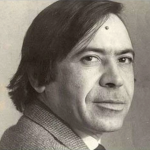
Mohammed Khaïr-Eddine (1941–1995) was a Moroccan Amazigh writer. He was one of the major Francophone avant-garde figures of his generation, renowned for his Surrealist-inspired “linguistic guerrilla warfare,” which he developed throughout numerous works of prose and poetry. With Abdellatif Laâbi and Mostafa Nissabouri, he helped found the avant-garde Moroccan journal, Souffles-Anfas, before he was compelled to self-exile in 1965. Khaïr-Eddine lived in France until returning to Morocco in 1979. He died in 1995 in Rabat.

Jake Syersak is the author of the poetry books Mantic Compost and Yield Architecture. He is also the translator of several books by Mohammed Khaïr-Eddine and Tahar Ben Jelloun. His work has received grants from The PEN/Heim Foundation and the National Endowment of the Arts. He currently lives in Olympia, WA.

Zachary Anderson holds an MFA from the University of Notre Dame and a PhD from the University of Georgia. His book reviews and critical writings can be found in Harvard Review, Kenyon Review, and the Action Books blog, and his poems have most recently appeared in Annulet, New Delta Review, and Denver Quarterly.
 BACK TO ISSUE