
Lake Effect
After work, I lock up and slip out the back door. My jacket smells like coffee and onions and some third unidentifiable musk. I should do laundry. I text Tippi: you off yet? and immediately regret it. I haven’t eaten since this morning but I snack on my cuticles—that should hold me over. I scroll, searching for an extra sad song and feeling stupid for it. Tippi texts back: no, come get a drink.
I sit at the bar, coat draped over the stool beneath me. Tippi’s wearing the crewneck I got her for Hanukkah last year—it’s royal blue and says BUCATINI in white, collegiate letters. She’s pouring a lavender drink through a strainer into a coup glass, probably an aviation. I served her an aviation two years ago when she’d just moved here.
“Purple rain?” she’d asked when I set it before her.
“No.”
She took a sip.
“You’re right.” She nodded, no further questions.
Now, she approaches me, roles reversed.
“G&T?” She holds up an etched crystal glass.
“Yes, please.”
“Still snowing?” Tippi sets the drink on a cardboard coaster and leans onto her elbows. A blunt lock of hair dangles in line with her cheekbone.
“Sure is,” I say. “Can’t stop that lake-effect snow.”
“Sure can’t,” she says. “You sleeping at the new place tonight?”
“Sure am.” We smile for a moment, forgetting the last month.
“Need help moving anything tomorrow?”
“I don’t think that’d be super helpful, Tip.”
She holds her hands up. “I’ll try to stay out of the way,” she says.
Three free G&Ts later, I’m struggling with the keys at my new apartment door. I brought one carload last night—whatever I could fit: empty trash bin, mom’s old trunk filled with artwork tucked between socks and underwear, rolled rug, camping gear, a pair of vintage ceramic lamps Tippi gave me for my birthday.
I sit on the floor in the tiny apartment with high ceilings and eat cold cheese pizza straight from the box. I don’t have any plates yet. I lick my fingers and wipe them on my jeans.
I unroll my sleeping bag and lie flat, gazing at the ceiling. It’s beautiful with whipped cream crown molding and an intricate rose in the center that reminds me of my girlhood bedroom. I’ve never lived alone before. Tippi helped me find the spot—she said it made more sense for her to stay in our old place because she makes more money. I turn my head and watch fat snowflakes pelting the window.
We’d first kissed by the lake. She’d texted me that she couldn’t sleep. We’d only known each other for a week or two—she’d come into the bar, back when I worked there. Just moved here from Phoenix, she’d said. I literally just came from the airport. She was the cutest thing I’d ever seen. Have I got a cocktail for you, I’d told her.
I couldn’t sleep that night either, so we drove to the shore. People who’ve never seen the Great Lakes don’t realize just how vast they are, how many ships they’ve swallowed. When winter reaches its coldest depths, the waves near the shoreline freeze over, caught mid-crash in crumbling formations like the Pacific coast. We climbed down from crunching dunes to the frozen beach. It was well after midnight but the moon was out, reflecting across ice and snow, which seemed to glow in its own right. Wind burned our cheeks and Tippi grabbed my hand.
“This is kind of crazy,” she said, “and I’m not expecting you to respond, but I just want to tell you—” She somehow made me feel nostalgic minute-by-minute. “I love you.”
In the morning, my hips ache from sleeping on the hardwood. My temple thrums lightly from the gin, my face taut and puffed. I crawl to the galley kitchen bisecting the apartment and dig through a paper bag—goddamn Cream of Wheat. Tippi packed the bag for me, sorting through our shared pantry. She knows I hate the gritty hot cereal. Out of stubbornness, I hunt for a saucepan.
As I whisk, I draft a text in my head: can’t believe you passed off your trash breakfast slop. I wonder if she did it on purpose, hoping I’d say something, or as a reminder—a wisp of her whenever I open the pantry. I toss the box in the trash.
In the front room, I stoop on the rolled-up rug before the windows, saucepan and spoon in hand. The world outside is bleached pure white—trees and streets and sidewalks coated in snow while flurries float in midair.
I think of Tippi on the beach, blunt bob backlit in the moonlight, saying she loved me. No one had ever paid me much attention—certainly no one like Tippi. I’d told her I loved her too, and I meant it. I meant it when I said we should move in together three months in, when I got her a job at the bar and they let me go two weeks later. I meant it when she drifted, spent time with new friends, stayed out later, “forgot” to text me back. I meant it when I walked in on her in the bathroom at a house show, arms wrapped around someone else, mouth searching a neck that wasn’t mine: but, I love you.
I spoon cooled porridge into my mouth. It’s as bland and gritty as I remember. I watch the swirling snow—that unpredictable lake-effect blizzard, wondering if I’m the cold front soaring over top or the warm water pushing from below.
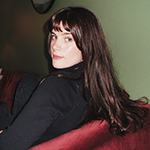
Sarah Lynn Hurd is a writer and poet from Michigan. She has recent work in Fictive Dream, HAD, Bear Review, and elsewhere. Her writing often explores relationships, loss, nostalgia, and perception. She earned her BA in creative writing and English literature from Grand Valley State University, and she’s currently attending UW-Madison for her MFA in fiction. Stop by sarlynh.com to visit her online.
 BACK TO ISSUE